


- About WXPress
- WXPress is your window into the world of WuXi AppTec and our global partners.
- Sitemap
- Events
- Contact
- Please reach out with any business inquires.
- communications@wuxiapptec.com
© 2026 WuXi AppTec. All Rights Reserved.Privacy Policy
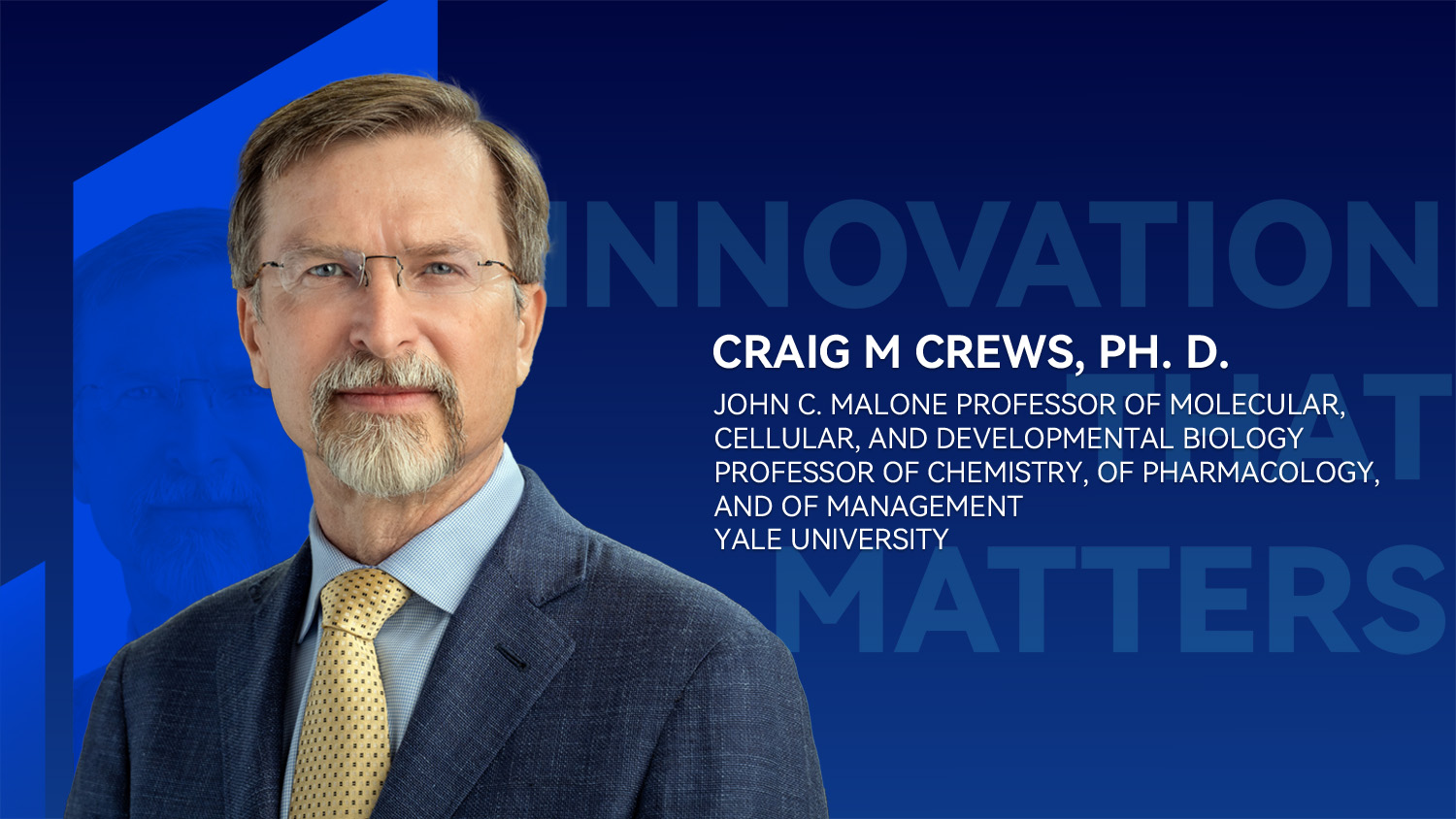
Many years later, staring at five kilograms of pale drug powder sealed inside a plastic bag, Craig Crews remembered that afternoon in the late 1990s, when almost nobody stopped to see his poster.
He was not entirely alone. The posters had been arranged alphabetically by last name, and beside his stood another young scientist’s work, belonging to a researcher named Raymond Deshaies. As the hours passed and few attendees stopped to ask questions, the two men began talking to each other instead.
Craig Crews was then a junior faculty member at Yale University, thinking obsessively about an unusual chemical idea: heterobifunctional molecules capable of tethering two proteins together inside a cell, forcing them into close enough proximity to interact. Deshaies, a yeast geneticist at Caltech, had spent years studying the machinery that governs the cell cycle. In 1997, his lab identified a protein complex known as SCF, part of the elaborate proteasome pathway — the cell’s internal disposal system, responsible for recognizing and dismantling unwanted proteins.
What if, the two scientists began to wonder, a molecule could bring these worlds together? What if a drug could physically drag a disease-causing protein to the cell’s own degradation machinery and mark it for destruction? Modern medicines, after all, were largely built on inhibition: blocking a protein’s activity, shutting something down, suppressing a signal. But this idea was different. It imagined a drug that could make a problematic protein disappear altogether.
“After a few beers, we started talking about using heterobifunctional molecules to hijack the protein degradation system,” Crews later recalled. “That was really the genesis moment.”
More than two decades later, the idea born from that late-night conversation would culminate in the first FDA-approved PROTAC therapy, opening the door to an entirely new class of medicines: drugs designed not simply to inhibit proteins, but to erase them from the cell entirely.
The idea that fascinated Crews and Deshaies rested on one of the cell’s most elegant housekeeping systems. Inside every human cell are roughly 30,000 proteasomes, barrel-shaped molecular structures that function like highly sophisticated disposal units. Their job is relentless and essential: to identify unwanted, damaged, or surplus proteins and break them down into recyclable fragments.
But the system is not indiscriminate. A cell cannot afford to destroy proteins carelessly; survival depends on knowing precisely what should remain and what must go. Before a protein can be fed into the proteasome, it first has to be marked with a molecular tag known as ubiquitin, a small protein that acts, in effect, as a disposal label. When enough ubiquitin molecules are linked together into a polyubiquitin chain, the message becomes unmistakable: destroy this protein.
Attaching that label requires an intricate relay of enzymes. One class, known as E1 enzymes, activates ubiquitin. Another, E2 enzymes, carries it. The final and most selective actors are the E3 ligases, molecular matchmakers that recognize specific target proteins and attach the ubiquitin label that condemns them to destruction.
The precision of this system is central to life itself. Cells rely on it to regulate everything from division and growth to stress responses and DNA repair. It also serves as a stringent quality-control mechanism: scientists now estimate that as many as thirty percent of newly synthesized proteins are dismantled shortly after being made because they fail to meet the cell’s standards.
By the late 1990s and early 2000s, the ubiquitin-proteasome pathway had emerged as one of the most important discoveries in modern biology. In 2004, Aaron Ciechanover, Avram Hershko, and Irwin Rose were awarded the Nobel Prize in Chemistry for uncovering the chemical principles behind this system — how cells regulate the presence of proteins by labeling unwanted ones with ubiquitin and directing them to the proteasome for rapid degradation.
The Nobel committee, in its announcement, hinted at the profound therapeutic possibilities embedded within the discovery. “The ubiquitin system has become an interesting target for the development of drugs against various diseases,” the statement read. Scientists, it suggested, might one day learn not only to prevent the degradation of important proteins, but also to deliberately trigger the destruction of harmful ones.
For Crews and Deshaies, that future had already begun to take shape years earlier.
The concept the duo envisioned depended on hijacking one of the cell’s own E3 ligases — the molecular gatekeepers responsible for deciding which proteins live and which are sent to destruction. The SCF complex identified by Deshaies’s laboratory was enormous and intricate, but it offered precisely what the two scientists needed: a way to recruit the ubiquitin machinery to a target protein of their choosing.
The first real demonstration arrived in 2001, when the two groups published a paper in the Proceedings of the National Academy of Sciences. The molecule they described — PROTAC-1 — was audacious in its simplicity, a bifunctional molecule actingas an adapter: one end contained a short phosphopeptide capable of recruiting the SCF complex. The other end carried ovalicin, a natural-product compound known to bind a protein called MetAP-2.
What made the experiment especially striking was that MetAP-2 was not known to be naturally ubiquitinated by the SCF complex. If the system worked, the PROTAC molecule itself would be responsible for forcing the interaction, effectively creating an entirely new biological relationship inside the cell.
And that was precisely what happened. MetAP-2 became ubiquitinated, then degraded, only in the presence of Protac-1. The paper ended with a prediction that, in retrospect, now reads almost understated: “In the future, this approach may be useful for conditional inactivation of proteins, and for targeting disease-causing proteins for destruction.”
Two years later, Crews and Deshaies founded a company called Proteolix, hoping to transform the concept into medicines. But timing, as often happens in biotechnology, proved unforgiving. The collapse of the genomic bubble had left investors wary of ambitious platform technologies and skeptical of unconventional drug modalities. Venture capitalists wanted familiar small molecules with a clear and immediate path to the clinic, not peptide-based degraders that sounded more like speculative biology than practical therapeutics.
“One VC pulled us aside and said, ‘Listen, we like you guys, but we’re not interested in the peptide degradation stuff,’” Crews recalled. “‘Do you have something else?’”
As it happened, they did.
At the time, Crews’s laboratory had also been studying epoxomicin, a natural product isolated from soil-dwelling Actinomycetes that selectively inhibited the proteasome itself. Unlike PROTACs, which attempted to redirect the degradation machinery, epoxomicin simply shut the system down. The company pivoted. That decision eventually led to the development of carfilzomib, a derivative of epoxomicin approved by the FDA in 2012 for multiple myeloma. By blocking the proteasome, the drug causes malignant cells to accumulate toxic levels of protein waste, ultimately driving them toward death.
The irony was difficult to miss. The scientists who had once imagined harnessing the cell’s disposal system to destroy harmful proteins first found commercial success by disabling that very system altogether.
“Having gone through the entire process from an idea in the lab to an approved medicine, I had a much better sense of what it actually takes to build a company,” Crews later reflected.
The success of carfilzomib validated that lesson. But even as Proteolix advanced toward a marketed cancer therapy, Crews never abandoned the original PROTAC concept that had first emerged from those conversations with Deshaies years earlier. What lingered in his mind, too, was the criticism investors had raised almost immediately: the peptide.
Early PROTAC molecules depended on peptide fragments to recruit E3 ligases, and in the pharmaceutical world of the early 2000s, that presented a serious problem. Drug discovery at the time was still heavily shaped by Lipinski’s “Rule of Five,” the influential framework that defined what a viable oral drug should look like — small, simple, chemically restrained. Molecules that violated those rules were widely viewed with skepticism. A bulky bifunctional degrader with a peptide component seemed to belong firmly outside the boundaries of conventional medicinal chemistry.
For PROTACs to become real medicines, Crews realized, the field would have to abandon the peptide altogether.
Around 2008, his group began the painstaking work of redesigning the entire concept from the ground up. First, they needed to discover a small molecule capable of binding an E3 ligase with enough specificity and affinity to replace the peptide recruiter and then integrate it into a bifunctional degrader that could function inside living cells.
“For four years, we worked on the chemistry, the structural biology, and all the assays necessary to come up with a small molecule ligand that could bind an E3 ligase,” Crews recalled. “The goal was to make an all-small-molecule PROTAC.”
The breakthrough arrived in 2015. In a landmark paper, Crews’s team reported a new generation of PROTAC molecules built entirely from small-molecule ligands. By replacing the peptide recruiter with a compact chemical binder, they created degraders that were dramatically more potent, more selective, and far more drug-like than the earlier prototypes. In mouse studies, the molecules achieved targeted degradation of disease-related proteins across multiple tissues, including solid tumors — an important demonstration that the approach might finally be therapeutically practical.
“It may not have been the prettiest molecule,” Crews said later, “but it was at least something we could realistically work with as a drug.”
And with that, the field seemed to shift almost overnight. What had once looked like an eccentric chemical biology trick suddenly appeared to be the beginning of an entirely new paradigm in drug discovery.
“Once we had the small-molecule replacement,” Crews recalled, “that was when I realized this could fundamentally change how drugs are developed.”
The 2015 paper did not merely attract attention; it unsettled long-standing assumptions about what a drug could be. Within the pharmaceutical industry, reactions oscillated between fascination and skepticism.
Some scientists doubted whether PROTAC molecules, substantially larger than conventional small molecules, could effectively enter cells at all. Others worried about the opposite problem: that the degraders might work too well. If a PROTAC continuously recruited E3 ligases to destroy target proteins, could it interfere with the cell’s own delicate protein-regulation machinery? Might it monopolize the ubiquitin system and prevent E3 ligases from carrying out their natural functions, leading to dangerous side effects?
Over time, many of those concerns proved experimentally manageable. Researchers demonstrated that PROTACs could indeed achieve oral bioavailability and meaningful activity in vivo, despite violating many of the conventional rules that had guided medicinal chemistry for decades. Questions surrounding potency and selectivity also became more tractable as the field developed new pharmacological concepts, including measures such as DC50, the concentration required to degrade half of a target protein population, and Dmax, the maximum extent of degradation achievable by a molecule. These metrics, pioneered in part by Crews’s laboratory, helped researchers think about degraders not as inhibitors, but as an entirely different pharmacological class.
Yet the more important question was philosophical rather than technical: why was protein degradation needed in the first place? Why invent an entirely new modality when inhibitors already worked?
For Crews, the answer lay in the limits of inhibition itself. Traditional small-molecule drugs generally work by occupying a functional pocket on a protein and suppressing its activity. But many disease-causing proteins lack such pockets altogether. By the early 2000s, scientists had already mapped much of the human genome and identified vast numbers of potential disease-related proteins. Yet only around 25% of the proteome appeared accessible to conventional drug discovery approaches. The rest were frequently labeled “undruggable.”
Crews increasingly came to see that term as misleading. “These proteins weren’t necessarily undruggable, they were undrugged.”
Protein degradation offered a fundamentally different approach. Unlike conventional inhibitors, which generally require a precise binding pocket to shut down a protein’s activity, PROTACs can act through surface interactions alone, dramatically expanding the range of proteins that may be therapeutically targeted.
“I didn’t want to compete with inhibitors. I wanted to complement them” He added.
In still other cases, inhibition alone is temporary and fragile. Cancer cells, for example, often respond to inhibition by producing more of the target protein or activating compensatory feedback loops that eventually restore the disease pathway.
Rather than repeatedly blocking a protein’s activity, a PROTAC could eliminate the protein itself. The pharmacology became event-driven rather than occupancy-driven: once degradation occurred, the molecule no longer needed to remain continuously bound to exert its effect.
Those distinctions became one of the intellectual foundations of the entire field.
The industry began to respond with remarkable speed. Citations of the 2015 Nature Chemical Biology paper rose sharply over the following years, helping transform targeted protein degradation from an academic curiosity into one of the most closely watched areas in drug discovery. Startups formed rapidly around the concept, beginning with Arvinas, the company Crews had founded in 2013 to advance PROTAC therapeutics into the clinic.
A decade later, the field reached the milestone. In May 2026, Arvinas and Pfizer announced that the FDA had approved vepdegestrant, marketed as VEPPANU, for certain patients with breast cancer. The decision marked the first approval of a PROTAC therapy in history, and the formal arrival of a new therapeutic modality built on the idea that disease-causing proteins need not merely be inhibited. They could be erased altogether.
To Crews, the approval of the first PROTAC therapy matters. However, the defining moment did not come from the first clinical data or a press release announcing the approval. By then, he already believed in the science. The deeper realization arrived in a far quieter, almost strangely ordinary moment: seeing the physical material of a PROTAC drug prepared for human testing for the very first time.
“I remember seeing the five kilos of the PROTAC that was going to go into humans,” he recalled. “That was the moment when it really hit me.”
When asked what comes next after PROTACs, Crews did not hesitate for long. The future, he believes, lies in a broader reimagining of protein-protein interactions, the intricate molecular relationships that govern much of biology and have historically remained frustratingly inaccessible to drug discovery.
Induced proximity technologies, Crews believes, offer a way around that limitation.
Among the concepts that now occupy much of his attention is a modality called RIPTAC (Regulated Induced Proximity Targeting Chimeras), developed through Halda Therapeutics, the third company he co-founded, which was acquired by Johnson & Johnson in 2025. Whereas PROTACs recruit an E3 ligase to eliminate a target protein, RIPTACs are designed to force entirely new protein partnerships inside a cell. The molecule simultaneously binds a tumor-specific protein and a second protein essential for survival, stabilizing an unnatural ternary complex that disrupts the essential protein’s function and selectively kills the cancer cell.
To Crews, the approach suggests a future in which drugs no longer act systemically and indiscriminately, but only within the precise tissues where disease occurs.
“I don’t believe that twenty years from now we’ll still mainly be making traditional inhibitors,” he said. “Everything could become proximity-driven.”
The logic, in his view, is straightforward. A conventional inhibitor suppresses its target wherever the protein exists in the body, often creating toxicities in healthy tissues. But an induced-proximity molecule could, in principle, work only where a tissue-specific partner protein is present. A RIPTAC designed around a skeletal-muscle-specific protein, for example, might inhibit an enzyme in skeletal muscle while sparing cardiac muscle entirely.
The vision remains ambitious, and biology rarely yields without resistance. Cancer cells, in particular, have a notorious ability to evolve around therapeutic pressure. Yet Crews suspects that resistance mechanisms for induced-proximity drugs may differ fundamentally from those seen with traditional inhibitors.
One reason, he argues, lies in the very nature of protein-protein interactions themselves. Scientists have spent decades trying to disrupt PPIs with small molecules and have repeatedly discovered how difficult those interfaces are to break apart. Unlike the compact binding pockets of enzymes, protein-protein interfaces often span broad and flexible surfaces. If a drug functions by creating or stabilizing a large protein-protein interface, a single mutation may alter one contact point without necessarily destabilizing the interaction entirely.
More than twenty-five years after a conversation beside two largely ignored posters, the field Crews helped create continues to expand beyond its original ambitions. What began as an attempt to persuade the cell to destroy a single problematic protein has evolved into a broader idea: that proximity itself may become one of the most powerful organizing principles in the future of medicine.
What excites Crews most is the possibility of building a molecular atlas for this future: a comprehensive catalog of ligands capable of binding proteins across the human proteome. If such a toolkit existed, researchers could theoretically assemble induced-proximity therapeutics almost modularly: selecting one ligand for a disease-related target, another for a tissue-specific protein, and combining them into entirely new classes of medicines.
“My dream,” Crews said, “is to have a catalog of the entire proteome and corresponding ligands for each protein, so when we have an idea, we can essentially pull components off the shelf and build the molecule we need.”
Explore our conversation with PROTAC pioneer Professor Craig Crews and his insights into the future of PROTAC drug development.