


- About WXPress
- WXPress is your window into the world of WuXi AppTec and our global partners.
- Sitemap
- Events
- Contact
- Please reach out with any business inquires.
- communications@wuxiapptec.com
© 2026 WuXi AppTec. All Rights Reserved.Privacy Policy
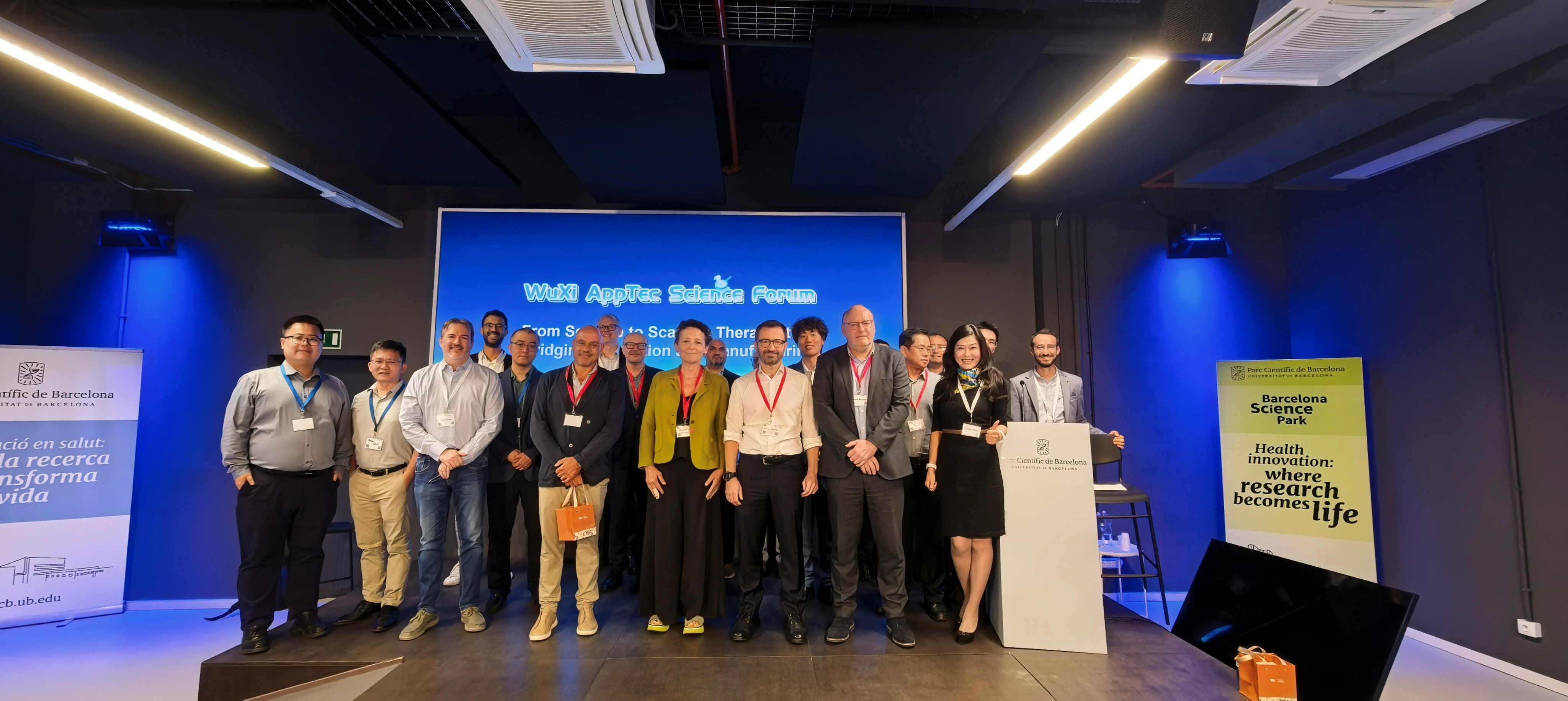
Over the past decade, Barcelona has moved firmly onto Europe's biotech map. The region ranked second among the European biotech hubs assessed by CPHI, and has built a growing base of life sciences companies and research institutions. It also attracted increasing amounts of international capital. More importantly, those once relatively disconnected pieces of the ecosystem are increasingly working together.
As the ecosystem evolves, the question facing Barcelona also has changed. The industry is no longer asking whether strong science can generate new biotech companies. At the WuXi AppTec Science Forum in Barcelona, investors who have watched the ecosystem develop over many years described what that next phase may require. Their discussion pointed to three priorities: designing programs around decisive evidence rather than simply generating more data, building a financing model that can support companies as they progress towards later-stage value creation, and giving emerging biotechs access to the development capabilities they need without requiring them to build everything themselves.
One of the clearest themes from the Barcelona discussion was that successful translation begins long before a company reaches the clinic—or even before a company is formed.
Academic research typically starts by asking scientific questions. Drug development requires an additional question: What evidence is needed to make the next investment decision?
Panelists described the importance of establishing a development roadmap early, identifying the milestones that could meaningfully increase a project's value, and then designing what one speaker called “killer experiments” around those milestones.
The distinction matters. For an emerging biotech with limited capital and time, the experiments need to test the assumptions on which the program depends: whether the underlying biology is reproducible, whether therapeutic intervention produces the intended effect, whether the candidate can demonstrate meaningful differentiation, and ultimately whether the evidence justifies committing additional resources.
That also means defining success before the experiment begins. During the discussion, one investor described how specialized assays or proof-of-concept studies could be designed with input from the scientific originator, experienced development partners and, where appropriate, pharmaceutical companies. Independent validation can add further confidence. But the critical step is agreeing in advance on the result that would constitute a meaningful positive outcome.
This approach has consequences on both sides of the decision. Strong positive data can provide the evidence needed to unlock the next stage of development and financing. Negative data should be equally impactful in driving decision making to de-prioritize projects. One panelist emphasized that capital efficiency requires the discipline to stop supporting programs when the evidence no longer justifies continued investment, rather than repeatedly extending timelines in the hope that results will eventually improve.
That may be one of the most important changes required as an ecosystem matures. It is the ability to evaluate more opportunities rigorously, identify the strongest ones earlier, stop weaker ones when necessary, and concentrate resources behind programs that continue to earn their way forward.
Barcelona's financing environment has changed significantly alongside its scientific ecosystem. The panelists recalled a time when specialized venture capital was scarce and international investors rarely looked to Barcelona for biotech opportunities. Today, there are more local funds, more international participation and greater confidence in companies originating from the region. One investor noted that a €50 million financing round that once would have appeared extraordinary no longer looks exceptional.
But it also reveals the next financing challenge.
Drug development becomes progressively more capital intensive as programs advance. Early scientific validation and company creation may require relatively modest amounts of capital compared with the resources needed for toxicology, CMC, manufacturing and clinical development. As companies mature, they therefore need investors capable of committing larger amounts of capital over longer periods.
The panelists framed this as a challenge extending beyond Barcelona to Europe more broadly. Two potential components are greater access to capital markets and a deeper pool of patient investors willing to give promising companies the time and resources required to mature.
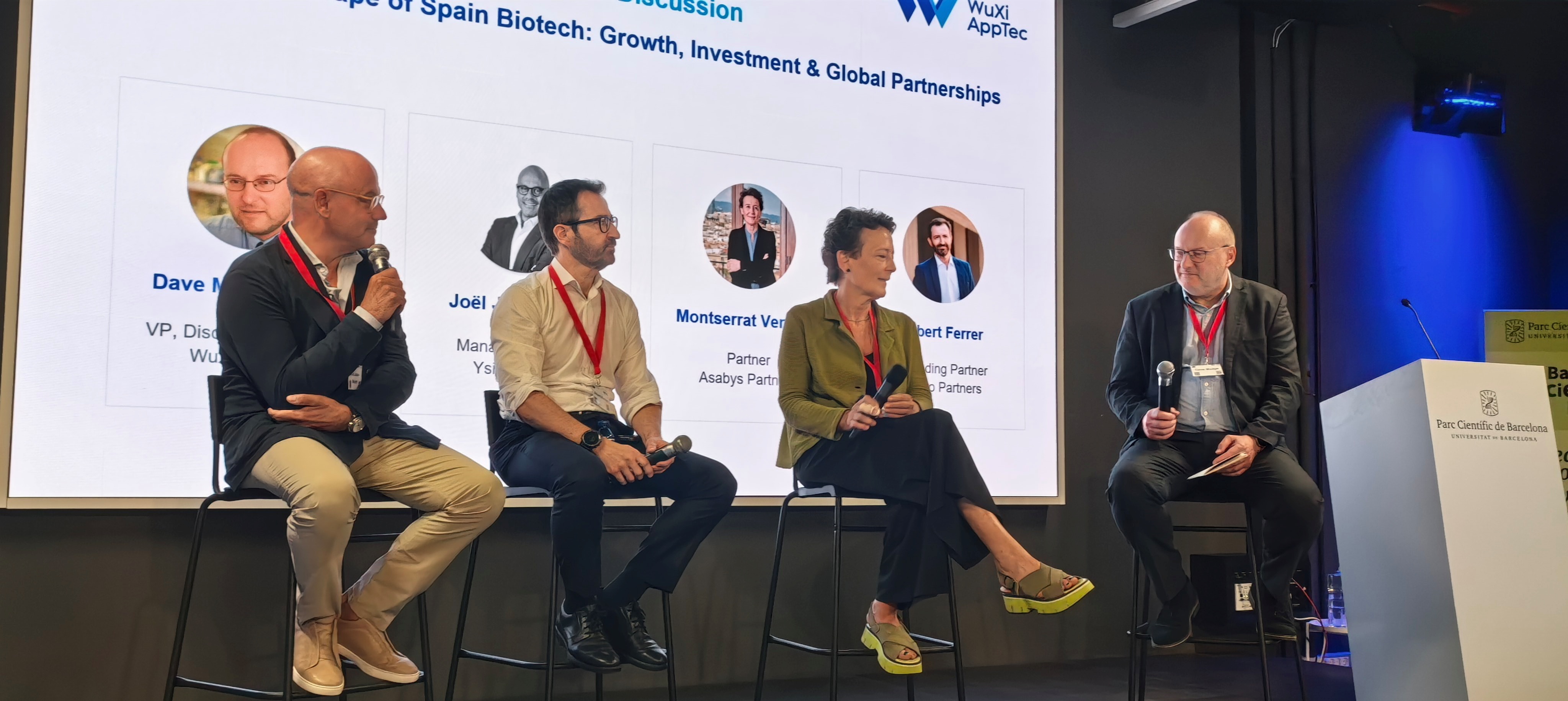
Panel discussion at the WuXi AppTec Science Forum in Barcelona
For investors themselves, however, access to capital is tied to another requirement: returns. Venture funds compete for capital just as biotech companies do, which makes disciplined capital allocation throughout development particularly important.
That creates a reinforcing relationship between science and financing.
A financing round can provide the resources needed to reach the next development milestone. Reaching that milestone can reduce an important source of uncertainty and strengthen the case for another round of investment. Programs therefore need to be designed around a sequence of meaningful scientific and development inflection points rather than treating financing and R&D as separate processes.
As the programs become larger, longer, and more expensive, the panelist believed that the next test for Barcelona ecosystem is whether it can sustain the momentum.
Capital is only one requirement as programs move toward the clinic. An academic spinout may begin with exceptional knowledge of a target, disease mechanism or therapeutic technology. As the program advances, however, the capabilities required expand rapidly—from pharmacology and toxicology to CMC, formulation, analytical development, regulatory strategy and manufacturing.
Few emerging biotechs can, or should, build all of those capabilities internally. That leads to another important idea raised during the Barcelona discussion: a mature biotech ecosystem does not necessarily need to own every piece of drug-development infrastructure. It needs reliable access to it.
Panelists pointed to manufacturing and specialized development technologies as areas where working with external partners can save significant time compared with building new infrastructure internally. The same principle can extend across development: companies can retain their focus on the science and assets that differentiate them while accessing specialized expertise and infrastructure as program needs evolve.
This changes how ecosystem scale can be understood. Barcelona does not need to reproduce every capability found in the world's largest biotech clusters within the region itself. What matters is whether a Barcelona biotech can efficiently connect strong local science with the expertise, technologies and infrastructure required to move a molecule through each successive stage of development.
For companies operating with small teams and limited resources, integrated development partners can help connect discovery, preclinical development, CMC and manufacturing as requirements change, while allowing companies to access capabilities when they are needed rather than building them years in advance.
The result is a more networked model of biotech development: science and entrepreneurship can remain rooted in Barcelona while development capabilities are accessed globally.
Barcelona's biotech ecosystem can already point to meaningful indicators of progress: more companies, more specialized investors, larger financing rounds and greater participation from international capital.
But one of the investors on the Barcelona panel proposed a more demanding measure. Rather than looking primarily at how much capital has entered the ecosystem, he suggested paying attention to how many molecules actually reach human studies. Reaching that point means several things have already gone right: investors have continued financing the program, key development risks have been addressed, and the company has assembled the capabilities required to move from promising science toward a potential medicine.
That may be the most useful way to think about Barcelona's next chapter.