


- About WXPress
- WXPress is your window into the world of WuXi AppTec and our global partners.
- Sitemap
- Events
- Contact
- Please reach out with any business inquires.
- communications@wuxiapptec.com
© 2026 WuXi AppTec. All Rights Reserved.Privacy Policy
In 2009, when IMPACT Therapeutics entered the field of synthetic lethality, no PARP inhibitor had yet been approved anywhere in the world. The scientific and commercial outlook remained uncertain at that time, and the risks were considerable. Yet, IMPACT chose to pursue that opportunity with more than a decade of persistent effort.
In January 2025, senaparib—IMPACT’s internally developed PARP inhibitor—was approved in China. Later that year, it was included in China’s National Reimbursement Drug List (NRDL). Separately, the company submitted a marketing authorization application (MAA) to the European Medicines Agency (EMA). On May 13, 2026, IMPACT was listed on the Main Board of the Hong Kong Stock Exchange. At the end of July, IMPACT entered into an exclusive partnership with Pharmanovia, a global specialty pharmaceutical company,to grant Pharmanovia the exclusive rights to manufacture, develop and commercialise senaparib in Europe, Middle East and North Africa, Australia and New Zealand for maintenance monotherapy for advanced epithelial high-grade ovarian, fallopian tube and primary peritoneal cancer. The partnership represents an important step in bringing senaparib to global patients.
From 2009 to 2026, the company progressed from early-stage research and development to commercialization, and ultimately, the public markets.
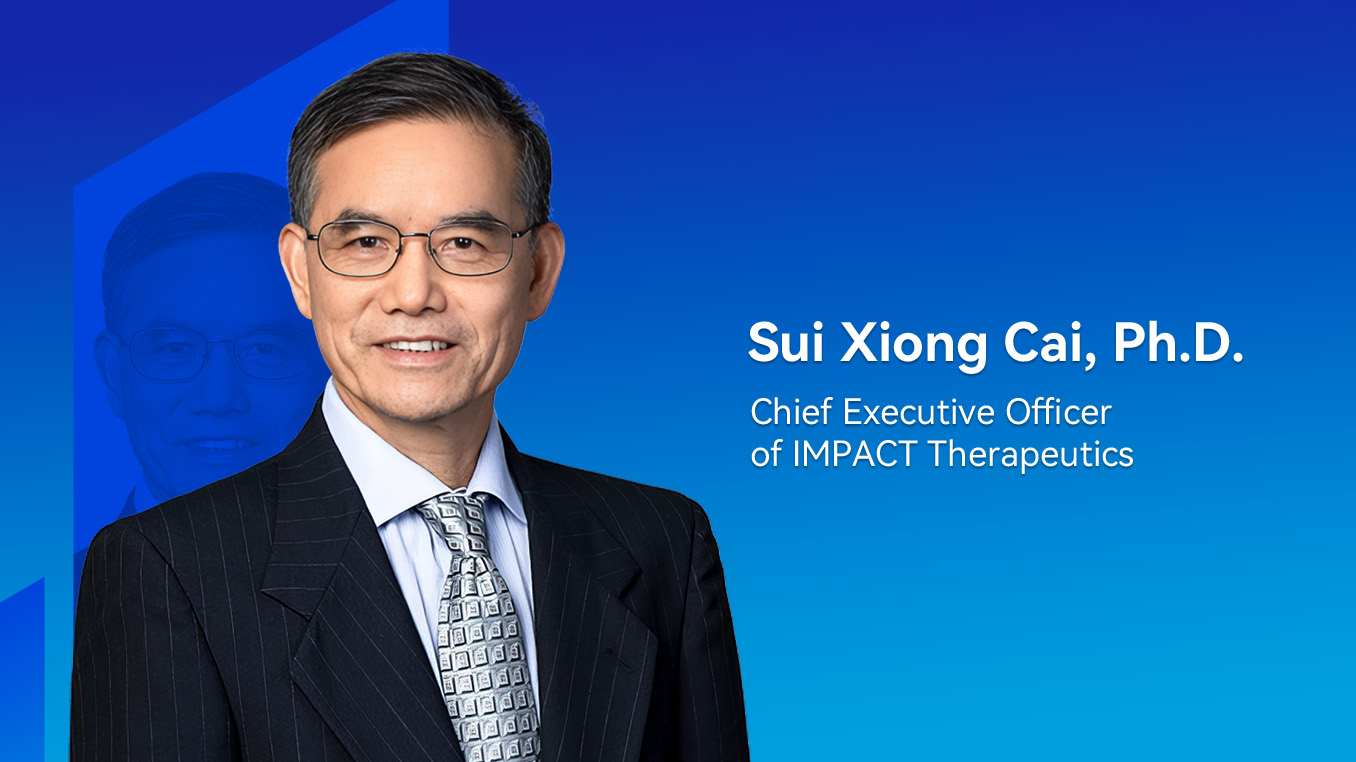
“Listing is only the beginning of a new chapter for the company. Our ultimate goal is to bring more differentiated, innovative, and effective therapies to patients with solid tumors worldwide,” Dr. Sui Xiong Cai, Chief Executive Officer of IMPACT Therapeutics, said in a recent interview with WuXi AppTec.
Dr. Cai joined IMPACT at its founding and has witnessed the company’s journey from its earliest days.
In his view, the company’s ability to sustain itself through a long development cycle reflects both the team’s conviction in its scientific strategy and the support of a broader collaborative ecosystem. During the interview, he highlighted the long-standing trust of investors, the continuous support of CRDMO partner WuXi AppTec, and the close collaboration with numerous partners.
“On the long road of innovative drug development, no company can succeed alone,” Dr. Cai said. “Open, mutually beneficial collaboration across the ecosystem is not simply a nice-to-have—it is essential to turning innovative science into new medicines.”
After 17 years of sustained effort, IMPACT has navigated the full drug development journey, from laboratory research to delivering a therapy to patients. Each milestone has also strengthened the company’s confidence and capabilities as it enters its next phase of innovation.
The following conversation with Dr. Sui Xiong Cai has been edited for clarity and length.
Dr. Sui Xiong Cai: IMPACT Therapeutics listed on the Main Board of the Hong Kong Stock Exchange on May 13, 2026. It was a significant milestone for both the company and the broader industry. I feel privileged to have witnessed IMPACT’s entire 17-year journey since its founding in 2009—a journey defined by perseverance and long-term commitment. When we set our company’s overall strategy as “rooted in China, with a global vision,” aiming to develop best-in-class (BIC) novel drugs, and anchored our focus on the synthetic lethality approach, no PARP inhibitor had yet been approved anywhere in the world. Both the clinical development pathway and the commercial potential of the field remained highly uncertain. After more than a decade of sustained effort, we successfully developed and launched our lead product, senaparib. Building on that foundation, we have established a broader and more systematic pipeline focused on synthetic lethality.
But we have not stopped there. To address a wider range of therapeutic needs, we have continued to expand the boundaries of our innovation by establishing two proprietary technology platforms: a dual-payload antibody-drug conjugate (ADC) platform and a proteolysis-targeting chimera platform.
The listing marks the beginning of IMPACT’s next stage of growth. Our ultimate goal remains unchanged: to bring more differentiated, innovative, and effective therapies to patients with solid tumors worldwide.
Dr. Sui Xiong Cai: Senaparib is IMPACT’s internally discovered and developed PARP inhibitor. We identified the candidate in 2012, secured approval in China in 2025, and saw it included in the NRDL later that year, making it a more accessible treatment option for patients with ovarian cancer. Also in 2025, the EMA accepted the drug’s marketing authorization application for review. Our recent partnership with Pharmanovia marks a significant step for IMPACT to bring its validated treatment options to more patients worldwide. We expect senaparib to reach target patients in the collaboration territories more quickly following approval, helping to deliver high-quality treatment options to address unmet medical needs.
Looking back, we faced two major challenges.
The first was balancing strategic focus with limited resources. At that time, the outlook for PARP inhibitors remained uncertain, while IMPACT had a very small team and highly constrained R&D resources. Our ability to grow from a single laboratory into a company with a commercial product and a public listing owes a great deal to our core R&D team, who have remained on the front lines throughout the journey, our commitment to developing new drugs against the best-in-class standard, and the long-term trust and support of our investors. What sustained us through those years was the conviction that we had to remain committed to what we believed was scientifically sound, even amid considerable uncertainty.
The second challenge involved several critical decisions about the clinical development strategy. In 2019, based on our deep understanding of the synthetic lethality mechanism and strong Phase 1 data, we decided to move directly into the Phase 3 FLAMES study without conducting a separate Phase 2 trial. That decision shortened the development timeline by more than two years. More importantly, we chose a more challenging path that we believed could deliver greater clinical value: evaluating senaparib as a first-line maintenance therapy in an all-comer population, rather than limiting enrollment to patients with BRCA or HRR mutations. Ultimately, supported by a comprehensive body of clinical evidence, we secured approval for first-line maintenance treatment across the broader ovarian cancer population.

This journey reinforced our belief that sound scientific judgment and strategic trade-offs are often more important than simply increasing investment. When resources are limited, the ability to interpret clinical data accurately and act decisively can be critical to overcoming development bottlenecks. It also confirmed that drug development is never a solo endeavor. Few companies can independently manage every stage of the process, and industry collaboration can play an important role in reducing risk and accelerating progress. Across the research, development, and manufacturing of senaparib, WuXi AppTec’s platform capabilities helped us shorten timelines and reduce the cost of trial and error. In many ways, that experience illustrates how effective partnerships can accelerate innovation.
Dr. Sui Xiong Cai: Our pipeline strategy is built around three priorities: advancing successive generations of products, developing complementary combinations, and exploring emerging mechanisms.
First, we are continuing to advance our PARP inhibitor portfolio while exploring new combination strategies. Senaparib, a PARP1/2 inhibitor, is currently the commercial foundation of our portfolio and has established a strong clinical and market base for the development of follow-on products. The potential value of a next-generation PARP1-selective inhibitor lies in reducing hematological toxicity and widening the therapeutic window. This could enable more flexible combinations with ADCs, chemotherapy, and other treatment modalities. It could also support expansion into larger indications, including breast and prostate cancers, as well as tumor types that may be more difficult to address with PARP1/2 inhibitors.
At the 2026 ASCO Annual Meeting, we presented Phase 1/2 clinical data evaluating the PARP1 inhibitor IMP1734 in combination with weekly paclitaxel in patients with advanced solid tumors. The combination demonstrated a manageable safety profile, with hematologic toxicity comparable to historical data for weekly paclitaxel alone. These findings support the potential for a PARP1-selective inhibitor to be safely combined with cytotoxic chemotherapy. Encouraging antitumor activity was also observed in patients who had previously received taxane-based treatment.
We are also advancing clinical development of IMP1707, a brain-penetrant PARP1 inhibitor designed to address more challenging settings, including brain metastases and primary brain tumors.
Second, we are pursuing complementary targets that could extend the clinical utility and lifecycle of our core products. ATR is an important next-generation target in synthetic lethality, and we view it as a potentially valuable combination partner for senaparib, particularly in patients who develop resistance to PARP inhibitors. We have initiated clinical trials evaluating the combination of a PARP inhibitor and an ATR inhibitor. The goal is to deliver a “double hit” to the DNA damage response pathway, address resistance at the mechanistic level, and potentially broaden the clinical use of senaparib.
Third, we are continuing to explore novel mechanisms and develop next-generation therapeutic approaches. Our research includes emerging targets such as PKMYT1/WEE1, DHX9, ATM, USP1, and CHK1/2. At the same time, we are extending our synthetic lethality strategy into emerging modalities, including next-generation ADCs and targeted protein degraders. Building on industry trends and our core scientific capabilities, IMPACT has established two proprietary technology platforms: a dual-payload ADC platform and a targeted protein degradation platform. Both platforms currently include preclinical-stage candidates and provide a foundation for differentiated innovation in the future.
Dr. Sui Xiong Cai: The next one to two years will be a critical period for advancing our pipeline and global development strategy.
On the commercial front, we expect a decision on the European marketing authorization application for senaparib this year. A potential approval would mark an important step in the company’s international commercialization journey.
Across the pipeline, several of our synthetic lethality programs are expected to generate clinical data in the second half of this year and over the following one to two years. These readouts could support future regulatory filings and the expansion of our products into additional indications.
At the same time, we expect our dual-payload ADC and targeted protein degradation platforms to complete key preclinical validation work and begin advancing candidates toward IND submissions. This would move IMPACT into a new phase of innovation built around multiple complementary technology platforms.
We also plan to increase our investment in global clinical development and actively pursue international licensing partnerships. Through an open and collaborative approach, we aim to accelerate development and bring our therapies to patients in more markets.
Dr. Sui Xiong Cai: No company can independently manage every stage of the long and complex drug development process. From target discovery and molecule development to manufacturing and regulatory approval, progress depends on close coordination across dozens of specialized disciplines and multiple functions. A gap at any point can delay the entire program. That is why open, mutually beneficial collaboration across the broader ecosystem is more than a catchphrase. It is essential to successfully translate innovative science into new medicines.
Take the partnership between IMPACT and WuXi AppTec as an example. The collaboration began as early as 2012. What initially stood out to our team was the combination of a globally aligned quality system and the ability to respond quickly. Those capabilities were central to our decision to select WuXi AppTec as a long-term partner.
More specifically, WuXi AppTec offers an integrated small-molecule CRDMO platform, laboratories that operate in accordance with regulatory standards in China, the United States, and Europe, and experienced scientific teams with strong technical expertise. The company also has a solid reputation for collaboration across the industry and well-established intellectual property protection mechanisms. These strengths are closely aligned with the needs of IMPACT’s long-term pipeline strategy.

Dr. Sui Xiong Cai: Our partnership with WuXi STA began during the early stages of senaparib’s development. The program was driven by an important goal: to provide patients with ovarian cancer with better treatment options. We therefore needed a partner with both deep experience in innovative drug development and the ability to execute efficiently. The WuXi STA team consistently delivered on both quality and timelines. They supported senaparib throughout its journey—from laboratory research and clinical supply to commercialization and, ultimately, reaching patients. That gave us considerable confidence and peace of mind.
During senaparib’s CMC development, for example, the WuXi STA team provided a broad range of services, including API process development and scale-up, preformulation development, and formulation development. Together, these efforts resulted in a robust, stable, and high-quality API and formulation process. This early work laid a strong foundation for subsequent clinical manufacturing, NDA registration, and commercialization.
Looking back on our years of collaboration, one moment stands out in particular. Senaparib received marketing approval from China’s National Medical Products Administration (NMPA) in January 2025, and the first prescription was filled just 72 hours later. The transition from regulatory approval to patient access was nearly seamless.
For an innovative drug, preparations for an NDA submission and commercial launch often needs to proceed in parallel, creating an extremely demanding timeline. The IMPACT and WuXi STA teams worked under significant pressure to advance both workstreams simultaneously. WuXi STA supported us in completing the NDA submission package on schedule and, just as importantly, helped ensure that commercial launch preparations were in place within the very short window following approval. We are grateful to the team for the professionalism and commitment they demonstrated throughout the process.
Of course, this is only the beginning. Senaparib is expected to receive a regulatory decision in Europe in the second half of 2026. We look forward to continuing our close partnership with WuXi STA as we work to bring senaparib to international markets, reach more patients, and advance the next phase of our collaboration.
Dr. Sui Xiong Cai: The main challenge in synthetic lethality today is the limited number of clinically validated targets. The key bottlenecks are gaining a deeper understanding of the underlying biology and identifying new targets. These are also two of the areas on which IMPACT is currently most focused. As new technologies continue to advance, we expect target discovery to become more efficient, potentially opening the door to further breakthroughs in disease treatment.
Looking ahead five to ten years, I believe synthetic lethality will enter a new phase characterized by multi-target strategies, combination therapies, and the synergistic integration of emerging technologies. From an indication perspective, the field could expand across a broader range of solid tumors with DNA damage response deficiencies. Molecules with strong brain penetration may also play an important role in the treatment of primary brain tumors and brain metastases. From a therapeutic strategy perspective, synthetic lethality could be combined with a range of modalities, including chemotherapy, ADCs, and radiopharmaceutical drug conjugates (RDCs). These combinations may generate meaningful synergistic effects and provide patients with more diverse and personalized treatment options. The field is also likely to move beyond traditional small molecules and expand into newer therapeutic approaches, including targeted protein degradation and dual-payload ADCs.
IMPACT Therapeutics reflects this broader evolution. We began with the development and commercialization of senaparib, then expanded more deeply into programs targeting PARP1 and ATR, and are now exploring dual-payload ADC and targeted protein degradation platforms. Throughout this progression, we have remained firmly focused on synthetic lethality while continuing to build a differentiated pipeline.
We believe that staying grounded in science, embracing open collaboration, and maintaining a long-term perspective are essential to translating innovation into meaningful benefits for patients. That remains at the core of IMPACT’s mission.