

- About WXPress
- WXPress is your window into the world of WuXi AppTec and our global partners.
- Sitemap
- Events
- Contact
- Please reach out with any business inquires.
- communications@wuxiapptec.com
© 2026 WuXi AppTec. All Rights Reserved.Privacy Policy
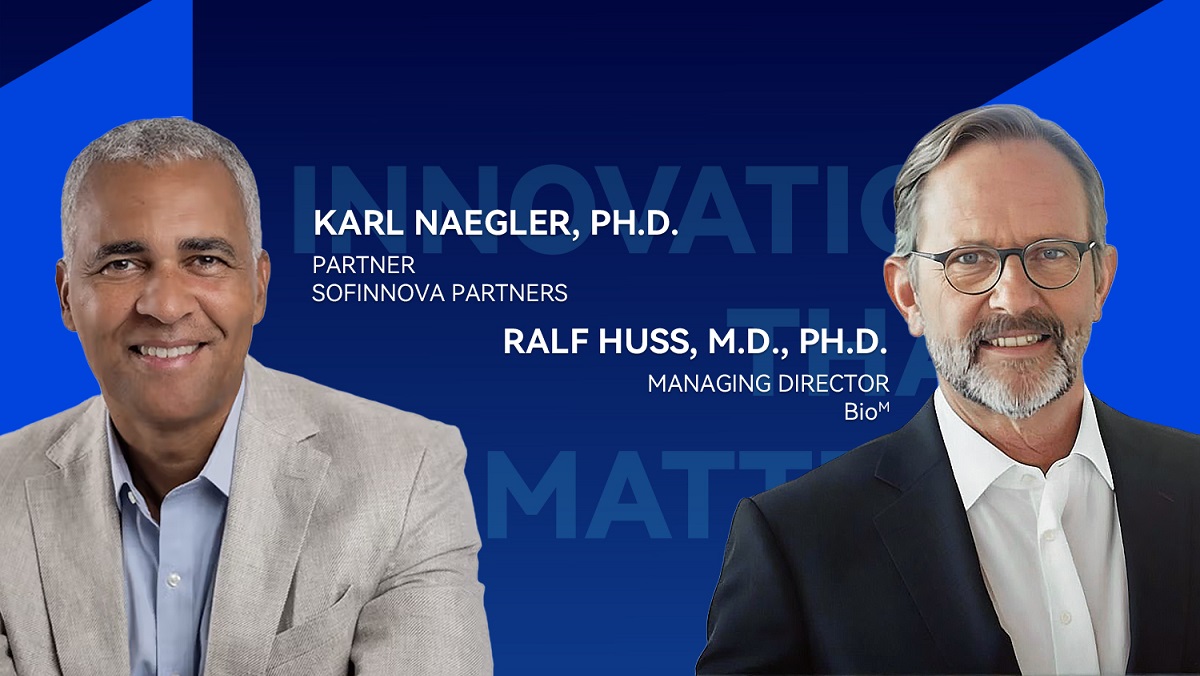
As Europe’s biotech landscape continues to evolve, Munich is rapidly emerging as a key hub for healthcare innovation. Home to more than 520 biotechnology and pharmaceutical companies, along with a vibrant network of service providers, the Munich biotech cluster is recognized for advancing cutting-edge therapeutics and diagnostics. At the heart of this growth is BioM, the region’s dedicated biotechnology network organization, and investors such as Sofinnova Partners, a leading European venture capital firm who built multiple Munich-based biotech companies. WuXi AppTec is also honored to support Munich’s growing biotech community through its Munich site and global network of CRDMO facilities. With Sofinnova’s recent announcement of having raised €1.2 billion to fuel the next wave of life sciences innovation, and ahead of BioM’s annual BayOConnect conference this July, we are pleased to share an exclusive conversation between two industry leaders: Dr. Karl Naegler, partner at Sofinnova, and Dr. Ralf Huss, Managing Director of BioM—both of whom have played pivotal roles in shaping and scaling the region’s biotech success.
Germany has long been a global leader in science and innovation, consistently ranking among the top countries for patent applications and research output. Within this landscape, Munich stands out for its concentration of world-class institutions such as Ludwig Maximilian University, the Technical University of Munich, and the Max Planck Institutes, all of which contribute to a highly skilled, international talent pool.
To stay globally impactful, however, science alone isn’t enough. The next step is integration and activation—bringing these strengths together into a cohesive innovation cluster. That’s where BioM comes in.
“BioM was created to turn groundbreaking academic ideas into real-world solutions,” said Dr. Ralf Huss, Managing Director of BioM.
Since BioM’s inception, the region has produced a number of “lighthouse” companies—successful local startups that evolved into global biotech leaders. These include ITM, a key manufacturer of lutetium used in one of the best-selling radioligand therapies; Micromet, which developed the first approved T-cell engager; MorphoSys, instrumental in IL-23-targeted treatments; Medigene, an early immuno-oncology pioneer; and U3 Pharma, whose first ADC product may soon reach the market.
Dr. Karl Naegler, who focuses on opportunities throughout Europe and has extensive experience in Germany noted: “We’ve made several investments in the region, and have seen encouraging progress with strong potential for future standout successes.”
These lighthouse companies are more than success stories; they are proof points that world-class biotech innovation can start, scale, and thrive in Munich—and they serve as powerful inspiration for the next wave of entrepreneurs.
Importantly, the momentum isn’t slowing down. A new generation of promising companies is emerging—Tubulis, Invitris, and others—bringing fresh innovation and energy to Munich’s biotech landscape.
Yet the path hasn’t been without obstacles. For many years, Germany’s biotech sector has faced a translational funding gap. Despite the country’s strong performance in key scientific indicators, venture capital (VC) funding has lagged far behind. In 2023, German biopharma startups attracted around €500 million in VC investment. While this may seem substantial, when adjusted for GDP, Germany’s funding should be closer to €2 billion.
“We’re still operating at roughly a quarter of the level we should be,” noted Dr. Naegler.
The tide, however, is turning. The number reached €1 billion in 2024—double the amount recorded in 2023. This marks a clear signal of growing confidence in the sector. According to BIO Deutschland, some of the reasons include supportive policy frameworks and global investor interest in biotech platforms.
“Remarkably, about 80% of that investment is flowing into Munich region. That’s a clear sign of momentum,” said Dr. Huss.
Still, both leaders agree: capital alone isn’t the answer.
“It’s not just about more capital. It’s about building the right environment—with experienced teams, strong leadership, and structured support from organizations like BioM. All of these elements must come together,” added Dr. Naegler.
Another area where Germany has made real progress in translation is technology transfer. Once a major bottleneck, the spinout and licensing process involving university IP has become significantly more efficient.
“We’re already miles ahead of where we were just a few years ago,” said Dr. Naegler, referencing a recent deal completed within just a few months and on favorable terms.
Despite these advancements, structural barriers remain. The GmbH corporate structure can create friction for international investors due to legal complexities and minority shareholder rights. And the legal framwork isn’t the only drawback.
According to Dr. Huss, the lack of smaller, earlier-stage IPOs is also limiting the ecosystem’s ability to mature.
“Of course, we want our companies to grow globally,” he said, “but I’d love to see them retain a strong presence here in Munich region—continuing to drive innovation from the region while building international partnerships.”
Too often, promising biotechs are acquired early—before they can grow into the anchor companies that attract talent, inspire spinoffs, and drive sustained innovation.
“If we consistently sell our companies after just a few years,” Dr. Naegler emphasized, “we’ll never develop the kind of sustainable ecosystem you see in places like Boston.”
Boston’s cluster, he noted, was built on foundational companies like e.g. Millennium Pharmaceuticals, which not only developed successful therapies but became a launchpad for future entrepreneurs.
“To build that kind of ecosystem in Germany, companies must be designed differently from day one—with a broader pipeline, a long-term strategic vision, and the ambition to become enduring players, not just quick exits.”
To reach that next level, both leaders agree that Germany must do more to celebrate its successes and foster collaboration across regions. These “lighthouse” companies not only demonstrate local excellence but also serve as beacons to inspire the next generation and attract global capital.
“This is a learning curve—for investors, for tech transfer offices, for corporates, and for founders,” said Dr. Huss. “But if we maintain the bridge between local roots and global reach, we can build something truly sustainable.”
This naturally leads to the next phase of evolution: building next-generation clusters.
Munich already offers a strong foundation, with world-class science, a skilled talent pool, and the presence of global corporations like Siemens, Allianz, and BMW. Their long-standing international footprint has helped make the city both welcoming and livable for global talent.
Yet beyond its local strengths, Munich’s future depends on how well it can integrate into a broader national and European innovation framework. Germany’s life sciences sector remains fragmented, with clusters in cities like Berlin, Heidelberg, and Munich often operating in isolation.
“We don’t need more clusters—we need stronger ones, and better collaboration between them,” said Dr. Naegler.
The spirit of cross-cluster integration is now evolving into a network-based innovation model, one that’s defined less by geography and more by interdisciplinary connectivity.
According to Dr. Huss, traditional boundaries around disease areas or institutional affiliations are dissolving. Munich is becoming a testbed for something bigger: an ecosystem where biotech, AI, and digital health converge.
“The big tech players—Google, IBM, AWS—are here now. They’re bringing entirely new ways of thinking,” said Dr. Huss. “This opens the door to the next generation of clusters—networks of excellence that cut across disciplines.”
At BIOM, this vision is already taking shape through initiatives like AI for Biotech, which aims to link the tech sector’s solutions with the life science community’s problems. “Tech companies have the solutions. We have the problems. It’s time to bring those worlds together.”
From “bench to bedside” to data-driven networks of excellence, Munich is covering all the key ingredients of a modern biotech ecosystem—world-class science, clinical excellence, global investment, and now the rise of AI.
“All the ingredients, the science, the clinical research, now also AI, we have them,” Dr. Naegler concluded. “We are on an upward trend, and we have ways to make it faster. I'm super excited to keep pushing in that direction.
“We’re finally leveraging the full power of our ecosystem—our history, infrastructure, talent, and experienced entrepreneurs,” said Dr. Huss. “Now it’s about using the momentum we have to push even harder, accelerate our progress, and move up the learning curve faster than ever before.”