

- About WXPress
- WXPress is your window into the world of WuXi AppTec and our global partners.
- Sitemap
- Events
- Contact
- Please reach out with any business inquires.
- communications@wuxiapptec.com
© 2026 WuXi AppTec. All Rights Reserved.Privacy Policy
As the fight against Alzheimer’s disease enters a new era, the Alzheimer’s Drug Discovery Foundation (ADDF) remains at the forefront, accelerating the development of diagnostics and therapies with a clear focus on translational impact. Through its unique venture philanthropy model, the ADDF has funded over 150 biotech companies and continues to play a pivotal role in advancing early-stage drug development. One of its most ambitious efforts is the Diagnostics Accelerator (DxA)—a $100 million global initiative aimed at developing affordable, accessible biomarkers and diagnostic tools for the early detection of Alzheimer’s and related dementias. As the FDA authorized the first blood test to aid in the diagnosis of Alzheimer’s this May, we had a conversation with Dr. Howard Fillit, ADDF Co-Founder and Chief Science Officer, on the field’s evolution and outlines the critical strategies needed to halve the burden of Alzheimer’s in the years ahead.
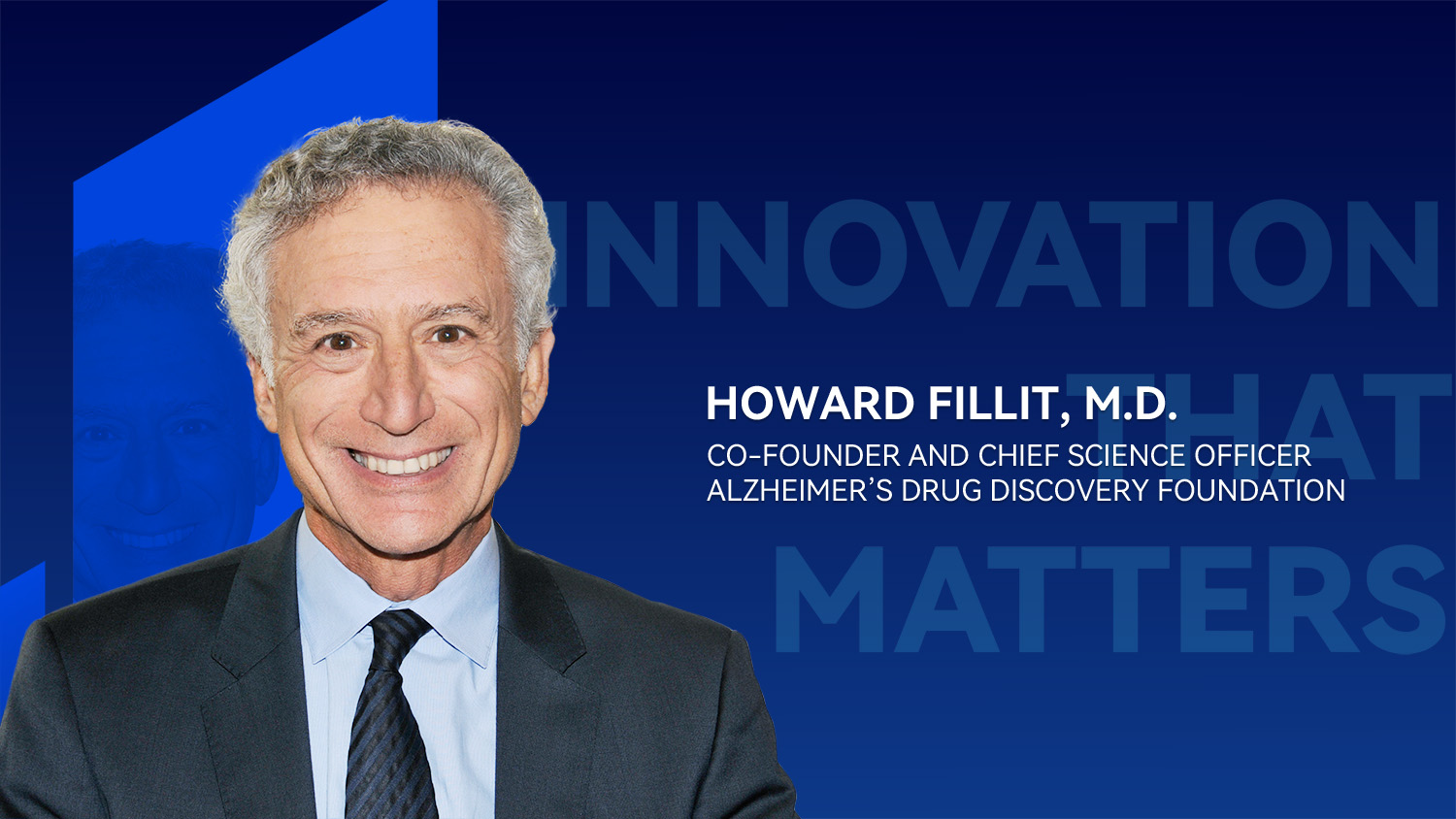
Thanks for joining us, Howard. You’ve seen the Alzheimer’s field evolve—from decades of frustration to a moment of renewed optimism. What do you think has fundamentally shifted in our approach to the disease?
Howard Fillit: That’s a great question. What we’re seeing now is the usual course of drug development—starting with foundational science and ultimately translating into clinical impact. In Alzheimer’s, that arc began more than a century ago, when Alois Alzheimer first described plaques and tangles during the autopsy of a patient with presenile dementia in 1906. But it wasn’t until the 1970s that Alzheimer’s was even recognized as the most common cause of dementia in old age, and meaningful research didn’t begin until the 1980s. So, we started from scratch—literally zero. That’s a key reason for the frustration.
It wasn’t until 1984 that beta-amyloid was identified as a core component of the plaques, which gave us our first molecular target and catalyzed a massive research effort. From around 1985 onward, we’ve had an intense, nearly singular focus on amyloid, with billions of dollars invested in understanding it, detecting it, and ultimately targeting it.
For the first time in nearly two decades, we have disease-modifying therapies approved by the FDA— Leqembi and Kisunla — marking a historic breakthrough in Alzheimer’s treatment. These advances are possible because of remarkable progress in biomarkers and diagnostic tools. It's really a revolution. So, what’s fundamentally changed? We’ve finally connected the dots between human pathology, target engagement, diagnostics, and clinical intervention.
At the ADDF, how do you uniquely reduce risk and catalyze breakthroughs? And what lessons can others in biotech or pharma take from your approach?
Howard Fillit: We built the ADDF with a single mission: to accelerate drug development for Alzheimer’s. That included three pillars—acceleration of the development of biomarkers, developing and investing in early-stage treatments, and prevention. As a venture philanthropy, we don’t fund basic research, we don’t do advocacy—we put all our resources into translational science. That's one thing that makes our model different from many other foundations.
We’ve made over 150 investments in early-stage biotech companies, using convertible notes and warrants and also use VC-style Preferred Equity. The difference is that our funds are tied strictly to a specific scientific project, not general expenses. Companies have to come to us with a clear work plan, a detailed budget, and defined milestones.
We also bring real expertise. We have more than 10 neuroscientists on staff—most with deep industry expertise. When we fund a company, we don’t just evaluate their proposal—we help improve it. A lot of early-stage Alzheimer’s startups come from academia and don’t have experience navigating the nuances of CNS drug development, either clinically or preclinically. For example, they don’t always know which animal models are the best ones to employ in that particular drug development program. Our team helps guide them—whether it’s choosing the right animal model or thinking through regulatory strategy—so the programs are in the best position to move forward.
Another key is that, as a venture philanthropy, we're in it for the long run. Whereas a venture capital fund might be limited to 10 years, we can stay in programs much longer. There is one biotech that we've been working with for almost 20 years. And we've helped them to get to the point where they're trying to raise funding now for a phase III program. And we're very excited about that particular company.
We’ve talked about the historically high failure rate in CNS drug development. From your experience, what are some of the biggest misconceptions that still haunt the field—and how can we overcome them to build more confidence and investment?
Howard Fillit: One big issue has been the lack of history—no decades of trial infrastructure like we’ve had in oncology. In the 1980s through the 2000s, we learned everything from scratch about Alzheimer’s.
An example came around 2010, when companies were testing monoclonal antibodies against beta-amyloid. In one major Phase III trial, a company used a PET tracer for beta-amyloid in the brain and did a sub-study. What they found was striking: about 30% of trial participants had negative amyloid scans. So, they didn't have amyloids in the brain, which was the target of the drug they were testing. And more than likely, they didn't have Alzheimer's disease, even though they had dementia and were enrolled by experts in the field.
That was a major wake-up call. It showed that subjective diagnoses weren’t good enough, and it highlighted a key reason why trials were failing. The solution came with biomarker-based enrollment, so the criteria for clinical trials became more objective. At the ADDF, we helped support the early development of amyloid PET imaging, and once that was implemented, the rigor and the efficiency of clinical trials improved dramatically.
Today, we’re seeing the next leap forward with blood-based biomarkers, which will make trials even more precise and scalable. Combined with advances in cognitive assessments and tau imaging, we now know how to run rigorous, robust, and efficient Alzheimer’s trials. Whether a drug succeeds or not, at least we know the trial was done right—and that’s a huge shift from where we were even a decade ago.
With the advances in blood-based biomarkers and neuroimaging, how close are we to achieving real-time precision medicine in Alzheimer’s?
Howard Fillit: That’s a great question. I think we’re already at a major inflection point. For the first time, we now have blood tests for Alzheimer’s disease—and several are on the market. They use different biomarkers and technologies. One of the most promising is p-tau217, which correlates strongly with beta-amyloid plaques. Others include the Aβ42/40 ratio, or the percentage of phosphorylated vs. unphosphorylated tau. So, there are different methods, and new ones are emerging.
Progress in Alzheimer’s starts with innovation and is made possible through collaboration. With the Diagnostics Accelerator (DxA), a $100 million global biomarker initiative—funded by leading philanthropists like Leonard Lauder, Bill Gates, Jeff Bezos and more—the DxA has supported more than 70 different biomarker programs worldwide. These include not only fluid-based markers but also digital biomarkers to improve and simplify cognitive assessment that pave the way for earlier intervention, more inclusive clinical trials, and a future of personalized, preventive Alzheimer’s care. We're entering a transformative era for Alzheimer’s diagnostic, which is an exciting milestone.
Prevention is one of the three pillars of the ADDF. In terms of prevention of Alzheimer’s, which direction do you find most promising?
Howard Fillit: One of the most exciting efforts is the landmark FINGER trial—the first randomized clinical trial to evaluate whether Alzheimer’s can be prevented through lifestyle interventions. The findings are compelling, suggesting that up to 40% of cases may be preventable. It uses a five-pronged approach: social engagement, continued occupational activity, rigorous management of diabetes and hypertension, regular exercise, and a Mediterranean-style diet. In short, it applies proven heart disease prevention strategies to brain health, with the added emphasis on cognitive stimulation—essentially, a “use it or lose it” model for maintaining mental vitality.
Now we’re moving into what we call FINGER 2.0, an ADDF-funded study. Just as cardiology evolved from lifestyle changes alone to combining them with drugs like statins, we’re adding pharmacological interventions to the mix. In this case, we’re testing metformin—one of the leading anti-aging candidates with multiple potential neuroprotective effects. The idea is to combine lifestyle and comorbidity management with a drug to see if we can better slow progression in early-stage Alzheimer’s, including those with mild cognitive impairment. It’s a new frontier in prevention, and we're hopeful about where it’s headed.
Thank you for your insights! To conclude, if you could make one bold prediction, what do you see as the future of Alzheimer’s research and development?
Howard Fillit: I believe we’ll soon have practical tools—like blood tests—to identify patients very early in the disease. From there, we’ll move toward a precision medicine model: using biomarkers to phenotype patients based on their unique neurodegenerative pathways, grounded in the biology of aging. This will enable a personalized, multimodal approach to treatment—combining therapies tailored to each individual’s biology.
Within the next five years, I think we’ll see the first examples of combination therapies that move beyond our current standard. Instead of a 30% slowing in cognitive decline, we could be looking at 50% or even 60%. Just as important, I believe we’ll have proof of concept showing prevention is possible. And here’s the impact: if we can delay the onset or slow the progression of Alzheimer’s by just five years, we could cut the number of cases in half. That’s achievable and incredibly exciting.