


- About WXPress
- WXPress is your window into the world of WuXi AppTec and our global partners.
- Sitemap
- Events
- Contact
- Please reach out with any business inquires.
- communications@wuxiapptec.com
© 2026 WuXi AppTec. All Rights Reserved.Privacy Policy
In October 2024, Axonis Therapeutics secured a landmark $115 million Series A financing—one of the largest private biotech raises in the central nervous system (CNS) space in recent years, especially for founder-led biotech. Riding this momentum, the company is advancing its lead candidate, AXN-027, through Phase I clinical trials. A first-in-class, orally bioavailable small molecule potentiator of KCC2, AXN-027 offers a novel approach to restoring neuronal inhibition across a range of CNS disorders. In parallel, Axonis is developing two additional KCC2-targeted programs, aiming to build a robust portfolio of small molecule potentiators tailored to the needs of specific patient populations. Recently, we had a conversation with Dr. Shane Hegarty, Co-Founder and Chief Scientific Officer of Axonis, to discuss how the company is helping to usher in a new era of targeted, mechanism-driven therapies in neurology.
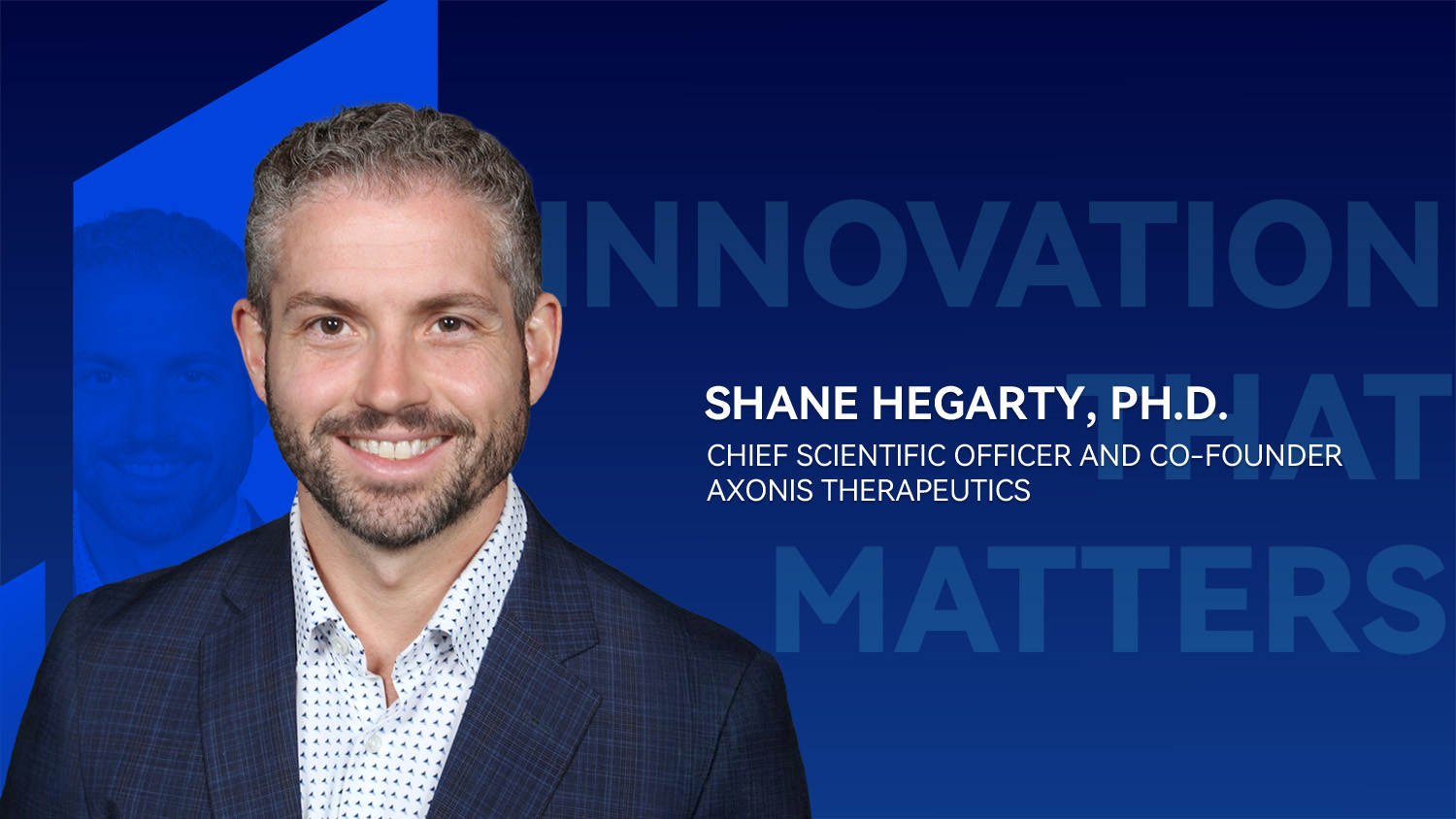
Shane, thanks for joining us—and congratulations on Axonis’s $150 million Series A. What do you think most resonated with investors, and how will this funding drive your development strategy?
Shane Hegarty: We initially identified KCC2 as a compelling clinically validated target in CNS pathologies. Our starting point wasn’t KCC2 itself—it was the broader, fundamental pathological issue of excitation-inhibition (E/I) imbalance in the CNS. Through an unbiased in vivo phenotypic screen of neuromodulatory compounds in an adult CNS E/I imbalance model, KCC2 was the only intervention that consistently delivered robust functional benefit by correcting E/I imbalance. We have now demonstrated this restoration of E/I balance via KCC2 potentiation across various models: drug-resistant epilepsy, pain, neurotrauma, neurodegenerative diseases and even behavioral models of psychiatric and neurodevelopmental conditions. Regardless of the pathology, when KCC2 function is impaired, the affected CNS circuits lose their ability to respond to inhibitory neurotransmission appropriately, thus leading to neuronal disinhibition and hyperexcitability. This mechanism is a key part of how we’re building confidence and data to support KCC2 as a first-in-class CNS therapeutic target. We believe KCC2 has the potential to fundamentally change how we treat a wide range of neurological diseases, where impaired inhibition is driving maladaptive circuit pathologies and drug resistance to therapies relying on functional inhibition.
The momentum around KCC2 as a target during our Series A fundraising was also the result of great timing, where two decades of KCC2 preclinical, genetic and clinical research has matured to derisk its translation into the clinic. But more broadly, I believe that this decade is the most promising time in history for the CNS field. We are standing on the shoulders of giants that have pushed CNS field forward over decades, such as our advisors Professors Corey Goodman, Zhigang He and Yves DeKoninck. What’s really driving this recent transformation is the growing recognition and burden of the massive unmet need in CNS. For a long time, the field relied heavily on symptomatic treatments aimed at broad populations. Now, we’re seeing a transition toward precision medicine—targeting well-defined mechanisms in genetically or pathologically stratified subgroups. This evolution opens the door to true disease-modifying therapies. Ultimately, better understanding of disease biology—combined with advances in modality and delivery—means that we can now match mechanisms to patients more effectively than ever before.
Recently there’s been a renewed interest in small molecules, including your lead compound, AXN-027. In your view, what’s driving this momentum—and how can we better harness their potential in CNS drug development?
Shane Hegarty: In my opinion, orally bioavailable small molecules remain an ideal modality, largely due to their ease of use and compatibility with patients’ lives. For example, small molecules offer flexibility—if the benefit isn’t there, patients can stop treatment. That’s a powerful advantage over more permanent therapeutic interventions.
The recent resurgence of small molecules may be fueled by a deeper understanding of novel biological targets. As we uncover more about the mechanisms driving CNS pathologies, new opportunities for targeted intervention emerge. And today’s small molecules are more versatile than ever—serving as degraders, activators, inhibitors, correctors, or potentiators. In our case, AXN-027 is an oral small molecule that potentiates KCC2. Ultimately, it’s about matching the modality to patient needs. When small molecules can achieve that, their convenience and adaptability make them highly attractive for CNS drug development.
In CNS drug development, there's ongoing discussion around how to modernize clinical trials. With AXN-027 in Phase I clinical trial, what are your views, broadly speaking, on the changes needed to advance clinical development in this space?
Shane Hegarty: We’ve seen encouraging progress in CNS clinical trials, especially with the adoption of fluid, imaging, and now electrophysiological biomarkers. These tools allow for more objective, less variable endpoints—potentially enabling shorter and more efficient trials. The key will be validating these biomarkers with robust datasets so that regulators can view them not just as secondary, but as primary clinical endpoints that measure both the clinical event and benefit.
Take absence epilepsy, for example. It's notoriously difficult to measure through self-reporting or observation, yet a specific EEG biomarker is now widely accepted as a direct readout of absence seizure activity. That’s the kind of advancement we need across CNS indications: clear, objective, measurable and mechanistically-relevant endpoints.
Equally important is patient stratification. If we can better understand the drivers of disease at a mechanistic level and align them with specific stages of progression, we can match the right modality to the right patient—similar to what oncology has done so successfully. That’s the promise of precision neuroscience, and it's where I believe the field is heading.
Looking more broadly at neuroscience, are there any trends you believe are currently underappreciated but deserve more attention?
Shane Hegarty: For me, it can betoo late to improve cognition if there's a lot of degeneration. One of the most exciting yet underappreciated areas is the concept of preemptive medicine. With the growing availability of biomarkers—like the recently approved blood-based test for Alzheimer’s—we now have the potential to detect disease much earlier and intervene before irreversible damage occurs. Matching therapeutic mechanisms to early disease stages could be far more effective than trying to treat advanced pathologies where, for instance, neurodegeneration-driven cognitive decline may already be too severe. Correcting E/I imbalances earlier in the disease course could lead to more profound benefits and potentially alleviate disease progression.
Another area worth more attention is polypharmacy, or rational combination therapies. The brain is incredibly complex, and different pathological triggers can activate overlapping disease mechanisms. Expecting a single therapy to address all aspects of a disorder can often be unrealistic. As we deepen our understanding of disease ontologies—how conditions evolve over time—we’ll be better positioned to intervene earlier and more precisely, ideally maintaining health rather than reacting to the advanced diseases once functions are already too compromised. For example, upon diagnosis in Parkinson’s disease it has been reported that the majority of nigrostriatal axonal inputs have already been degenerated.
So I think that’s where the future of medicine and biotech should go: it shouldn’t be treatments aimed at reversing disease in late stages — it should be preemptive, aimed at maintaining health and intervening at the earliest stage of disease, when the burden is more manageable and course correction is more achievable.
To close, if you could make one transformative change to boost R&D productivity and patient impact in CNS over the next 5–10 years, what would it be?
Shane Hegarty: That’s a fantastic question, and there are many things I’d wish for. But if I had to choose one, it would be to see more attention and action directed toward ultra-rare and orphan CNS disorders. Many of these conditions receive little to no investment—not because we lack scientific understanding, but because there’s no clear commercial incentive to develop therapies in today’s market. In some cases, we actually understand the drivers of these rare pathologies much better than we do for broader population disorders, for example monogenic neurodevelopmental disorders.
So my wish would be for a collaborative effort—across investors, payors, regulators, and drug developers—to create mechanisms that support therapeutic development for these often overlooked diseases. It may not just be about financial incentives, but about building a streamlined and efficient development path that ensures patients with ultra-rare conditions aren't left behind when therapeutic modalities are advancing in other indications. At Axonis, we’re committed to pursuing first-in-class science, and I hope our work can help shape a future where innovation is truly inclusive of all patient populations.