


- About WXPress
- WXPress is your window into the world of WuXi AppTec and our global partners.
- Sitemap
- Events
- Contact
- Please reach out with any business inquires.
- communications@wuxiapptec.com
© 2026 WuXi AppTec. All Rights Reserved.Privacy Policy
Building on the momentum of the World Diabetes Day on November 14, 2024, it’s important to reflect on the profound contributions the pharmaceutical and biotechnology industries have made to diabetes care. This year's theme, "Diabetes and Well-being", emphasizes the crucial role of physical, mental, and societal well-being for people living with diabetes and those at risk. With over 537 million people worldwide affected by diabetes, this chronic condition not only impacts individuals but also deeply affects their families and communities. As we honor World Diabetes Day, this article pays tribute to the extraordinary efforts of the biotech and pharmaceutical sectors in developing innovative therapies that are revolutionizing diabetes treatment and improving the quality of life for millions of patients.
The history of diabetes therapy has been one of continuous innovation, driven by a relentless pursuit of better outcomes for patients. The journey began with the discovery of insulin in the 1920s. Insulin was a life-saving breakthrough for patients with type 1 diabetes, allowing them to control their blood sugar and live longer, healthier lives. This discovery not only transformed diabetes care but laid the foundation for future innovations.
In 1950s, the sulfonylurea drugs emerged since tolbutamide was introduced commercially in Germany followed by chlorpropamide, acetohexamide, and tolazamide. These drugs worked by stimulating the pancreas to release more insulin. For the first time, patients with type 2 diabetes had an alternative to insulin injections, providing a more convenient way to manage their condition. This represented a significant step forward in making diabetes treatment less burdensome and more accessible.
A major breakthrough came in 1994 with the FDA approval of metformin. Unlike previous treatments, metformin worked by reducing the liver's glucose production, making it highly effective for managing type 2 diabetes. It quickly became the first-line treatment for millions of patients and remains one of the most prescribed medications for diabetes to this day because of its proven safety and effectiveness.
Thiazolidinediones (TZDs), introduced in the late 1990s with drugs like rosiglitazone and pioglitazone, represented another pivotal moment in the treatment of type 2 diabetes. TZDs work by improving insulin sensitivity in fat, muscle, and liver cells, thereby enhancing the body’s natural ability to use insulin effectively. This mechanism addressed one of the root causes of type 2 diabetes—insulin resistance. TZDs were particularly important because they targeted the underlying metabolic dysfunctions associated with diabetes, offering a novel approach to long-term glucose control.
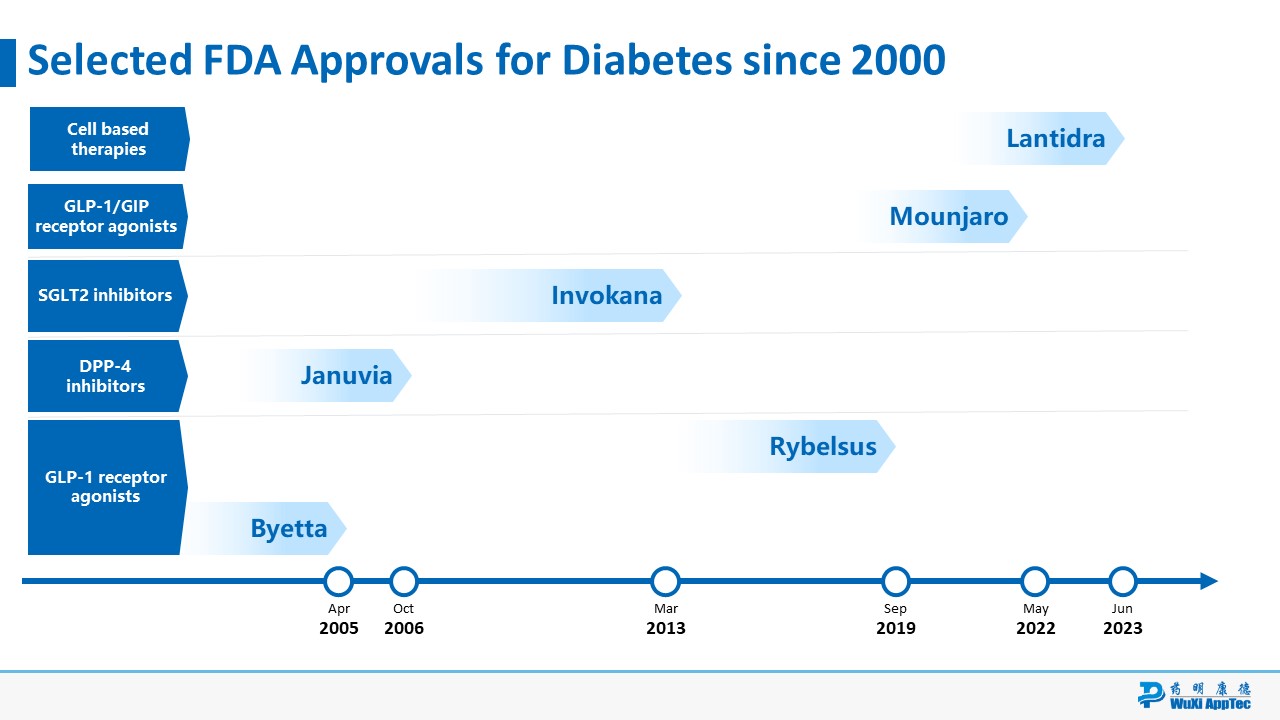
In 2005, a new class of medications called GLP-1 receptor agonists was introduced. These drugs mimic the body’s natural hormones to help regulate blood sugar levels, offering a new option for patients struggling with uncontrolled diabetes. For many, GLP-1 receptor agonists also led to significant weight loss, addressing one of the key challenges in managing type 2 diabetes.
Dipeptidyl peptidase-4 (DPP-4) inhibitors was also introduced in the mid-2000s. These drugs, such as sitagliptin, work by inhibiting the enzyme DPP-4, which in turn helps increase insulin production and decrease glucose production in the liver. What made DPP-4 inhibitors a significant advancement was their ability to lower blood sugar levels without causing the weight gain commonly associated with other diabetes medications. This class of drugs also had a low risk of hypoglycemia, making them a safer option for many patients, particularly those with type 2 diabetes.
The year 2013 marked the arrival of SGLT-2 inhibitors, which offered a novel approach by helping the kidneys remove excess glucose from the body. This innovation went beyond blood sugar control, providing protective benefits for the heart and kidneys, and reducing the risk of heart failure and chronic kidney disease. SGLT-2 inhibitors redefined diabetes care, extending their benefits far beyond managing blood sugar levels alone.
In 2019, the FDA approved oral semaglutide, the first oral GLP-1 receptor agonist. This was a major milestone, as previous GLP-1 therapies were only available in injectable form. Oral semaglutide offered the same blood sugar and weight loss benefits as its injectable counterparts, but with the added convenience of a pill. This innovation improved patient adherence and comfort, making it easier for patients to incorporate treatment into their daily lives.
Another recent breakthrough came in 2022 with tirzepatide, the first drug of its kind to target both GIP and GLP-1 receptors. Tirzepatide not only provided superior blood sugar control but also led to unprecedented weight loss in patients with type 2 diabetes. This drug represents a significant innovation by addressing both hyperglycemia and obesity, two major challenges in diabetes management.
In 2023, FDA further approved Lantidra, a cell-based therapy for type 1 diabetes. Lantidra is the first therapy approved for patients who are unable to manage their blood sugar levels due to recurrent severe hypoglycemia. This novel treatment involves the transplantation of pancreatic islet cells, which can restore the body’s ability to produce insulin. For many patients with type 1 diabetes, Lantidra offers a new frontier of hope, potentially freeing them from the daily challenges of insulin injections and blood sugar monitoring.
These breakthroughs are not just scientific achievements; they have transformed lives. Diabetes remains a global burden, it is now one of the leading causes of death globally, costing the global economy over $760 billion annually in direct healthcare expenditures. Yet, thanks to the relentless efforts of the biopharma industry, the future of diabetes care is brighter than ever.
As we honor World Diabetes Day, it’s essential to recognize the transformative power of these therapies. They have given patients more than just new treatment options—they have offered them the possibility of leading healthier, fuller lives. Looking forward, continued research and collaboration will undoubtedly bring forth more innovative solutions, ensuring that diabetes management becomes easier, more effective, and more personalized. At WuXi AppTec, we remain deeply committed to advancing breakthroughs through our unique CRDMO service platform, driven by our vision that “every drug can be made and every disease can be treated”.