


- About WXPress
- WXPress is your window into the world of WuXi AppTec and our global partners.
- Sitemap
- Events
- Contact
- Please reach out with any business inquires.
- communications@wuxiapptec.com
© 2026 WuXi AppTec. All Rights Reserved.Privacy Policy
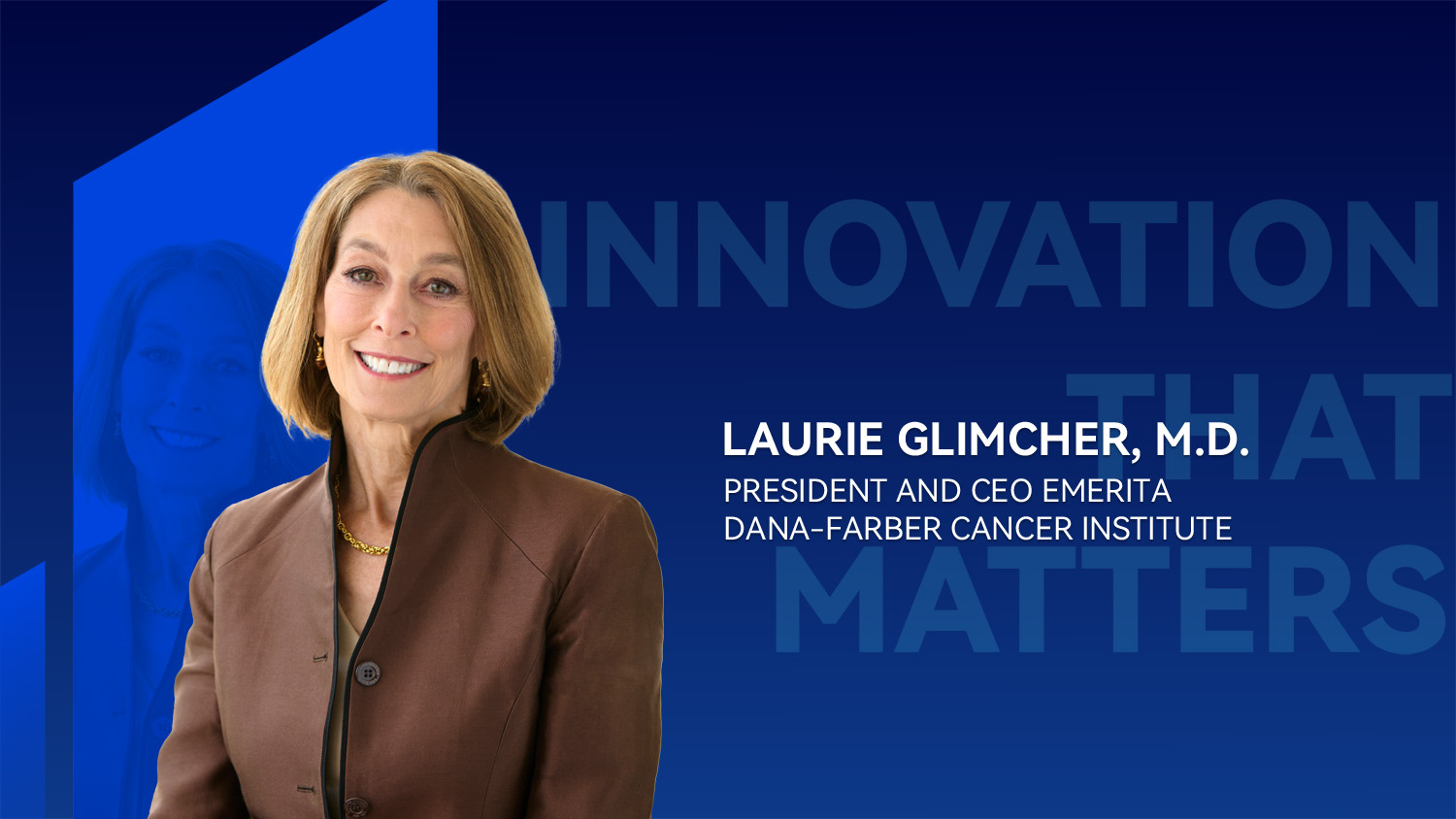
At the private speakers' luncheon during WuXi Global Forum 2025, Dr. Laurie Glimcher, President and CEO Emerita of Dana-Farber Cancer Institute, captivated speakers and guests with her compelling vision for the future of cancer care. As a leader at the forefront of transformative cancer research for decades, Dana-Farber has been instrumental in redefining the landscape of oncology. In her talk, Dr. Glimcher shed light on the progress made, the challenges ahead, and the evolving strategies in the fight against one of the most complex and devastating diseases of our time.
Thank you for having me here. I'm delighted to discuss cancer and the remarkable advances we now have in treating our patients. Outcomes that were once unimaginable just a decade or two ago have improved dramatically.
I remember when my mother developed lung cancer back in 2008. At that time, a diagnosis of stage III or IV meant there were very few options available—she passed away 15 months later. Today, however, the treatment landscape has changed significantly. I have organized these changes into six key areas: precision medicine, immunotherapy, advancements in hematologic malignancies, early detection, artificial intelligence, and addressing cancer disparities and prevention.
I would like to thank academia, pharmaceutical companies, and biotech innovators for their contributions—ranging from exciting small molecules and biologics like monoclonal antibodies to breakthroughs such as CAR-T, CAR-M, CAR-NK therapies, ADCs, and PROTACs, all emerging over the last decade.
Consider how cancer treatment has evolved over the past two decades. Initially, the focus was on genetics—identifying mutations and developing targeted drugs, such as those addressing EGFR mutations. We have also learned how to effectively activate the immune system. Over a century ago, a physician observed that infections sometimes led to tumor regression, suggesting that the body has mechanisms to fight cancer. Today, we understand the roles of T cells, B cells, and natural killer cells, and we recognize that both innate immunity (including dendritic cells and natural killer cells) and adaptive immunity (T cells and B cells) are crucial in combating cancer.
Cancer is not solely a disease of genetic mutations; epigenetics plays a significant role as well. The 98% of our genome that is non-coding region contains important cancer specific regulators influencing cancer development. In many cases, resistance to therapy is due not to genetic mutations but to changes in cell state driven by non-coding regions and other epigenetic processes.
We have also made tremendous strides in saving the lives of women with breast cancer. Remarkably, between 1989 and 2022, breast cancer mortality in the U.S. dropped by 40%, largely due to early detection efforts. Similarly, lung cancer mortality rates have declined by approximately 30% since their peak in the early 1990s—thanks to advances in treatment, early detection, and reductions in smoking.
Yet there is a concerning trend: the overall incidence of cancer is rising, with over two million cases in the U.S. and 18 million globally. While aging remains a major risk factor, it is alarming that increasingly, young people are being diagnosed with advanced cancer. At Dana-Farber, our Young-Onset Colorectal Cancer Center has seen a surge in otherwise healthy young patients presenting with stage III or IV colorectal cancer—a diagnosis with a high mortality rate. We are also witnessing cases of advanced-stage lung cancer, particularly in women who have never smoked. The causes of these trends remain unclear, with potential factors including environmental exposures, diet, microplastics, the microbiome, and metabolic changes.
At Dana-Farber, the collaborative efforts of our scientists and clinicians—each constituting roughly half of our team—are dedicated to unraveling these mysteries. It is heartbreaking to witness young patients, such as a 25-year-old with metastatic breast cancer, facing such devastating diagnoses.
Early detection is critical. Our focus, along with many others in the field, is to identify cancer before it spreads. One promising area of research is clonal hematopoiesis, discovered by Dr. Ben Ebert at Dana-Farber. He observed that, especially in patients with hematologic cancers, approximately 5% of older individuals develop small clones of blood cells. While these clones are often benign, their presence can predispose individuals to leukemias and even cardiac issues—making this a significant area for further study.
At Dana-Farber, our Centers for Early Detection and Interception aim to diagnose cancer at stage I, when treatment is most effective. Currently, only 25% of our patients are diagnosed at stage I, while 75% present with later-stage disease. We are committed to identifying individuals at higher risk and intervening earlier.
Another area of intense interest is cancer vaccines, exemplified by the groundbreaking work of Dr. Catherine Wu. Focusing on melanoma, she pioneered a treatment in which the tumor is removed, its antigens identified, and then formulated into a therapeutic vaccine. In her initial trial approximately eight years ago with near-terminal melanoma patients, six out of eight have since survived—marking a significant milestone in cancer vaccine research. Beyond academic research, efforts are underway to develop highly sensitive blood tests capable of detecting cancer cells with 99.99% accuracy, which would revolutionize early diagnosis.
We are also pioneering approaches to "drug the undruggable" through protein degradation strategies like PROTACs. With only about a thousand drugs currently available to target roughly 20,000 genes, these innovative methods are essential for addressing proteins that traditional drug chemistry cannot target. In collaboration with Yale, our team at Dana-Farber has developed PROTAC technology to induce targeted protein degradation. This approach is progressing well, with partnerships established with two companies, and represents a promising avenue for targeting previously "undruggable" proteins.
At Dana-Farber, we conduct approximately 1,100 clinical trials annually. I am extremely optimistic about our progress, which has transformed cancer treatment over the past two decades. However, significant challenges remain, particularly in treating aggressive cancers such as pancreatic cancer and glioblastoma—areas where we continue to work diligently.
My greatest wish for this community is to maintain a patient-centered focus in all our efforts—a principle that is deeply ingrained at Dana-Farber. Let patients, particularly those who have been historically marginalized and underserved, continue to be our North Star. Let us ensure that our quest of discovery and new therapies translates into hope and tangible answers for all those counting on us.
Thank you.
This transcript has been lightly edited for clarity and readability.