


- About WXPress
- WXPress is your window into the world of WuXi AppTec and our global partners.
- Sitemap
- Events
- Contact
- Please reach out with any business inquires.
- communications@wuxiapptec.com
© 2026 WuXi AppTec. All Rights Reserved.Privacy Policy
Though once associated with a tragic episode in pharmaceutical history, thalidomide was later repurposed through decades of mechanistic investigation, ultimately becoming an important starting point for molecular glue drug research. Its journey reflects the broader evolution of molecular glue degraders—from serendipitous discovery to increasingly rational design.
Recent developments underscore how far the field has progressed. The approval of the first cereblon E3 ligase modulator (CELMoD) agent marks an important milestone in translating this therapeutic concept into clinical practice and commercialization. At the same time, the investigational landscape for molecular glue degraders is expanding beyond hematologic malignancies into solid tumors, inflammatory conditions, and immune-mediated diseases, reflecting a rapidly diversifying pipeline.
Despite promising potential, the discovery, development, and manufacturing of molecular glue degraders still face numerous challenges. Fully unlocking their therapeutic potential requires collaborative efforts across an innovative ecosystem. WuXi Biology has established a comprehensive and integrated platform for molecular glue drug discovery, providing partners with end-to-end support from hit identification to early validation and optimization.
The DNA-encoded library (DEL) platform has established small-molecule and peptide libraries on the scale of millions to billions of compounds, and has developed and continuously refined a dedicated “molecular glue”–focused library. By accessing a broader chemical space and achieving in-depth target-specific screening capabilities, it enables the precise identification of active hit compounds.
To accelerate hit confirmation and lead optimization, WuXi Biology has developed a Direct-to-Biology (D2B) rapid iteration platform that tightly connects medicinal chemistry, computer-aided drug design (CADD), high-throughput synthesis, and biological evaluation within a seamless design–make–test–analyze (DMTA) workflow. Supported by nanomole-scale automated synthesis and 384- or 1536-well high-throughput assay systems, the platform enables a full cycle of structure–activity relationship (SAR) exploration across thousands of compounds in approximately two to three weeks, significantly accelerating the progression of molecular glue hits toward lead compounds. Together, these integrated capabilities provide an efficient and scalable one-stop solution for molecular glue discovery, enabling partners to explore previously intractable targets and advance innovative therapeutic programs.

Image source: 123RF
In the early 1960s, several countries reported severe limb malformations in newborns, including phocomelia. Subsequent investigations linked many of these cases to maternal thalidomide use during pregnancy, prompting the drug to be withdrawn from markets across multiple countries and regions.
Yet thalidomide’s story did not end there. In 1964, Israeli physician Jacob Sheskin serendipitously observed that thalidomide markedly alleviated symptoms of erythema nodosum leprosum (ENL), with his findings published the following year. Decades later, in 1999, a Phase 2 study provided further evidence that thalidomide had antitumor activity in refractory multiple myeloma.
The same molecule therefore came to embody a striking paradox: it had been associated with a devastating chapter in pharmaceutical history, yet it also demonstrated therapeutic potential in inflammatory disease and cancer. Researchers suspected that this apparent contradiction reflected an as-yet-unknown regulatory mechanism. To understand it, they first needed to answer a fundamental question: What is thalidomide’s molecular target?
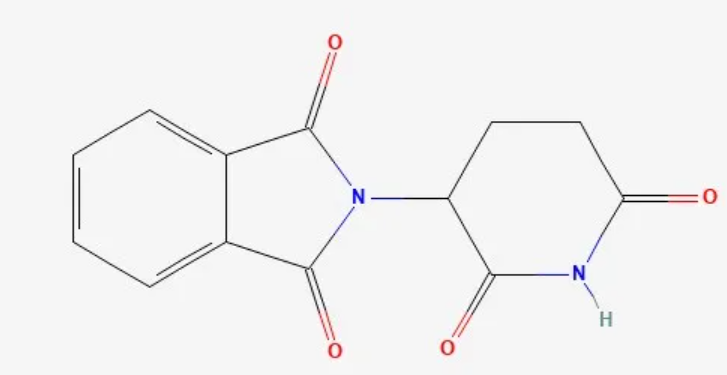
▲The molecular structure of thalidomide(Image source: PubChem)
The answer remained elusive for nearly half a century. Then, in 2010, a study published in Science identified cereblon (CRBN) as one of the major direct protein targets of thalidomide. CRBN functions as a substrate receptor within the CRL4 E3 ubiquitin ligase complex, working with the CUL4-RBX1-DDB1 core machinery to recognize specific substrates and recruit them for ubiquitination and subsequent proteasomal degradation. Put simply, thalidomide and its analogs bind to CRBN and alter the substrate specificity of the E3 ligase complex.
Once the target had been identified, another question immediately followed: Which proteins were now being recruited by CRBN?
Four years later, two studies published in Science provided an important part of the answer. They showed that lenalidomide, a thalidomide derivative, induces CRBN to recruit and degrade two transcription factors, IKZF1 (Ikaros) and IKZF3 (Aiolos). Both proteins are important for the survival of multiple myeloma cells, and their degradation compromises tumor cell viability. These findings revealed a key molecular mechanism underlying the anti-myeloma activity of immunomodulatory drugs such as lenalidomide.
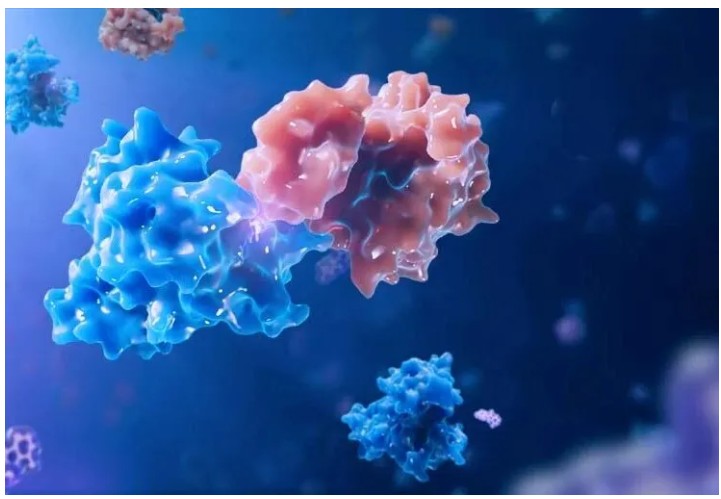
This mechanism became a classic paradigm for molecular glue degraders: rather than simply occupying and inhibiting a target, a small molecule promotes a new interaction between an E3 ubiquitin ligase and a target protein, leading to target ubiquitination and subsequent degradation.
Although molecular glue degraders have demonstrated considerable therapeutic potential, many of the earliest examples were discovered serendipitously. Reliance on chance discovery, however, makes it difficult to systematically expand the target space, optimize degradation efficiency, and improve drug-like properties to meet the demands of clinical development.
Structural biology provided an important turning point.
The elucidation of crystal structures of the CRBN E3 ubiquitin ligase complex and its complexes with molecular glues gave researchers an atomic-level view of how these compounds function. Many classical CRBN-based molecular glue degraders share a glutarimide ring as a core pharmacophore. This structural motif fits into a hydrophobic pocket in CRBN, where it is stabilized through hydrophobic interactions and a network of hydrogen bonds.
Other portions of the molecule help shape a new protein–protein interaction surface. These structural features play a critical role in determining which neosubstrates can be recruited and how efficiently degradation occurs.
Armed with these insights, researchers began moving from serendipitous discovery toward rational design, deliberately modifying molecular structures to achieve more efficient and sustained protein degradation. A range of strategies has emerged, including optimizing molecular glue scaffolds while retaining the glutarimide core and chemically modifying non-degrading target ligands with a “covalent handle” to explore their conversion into covalent molecular glue degraders.
CELMoDs are a notable outcome of this rational design effort. CELMoDs are a new class of molecular glue degraders developed through systematic optimization of immunomodulatory drug (IMiD) scaffolds such as those derived from thalidomide. CELMoDs and classical IMiDs share the glutarimide ring as a common CRBN-binding motif but differ in other structural features.
Compared with traditional IMiDs, representative CELMoDs incorporate additional structural extensions that can strengthen interactions with CRBN and promote conformations that favor neosubstrate recruitment. Although both classes act through CRBN-dependent mechanisms, they can differ substantially in binding affinity, substrate degradation efficiency, and downstream cellular effects.
A recent example is Bristol Myers Squibb’s Zenbexus (iberdomide), the first FDA-approved CELMoD agent. Iberdomide contains additional phenyl and morpholine groups that enhance interactions with CRBN and recruited substrates. It binds CRBN with substantially greater affinity than lenalidomide and pomalidomide and retains antitumor activity in multiple myeloma cells resistant to those earlier IMiDs.
Together, these advances point toward a common goal: transforming molecular glue degrader discovery from an empirical process into a more predictable, scalable, and systematic discipline.
The approval of Zenbexus represents an important step in bringing rationally designed CELMoDs into clinical use. Yet the broader potential of molecular glue therapeutics may lie in the continuing expansion of their disease indications, target space, and underlying mechanisms.
In hematologic malignancies, molecular glue degraders continue to generate encouraging clinical progress. Bristol Myers Squibb’s investigational CELMoD mezigdomide, in combination with carfilzomib and dexamethasone, is currently under FDA review for relapsed or refractory multiple myeloma, with a Prescription Drug User Fee Act (PDUFA) target date of May 13, 2027.
At the same time, development is expanding into solid tumors, inflammatory diseases, and immune-mediated disorders. SEED Therapeutics’ RBM39-targeting molecular glue degrader ST-01156 has entered a Phase 1/1b trial in patients with advanced solid tumors. Neomorph’s NEO-811, meanwhile, is being evaluated in a Phase 1/2 trial in patients with locally advanced or metastatic, unresectable clear-cell renal cell carcinoma.
In inflammatory diseases, Monte Rosa Therapeutics’ NEK7-targeting molecular glue degrader MRT-8102 is being investigated for conditions driven by the NLRP3 inflammasome and IL-1/IL-6 signaling pathways, with positive interim Phase 1 results already reported. In immune-mediated diseases, the company’s VAV1-targeting degrader MRT-6160 has achieved greater than 90% degradation of VAV1 in peripheral blood T cells.
Importantly, the potential of molecular glues extends beyond protein degradation itself. Classical molecular glue degraders recruit E3 ubiquitin ligases to promote proteasomal degradation of a target protein, but other molecular glues can modulate protein function without inducing degradation.
These so-called non-degrading molecular glues stabilize otherwise transient protein–protein interactions, creating new functional states without eliminating the target protein. This expands the molecular glue concept beyond targeted degradation and opens an additional therapeutic strategy for modulating previously difficult-to-drug proteins.
CLEO4-88 provides one example. The compound promotes an interaction between GID4, a substrate receptor of the CTLH E3 ligase complex, and the peroxisomal thiolase ACAA1. Rather than triggering ACAA1 degradation, formation of this induced complex suppresses ACAA1 enzymatic activity.
Revolution Medicines’ recently FDA-approved Rasonque (daraxonrasib) also exemplifies a non-degrading molecular glue strategy. Rasonque first binds cyclophilin A (CypA), forming a binary complex that subsequently engages RAS proteins in their active state. This interaction creates a ternary complex comprising RAS, daraxonrasib, and CypA, thereby blocking interactions between RAS and downstream effector proteins.
Taken together, these advances suggest that molecular glues are evolving into a broader drug design paradigm—one that extends beyond a single mechanism or therapeutic area. As structural biology and chemical biology become increasingly integrated, more predictable and precise design strategies could further expand the range of proteins and biological functions accessible to molecular glue therapeutics, opening new possibilities for drug discovery and disease treatment.