

- About WXPress
- WXPress is your window into the world of WuXi AppTec and our global partners.
- Sitemap
- Events
- Contact
- Please reach out with any business inquires.
- communications@wuxiapptec.com
© 2026 WuXi AppTec. All Rights Reserved.Privacy Policy
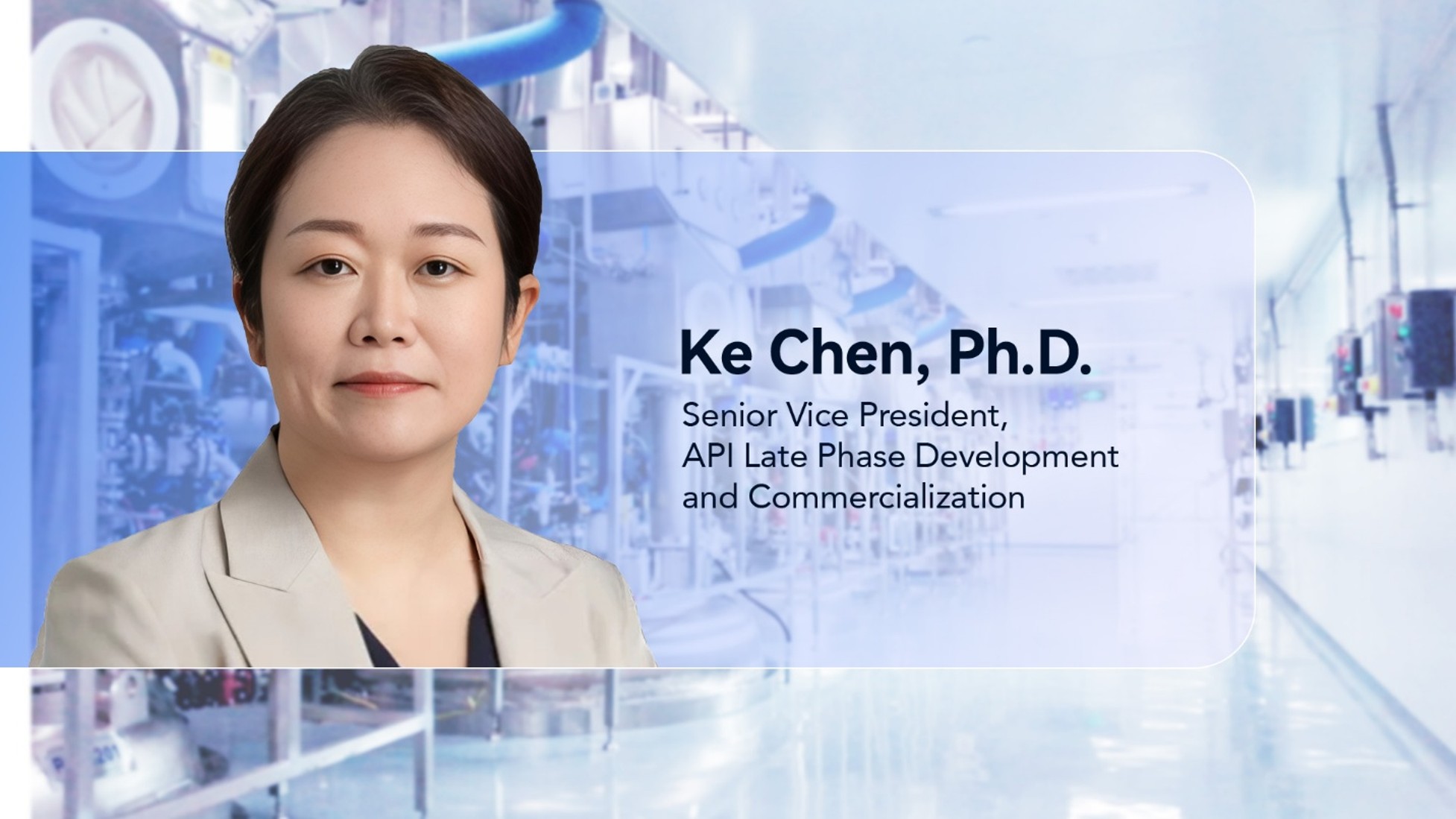
Editor’s Note: As Dr. Ke Chen prepares to attend CPHI in October, the industry looks markedly different from the one she saw just a few years ago.
API development and manufacturing are under mounting pressure resulting from faster development timelines, more complex molecules, evolving regulatory expectations and a renewed focus on supply-chain resilience. And pharma and biotech companies are asking more from their manufacturing partners beyond execution, demanding experience, flexibility and practical solutions as well.
Ahead of CPHI Milan, Fierce Pharma spoke with Dr. Chen, Senior Vice President of API Late Phase Development and Commercialization at WuXi AppTec, about the changes she has seen across the industry, the manufacturing challenges behind increasingly complex medicines, what a resilient supply chain really requires, and where API manufacturing may be headed over the next five years.
Ke Chen: The whole field has been going through a lot of dynamic changes. First of all, speed. I think this has been a key theme for the whole field for maybe the past five years. Over the past year or so, I have seen even greater pressure, and it is coming from all fronts.
It is not only driven by unmet clinical needs, where new drugs may move through accelerated development and approval; it also comes from the funding environment. For some biotech companies, funding has not been very stable. Development of an important drug may be paused, and then when funding becomes available, there is suddenly a need to pick up speed and push forward quickly.
Co-development and M&A are another major factor. Often, we see a drug being developed at a normal pace, but then a new partner comes in with a different strategy, a different target market, or perhaps a slightly different clinical design, creating a new need for speed.
Another increasing trend I see is the emphasis on supply-chain resilience. Supply-chain resilience has always been a focus for this field, but it is becoming almost mandatory for customers as well as CRDMO partners such as WuXi AppTec. I think the key change is that people are becoming more pragmatic. You need to have a practical, down-to-earth plan that can actually be executed in a timely fashion. That is the shift I see.
So those are the two areas I would highlight. You could call them new trends, or you could call them evolving priorities, but speed and supply-chain resilience are clearly the focus.

Ke Chen: I don’t think they necessarily conflict with each other. Our customers, especially their CMC and supply-chain specialists, are very resourceful. They work closely with the manufacturing partners, whether those are internal teams or external partners such as WuXi AppTec, to come up with pragmatic solutions. They need to address timeline concerns, funding constraints and the increasing pressure around supply-chain resilience.
Phase-appropriate development has been a key theme for the industry. If you do it the right way, together with practical decision-making, a stage-wise approach can be very effective.
Orphan drugs are a good example because they highlight many of these challenges. Funding can be an issue, but at the same time, the development timeline is often very tight. The developers may not have many opportunities to run manufacturing batches before they need to push toward market approval. The number of batches available for the initial filing can also be limited.
In these situations, regulatory authorities such as FDA and EMA provide guidance on how developers can approach the filing. Concurrent validation, for example, can allow developers and their manufacturing partners to take a stage-wise approach.
It means the developer and its partners need to use every manufacturing opportunity to gather more process and quality knowledge. At the same time, regulatory authorities may allow the developer and manufacturer to run a limited number of batches before approval, with a commitment to complete the validation during the commercial stage.
I think this is a good example of how different sectors can work together on a practical, stage-wise approach to manage these different pressures without creating unnecessary conflict.

Ke Chen: I think what pharma and biotech companies want from an API partner today is that the partner should not just be a pair of hands executing the work laid out by these companies. A preferred API partner should be experienced enough to anticipate challenges, find alternative methods, and provide solutions to unexpected situations.
This has become increasingly important as outsourcing has continued to grow over the past decade or so. An experienced partner such as WuXi AppTec has the opportunity to support many different projects, and that gives real-time experience across the industry. Based on that experience, an ideal partner can offer suggestions and potential solutions rather than simply waiting for instructions.
Of course, the decision will always be made by the developer. But I think the ability to provide solutions, together with the flexibility to support different needs, has become a core capability of an API partner.

▲WuXi AppTec's site in Changzhou
Ke Chen: I think the challenge runs through the entire development pathway. It is true that many drugs can be made at the discovery stage. Discovery scientists are very creative. They can come up with very complex molecules, purify them at milligram or gram scale, and move very quickly. But many of these challenging molecules start to give developers and manufacturers a headache as you move to larger scale and later-phase development.
Scalability of the process is one challenge. You also need to establish the right controls to secure product quality and demonstrate that you have a good overall control strategy.
The raw materials upstream can become more complex as well. Then the question is how to work with upstream vendors to develop a cost-effective way to make those raw materials with consistent quality, while also ensuring PGIs (potential genotoxic impurities) control and nitrosamine control.
Some compounds, intermediates, or even the drug substance itself may not be very stable. Again, that becomes more challenging as you move to larger scale.
We have talked a lot about drug substances, but with some newer modalities, the biggest challenge may actually come later. PROTACs are a good example. Some of these molecules have molecular weights around 1,000. The drug substance itself can have challenges, including stability, but formulation can be even more difficult. In some cases, formulation can become a showstopper.
And even after the CMC and supply-chain teams have worked with the customer to develop a good process, secure the quality controls, and find a suitable formulation for commercialization, there is still the supply-chain challenge associated with these complex molecules.
I can give you one example from a program we worked on. Before the customer came to WuXi AppTec, they were working with multiple external vendors to make one targeted protein degrader. Vendor A handled the RSM (Regulatory Starting Material), vendor B made the crude API, vendor C made the final API, vendor D handled the spray-dried dispersion, and vendor E produced the final drug product. Those five vendors were spread across different countries and continents.
Even if you put aside the process and quality challenges, just think about the logistics: shipment, method transfer, and customs clearance. That alone can extend the timeline by six months to a year, at the very least.
In this case, WuXi AppTec’s integrated platform offered an important advantage. By bringing those activities within our global quality system and manufacturing the raw material, API, spray-dried dispersion, and drug product within the same network, we helped the client accelerate the program by roughly six to 12 months without changing much of the overall workflow.
I think this case gives a very vivid picture of the challenges we are dealing with. They come from the technology itself and from the control strategy, but also from how you plan and manage the supply chain.
Ke Chen: Geographic diversification is one approach, but geographic diversification alone is not enough. Supply-chain resilience also means process robustness. Obviously, that means robustness in drug substance and drug product manufacturing, but it also extends to quality control further upstream.
I can give you a real example that we are working on currently. Over the past few years, we are seeing more partnership opportunities between Chinese biotech companies and overseas pharmaceutical companies. These are very exciting opportunities, both for customers and for patients, but they can also create new challenges for supply-chain specialists.
In this case, a Chinese biotech company was able to launch an important new drug for an unmet clinical need in China, leveraging the WuXi STA network for both drug substance and drug product. The company then secured a partnership with a European pharmaceutical company for global expansion.
With that global filing and potential acceleration came new requirements. The supply chain that had originally been established for the program was no longer sufficient to support the new global expansion plan.
That was one element. The second was upstream. When we originally worked with the biotech company, it had chosen another vendor for a key raw material. But that raw-material supplier did not meet the global quality requirements of the new partner. So there were different challenges that needed to be addressed.
In this case, WuXi STA again worked as a solution provider. We worked with both partners to quickly bring larger manufacturing trains into both our Changzhou and Taixing sites. This helps address the bottleneck created by increased clinical and potential commercial demand and supports the accelerated global development plan.
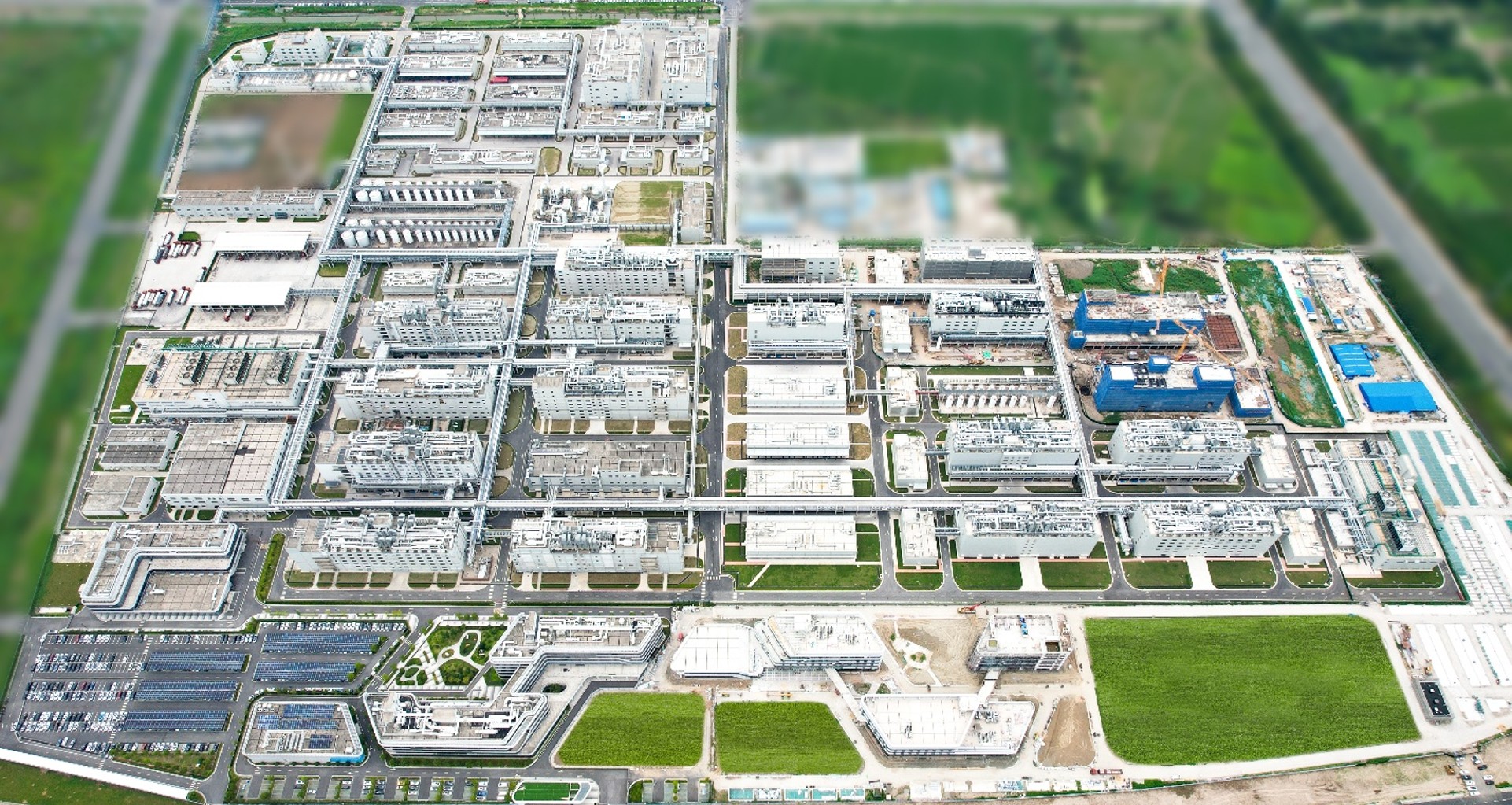
▲WuXi AppTec's site in Taixing
We also leveraged our ISO-certified manufacturing site to back-integrate the raw material and RSM into our own supply chain, so we could meet the higher quality standards required by the new partner.
We are still in the middle of executing this plan, so I would not say that we have taken CMC and supply chain off the critical path yet. But with the plan we have laid out together with partners, I believe we are on track to prevent CMC and supply chain from becoming a bottleneck and help bring this important drug not only to the local market, but potentially to the global market as well.
Ke Chen: This is my favorite question. It is always fun to look ahead and think about what such a dynamic field may bring.
I think the biggest changes will come from science and new technology, because science is still at the core of our field. We are seeing more breakthroughs in discovery and in the clinic, and targets that were once considered undruggable are becoming druggable. The science continues to push us toward new modalities and more challenging molecules to meet clinical needs.
Along with that complexity, I think we will see broader application of new manufacturing technologies that can help the industry make these more difficult drugs. And when I talk about new technology, I am not only talking about flow chemistry or biocatalysis. Technologies such as electrochemistry and photochemistry may also become more scalable for industry use.
So I think the development, application and commercialization of these technologies will be one of the major changes over the next five years, driven by more complex molecules and the continued need for acceleration.
But at the same time, our industry will always be built around control strategy. The analytical challenges we deal with today, the scrutiny around raw-material specifications, solvents, PGI control and nitrosamines, and the overall quality-by-design concept will remain very important.
The hard work behind understanding and controlling the process will still be there. I think that will always be a cornerstone of our industry, and I do not expect that part to change very much.