

- About WXPress
- WXPress is your window into the world of WuXi AppTec and our global partners.
- Sitemap
- Events
- Contact
- Please reach out with any business inquires.
- communications@wuxiapptec.com
© 2026 WuXi AppTec. All Rights Reserved.Privacy Policy

Most medicines work by binding to a protein and blocking its activity. Induced proximity takes a different route. It brings a disease-related protein close to a cellular effector so that the effector can change what the target does or what ultimately happens to it.
The best-known example is targeted protein degradation. Proteolysis-targeting chimeras and molecular glue degraders recruit disease-associated proteins to the ubiquitin-proteasome system, allowing the cell to remove them. But the idea is broader than degradation. Depending on the effector that is recruited, proximity can also disrupt signaling, redirect a protein within the cell, alter its structure, or change its activity.
Developments in Q2 2026 made that broader potential easier to see. The quarter brought the first regulatory approval, strong late-stage clinical data, progress in non-degrading molecular glues, and new investment in delivery systems and alternative effector systems. It also highlighted a practical challenge: turning an elegant biological concept into a medicine that can be dosed, manufactured, and tested reliably.
The most visible milestone of the quarter was the first regulatory approval of a proteolysis-targeting chimera. The approved therapy uses a bifunctional molecule to bring an estrogen receptor together with an E3 ligase, leading to degradation of the receptor in patients with a molecularly defined subtype of advanced breast cancer. This was more than another product approval. It showed that a productive ternary complex can be translated into a medicine approved by a regulatory authority.
Late-stage results also added weight to the molecular glue approach. In a Phase 3 study in relapsed or refractory multiple myeloma, adding a next-generation molecular glue degrader to an established regimen reduced the risk of disease progression or death by 52%. Median progression-free survival rose from 8.3 months with the control regimen to 18.0 months with the degrader-containing combination. The result suggests that induced degradation can complement established therapies and deliver meaningful benefit in heavily pretreated patients.
Clinical development is also moving beyond cancer. During the quarter, oral degraders aimed at inflammatory signaling proteins advanced in eosinophilic asthma, atopic dermatitis, and hidradenitis suppurativa. An early-stage degrader directed at a B-cell signaling protein produced an objective response rate of 83% in chronic lymphocytic leukemia and reduced target levels in skin tissue, supporting further study in chronic inflammatory disease. Other programs are being explored in neurological disorders.
The implication is straightforward: targeted protein degradation is moving from proof that the modality can work toward expansion into new disease areas. It may be particularly useful for transcription factors, scaffold proteins, drug-resistant mutants, and proteins whose non-enzymatic functions are difficult to shut down with a conventional inhibitor.
Q2 2026 also reinforced an important point: induced proximity does not always mean removing a protein. A new class of RAS inhibitors uses a molecular glue-like mechanism to bring RAS together with a chaperone protein. The resulting ternary complex blocks RAS from engaging downstream effectors, but RAS itself is not degraded.
A late-stage study in previously treated metastatic pancreatic ductal adenocarcinoma provided strong clinical support for this strategy. Median overall survival was 13.2 months with the ternary-complex inhibitor, compared with 6.7 months with standard chemotherapy. Median progression-free survival was 7.2 months versus 3.6 months. Related programs built on the same principle also showed encouraging early activity in RAS-mutant pancreatic and lung cancers.
These results widen the design space for induced proximity medicines. The goal is not necessarily to degrade or eliminate the target. It is to create a molecular interaction that changes disease biology in a useful way. Depending on the complex, that may mean blocking a signaling pathway, altering a protein's intracellular localization, restoring its structure, or recruiting another cellular function.
Deal activity during the quarter reflected the same shift. Partnerships and financing were not limited to conventional degraders; they increasingly focused on delivery, tissue selectivity, and new ways to recruit cellular machinery.
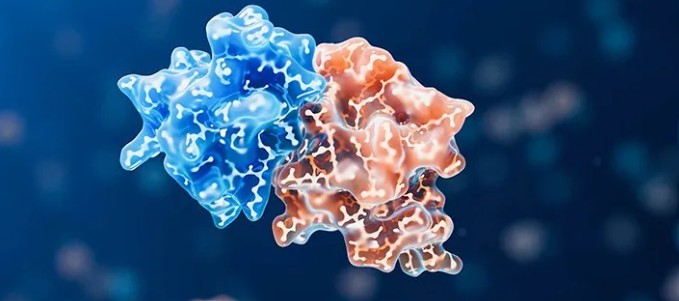
One global co-development agreement for a clinical-stage BTK degrader included a $700 million upfront payment and a total potential deal value of up to $2.3 billion. The program is being considered across hematologic malignancies, immune-mediated diseases, and neurological disorders, showing that large pharmaceutical organizations now see targeted degradation as a strategy that may be useful across multiple disease areas. A separate collaboration worth more than $1 billion centered on degrader-antibody conjugates.
Degrader-antibody conjugates pair the selective delivery of an antibody with the catalytic activity of a degrader payload. In principle, this could concentrate degradation in selected tumor cells or tissues, limit exposure in healthy tissues, and widen the therapeutic window. Here, delivery is not an add-on; it is part of how the medicine is designed to work.
Investors also backed regulated induced proximity targeting chimeras. These molecules bind a disease-specific protein and an essential cellular protein at the same time, creating a non-natural complex that disrupts the essential protein mainly in disease cells. An $85 million financing round supported both a conventional degrader program and this newer mechanism, signaling interest in proximity-based approaches that do not rely on degradation.
Other emerging platforms are looking more broadly for useful effectors, including chaperones, adaptor proteins, transport proteins, and enzymes involved in post-translational modification. The field is therefore asking a more precise set of questions: Which effector should be recruited? In which cell or tissue? And what biological result should that interaction produce?
The scientific flexibility of induced proximity is also what makes these medicines hard to develop. A candidate must bring the right partners together in the right geometry, produce the intended effect in cells, and possess the properties required of a viable drug candidate.
Several challenges tend to appear at the same time:
An end-to-end contract research, development, and manufacturing organization (CRDMO) can help connect these decisions instead of treating them as separate workstreams. At the discovery stage, screening, tailored libraries, chemical synthesis, structural and biophysical studies, cellular assays, and mechanistic experiments can be used together to identify productive complexes. Medicinal chemistry can then optimize target ligands, effector ligands, linkers, molecular glue interactions, or conjugation strategies while biological data are generated in parallel.
As candidates move into development, WuXi AppTec combines process chemistry, analytical development, formulation, DMPK, and bioanalysis to address issues such as exposure, solubility, tissue distribution, metabolic stability, and manufacturability. Synthetic route redesign, biocatalysis, high-throughput crystallization screening, and formulation approaches such as spray-dried dispersion can help solve scale-up and bioavailability problems.
Drug metabolism and pharmacokinetic studies are equally important. Measuring systemic exposure, tissue distribution, metabolic pathways, target modulation, and downstream pharmacology helps teams determine whether a candidate reaches the intended tissue at a therapeutically relevant concentration and produces the desired biological effect. Bringing these data together within one development framework can reduce handoffs and support faster, better-informed decisions.
The Q2 2026 landscape suggests that induced proximity is entering a more practical phase. Regulatory approval has lowered uncertainty around targeted degradation, late-stage data have strengthened confidence in molecular glues, and clinical programs are moving into immune-mediated, inflammatory, and neurological diseases.
At the same time, non-degrading molecular glues, regulated induced proximity targeting chimeras, and degrader-antibody conjugates are extending the field beyond its original boundaries. The next challenge is not simply to show that proximity can change biology. It is to identify which proximity-inducing molecules can become safe, selective, and manufacturable medicines.
WuXi AppTec will continue to use its end-to-end CRDMO platform to support the research, development, and manufacturing of induced proximity medicines and help partners advance promising programs toward clinical development and, ultimately, patients.
What are induced proximity drugs?
Induced proximity drugs create or stabilize an interaction between a disease-related target and a cellular effector. That interaction can lead to degradation, inhibition, relocalization, modification, activation, refolding, or another change in protein function.
Is induced proximity limited to targeted protein degradation?
No. Targeted protein degradation is the most established use of induced proximity, but the same principle can also block signaling complexes, redirect proteins, recruit chaperones or modifying enzymes, create selective dependencies, or deliver degradation activity to particular cells and tissues.
Why are induced proximity drugs important for patients?
They may open treatment options for diseases driven by proteins that conventional drugs cannot control well. By changing a protein's fate or function rather than only blocking one binding site, induced proximity medicines may help address difficult targets, overcome some forms of drug resistance, and improve selectivity for particular cells or tissues.
What are the main challenges in developing induced proximity medicines?
These molecules must form the right complex in cells and also meet the standard requirements for a viable medicine, including selectivity, exposure, stability, safety, and manufacturability. Chemistry, biology, pharmacokinetics, bioanalysis, formulation, and process development therefore need to be coordinated closely.
How can an integrated CRDMO platform accelerate induced proximity drug development?
An integrated CRDMO platform brings discovery, development, and manufacturing capabilities into one workflow. This can reduce handoffs, connect mechanistic data with DMPK and CMC decisions, and help teams address design, exposure, formulation, scale-up, and analytical challenges earlier in development.