

- About WXPress
- WXPress is your window into the world of WuXi AppTec and our global partners.
- Sitemap
- Events
- Contact
- Please reach out with any business inquires.
- communications@wuxiapptec.com
© 2026 WuXi AppTec. All Rights Reserved.Privacy Policy

Drug discovery is a journey into the unknown, where some of its most meaningful moments come not at the finish line, but along the way — as scientists keep pushing through uncertainty and setbacks.
When an unprecedented molecular structure emerges, it brings both the possibility of a breakthrough and a new set of challenges. Turning that possibility into reality takes more than a moment of scientific inspiration. It requires persistence, ingenuity, and the ability to solve one difficult problem after another over the course of a long development journey.
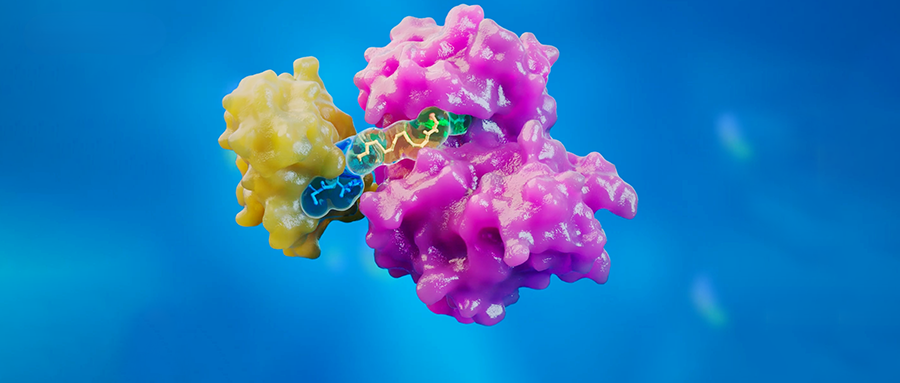
Years ago, a client approached WuXi AppTec’s Research Chemistry Services (RCS) with an unusual hit molecule. It had a high molecular weight and an unconventional structure, and belonged to a class that would later become one of the industry’s most closely watched areas of research: proteolysis-targeting chimeras (PROTACs). Rather than directly inhibiting protein activity like conventional small molecules, PROTACs harness the cell’s ubiquitin–proteasome system to selectively tag and degrade disease-causing proteins. This distinctive mechanism offers the potential to address targets historically considered “undruggable.” At the same time, their size, complex structures and unusual physicochemical properties pose new challenges for synthesis and development.
At the time, targeted protein degradation (TPD) was still nascent. Only a handful of companies and research institutions were exploring PROTACs. Established technical precedents were scarce, and no product had yet completed the full journey from research and development to commercial manufacturing. The path ahead was clearly filled with risk and uncertainty. At the project kickoff, the client put it plainly: “This project is hard to do.”
Faced with challenges that were difficult to anticipate in advance, the WuXi AppTec RCS team chose to tackle them head-on. Following a systematic assessment, the team quickly identified two major technical hurdles: synthesis and purification. Work then began to find practical solutions to both.
On the synthesis side, the client’s initial route suffered from low yields, involved cumbersome steps, and could not support subsequent scale-up. Given this completely new chemotype and the lack of established precedent, the team effectively had to build a route from the ground up. Through iterative experimentation and by drawing on electrochemistry, photochemistry and flow chemistry platforms, they established a more streamlined synthetic route with substantially improved yields. Importantly, the route was also successfully applied to subsequent scale-up, laying a solid foundation for the program to move forward efficiently.
Purification posed a different set of obstacles. The molecule had extremely poor solubility and was unstable under basic conditions, resulting in very low recovery using conventional separation protocols. Through independent process development, the team adopted a “continuous separation coupled with rapid acid neutralization” strategy to stabilize the target compound in real time. The adjustment may have appeared relatively small, but it markedly improved both purity and recovery.
With breakthroughs in both synthesis and purification, the team delivered results that exceeded the client’s expectations. In just 13 months, they synthesized and delivered more than 560 complex TPD compounds, enabling rapid selection of a preclinical candidate (PCC). This pace was well above the industry average at the time. Over the following three months, they fully established an asymmetric synthetic route for the selected PCC and delivered approximately 250 grams across multiple batches to support efficacy studies.
The program was then handed over seamlessly to WuXi AppTec’s API development and manufacturing team, where it moved into non-GMP and GMP manufacturing.
Throughout the project, new and unexpected challenges continued to emerge. The team maintained close communication with the client and responded rapidly. “The RCS team could respond to almost every client question within 24 hours and provide an actionable solution,” the RCS project lead recalled. The team did more than simply execute assigned tasks. With a clear understanding of the client’s goals, it proactively adjusted and refined project strategies, consistently delivering on time or even ahead of schedule.
The client took notice and subsequently expanded the scope of collaboration to include additional projects. Over time, the two sides moved from individual engagements to a long‑term partnership built around shared growth.
This case exemplifies WuXi AppTec’s long-standing model of collaborating closely with clients and building capabilities alongside their project needs. By supporting the growth and development of numerous partners, the company has been deeply involved in the entire evolution of TPD therapies—including PROTACs—from early concept to industrial translation. Leveraging its integrated, end-to-end CRDMO platform, WuXi AppTec continues to support global partners to take these therapeutic molecules from discovery and development through to manufacturing and delivery.
Today, in the TPD field, the WuXi AppTec RCS team, drawing on a mature discovery chemistry platform, has built a comprehensive set of capabilities that spans early research support, rapid synthesis from milligram quantities to hundreds of grams, and route optimization. Across bifunctional targeted protein degradation molecules, molecular glues and other types of degraders, the RCS team has more than 1,100 chemists with extensive experience in the synthesis and optimization of linkers, E3 ubiquitin ligase ligands and target protein ligands. To date, they have synthesized more than 230,000 related compounds, providing a robust compound library foundation for rapid iteration of complex molecules. At the same time, the team has built an extensive inventory of ligands and precursors, significantly boosting the efficiency and success rate of early discovery.
WuXi AppTec has also established a dedicated team to address the purification challenges associated with TPD molecules. Over more than a decade, the team has completed separation work for over 200,000 related molecules, establishing a comprehensive separation system and a diverse portfolio of methods. RCS has an efficient analytical and purification system comprising more than 200 preparative high-performance liquid chromatography (Prep-HPLC) and supercritical fluid chromatography (SFC) methods, plus mass spectrometry-based ternary complex confirmation and proteomic analysis capabilities. Collectively, these resources support key steps from chemical feasibility verification to mechanism-of-action studies. In addition, through close integration with DMPK and in vitro/in vivo evaluation capabilities, the team can provide customized solutions for degraders with characteristics such as high molecular weight and challenges related to solubility and stability, helping clients accelerate the translation of innovative degradation strategies into viable drug candidates.
This case also offers a vivid illustration of WuXi AppTec’s philosophy of “following the science, following the client, and following the molecule.” And that philosophy extends beyond TPD. As novel therapeutic modalities continue to generate increasingly diverse and complex molecules, WuXi AppTec continues to advance alongside the science and work side by side with its clients—strengthening its platform capabilities and scale to better support global partners and help bring innovative therapies to patients faster.