

- About WXPress
- WXPress is your window into the world of WuXi AppTec and our global partners.
- Sitemap
- Events
- Contact
- Please reach out with any business inquires.
- communications@wuxiapptec.com
© 2026 WuXi AppTec. All Rights Reserved.Privacy Policy

Not long ago, a global pharmaceutical company was advancing a series of peptide-related projects through WuXi AppTec’s integrated platform. As development progressed, a new challenge emerged: as peptide structures become increasingly complex, how could metabolite identification be completed faster and with greater accuracy?
This was not simply a matter of “speeding up an experiment.”
For some complex peptides, traditional data processing and structural elucidation approaches can be time-consuming and highly dependent on the expertise of individual scientists. When molecules contain complex features such as cyclization or specialized chemical modifications, the applicability of commonly used analytical tools may also become limited.
WuXi AppTec’s Drug Metabolism and Pharmacokinetics (DMPK) team ultimately took on the challenge. Leveraging TidesID® intelligent one-top interpretation platform (TidesID®), a proprietary automated spectrum interpretation platform developed in-house, the team completed the relevant structural analysis and delivered the project results within 9 working days.
The client subsequently entrusted WuXi AppTec with additional related projects.
For the DMPK team, however, the significance of this case went well beyond “9 working days.” It reflected a broader challenge that is becoming increasingly visible as new modalities advance: as drug molecules evolve, must the research tools and workflows used to study them evolve as well?
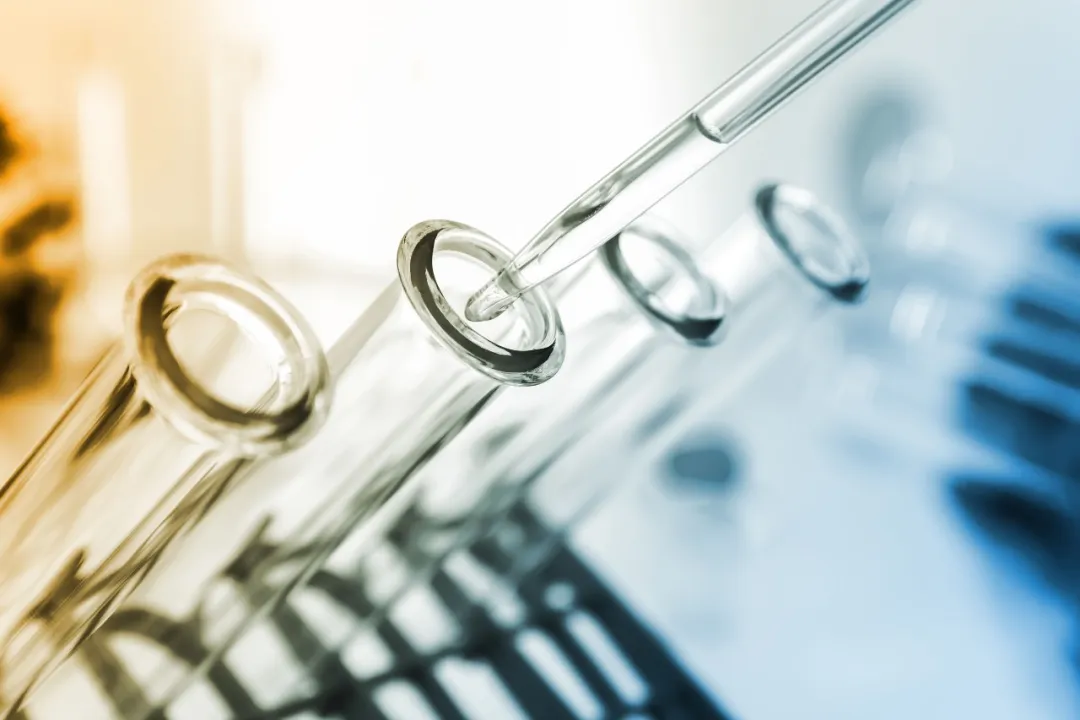
Metabolite identification, or MetID, is an important component of drug research and development. In simple terms, scientists examine complex analytical data to identify metabolites generated after a drug enters a biological system, further elucidate their structures, and map potential metabolic pathways. These insights can support decisions related to early-stage molecular optimization, cross-species metabolism assessment, and analyte selection for subsequent studies.
For traditional small molecules, the industry has accumulated relatively well-established research approaches and analytical tools. The rapid development of peptides, oligonucleotides, and other emerging modalities, however, is changing the nature of the challenge.
Compared with traditional small molecules, these molecules often have larger molecular weights and more complex structures. A single molecule may incorporate different cyclization strategies, scaffold designs, and chemical modifications. As the number of structural building blocks increases, the number of potential metabolites that may need to be considered can also rise substantially.
Analytical instruments can generate large volumes of data. The real challenge lies in identifying the information that matters.
Traditionally, this work has relied heavily on scientists reviewing spectra individually and applying their professional judgment. As molecular complexity increases, the time required for data processing and structural interpretation can increase accordingly. More importantly, different types of new modalities have distinct structural characteristics, making it difficult to address every molecule with a single standardized workflow.
Commercial software can face similar limitations. Some highly complex molecular structures may be difficult to input directly into existing systems. At the same time, as molecular designs continue to evolve rapidly, updates to general-purpose software may not always keep pace with emerging project needs.
For the DMPK team, this raised a practical question: as the number of complex projects continued to grow, simply adding more people would not provide a sustainable long-term solution.
TidesID® did not begin as a large-scale software development initiative designed in advance.
Initially, a scientist on the DMPK team combined coding experience with an understanding of peptide metabolism to develop several small programs that could assist with data processing.
The idea was straightforward: could repetitive and time-consuming tasks that followed identifiable analytical logic be handled by software?
After being tested in real projects, these programs gradually demonstrated their value.
As project volumes increased, however, new requirements continued to emerge. Peptide structures became increasingly complex, while the number of oligonucleotide projects grew rapidly. Programs initially created to solve specific problems began to encounter a much broader range of molecular architectures and analytical scenarios.
The DMPK team therefore began collaborating with WuXi AppTec’s internal automation technology team to systematically upgrade the original tools.
It was a highly interdisciplinary process.
DMPK scientists understood the realities of project execution. They knew which unusual structures could arise, which data sets were the most difficult to interpret, and which steps in the analytical workflow had the greatest impact on efficiency.
The automation technology team, meanwhile, brought together expertise in structural interpretation, chemometrics, algorithm development, and software engineering. Their role was to translate the analytical expertise accumulated by scientists into processes that a computer could recognize, calculate, and execute.
Structure recognition is one example of this interdisciplinary collaboration. Although it is only the first step in the software workflow, it directly determines whether the system can correctly “understand” a complex molecular structure and perform subsequent analyses.
Drawing on extensive project experience, the DMPK team categorized structural types associated with different modifications and scaffold designs. Experts in structural interpretation and chemometrics then developed the computational logic, while software engineers designed the data input methods and system architecture needed to integrate individual modules into a complete workflow.
Scientific experience and digital capabilities gradually converged.
What began as several small programs ultimately evolved into TidesID®, a one-stop automated spectrum interpretation platform for new modalities. Today, TidesID® has advanced to version 2.0 and has expanded to support metabolite analysis needs for complex molecules including peptides and oligonucleotides.
TidesID® was not designed simply to “make computers run faster.”
Under traditional workflows, spectrum interpretation for complex new modalities can depend heavily on the accumulated expertise of individual scientists. When reviewing the same data set, a scientist with years of project experience and someone newly exposed to the molecule type may differ significantly in processing efficiency and speed of interpretation.
This reflects a broader challenge across highly specialized research fields: How can expert expertise be embedded in standardized workflows and applied more consistently?
During the development of TidesID®, the DMPK team progressively deconstructed analytical approaches accumulated through years of project experience and translated complex compound identification problems into standardized, computable, and executable analytical workflows.
The system first recognizes the molecular structure, then establishes an analytical framework based on its structural characteristics and assists scientists with data interpretation. Information that previously required extensive step-by-step manual review can be handled in a more structured and systematic manner.
The role of scientists does not disappear.
On the contrary, researchers can devote more time to scientific judgment and the analysis of complex questions, while automated tools handle part of the repetitive data-processing workload. This shift also helps make project execution more consistent and controllable.
Based on the DMPK team’s project experience, the use of TidesID® can shorten overall MetID project turnaround time by approximately 30%. For structurally more complex molecules that traditionally require longer periods of manual processing, the efficiency gains from automated data analysis can be particularly significant. In actual peptide projects, the analysis timeline for complex molecules can now approach the turnaround time typically seen in conventional small-molecule projects. The 9-working day delivery described at the beginning of this article was achieved in this context.
Efficiency, however, is not the only priority for TidesID®.
In metabolite identification, data completeness is equally important. TidesID® can support the analysis of different types of peptide structures, helping scientists identify potential metabolites more systematically, reduce the risk of missing critical information, and make project analysis more consistent and controllable.
For the DMPK team, the development of TidesID® has therefore remained focused on one central objective: to provide scientists with a more complete and consistent evidence base through more systematic data processing, thereby better supporting subsequent development decisions.
Viewing TidesID® solely as a software tool may make it difficult to fully understand how it came into being.
Automation in drug development is not simply about replacing manual operations with machines. The greater challenge is first understanding why a scientific workflow functions the way it does, then determining which steps can be standardized, which information can be digitized, and how experiments, data, and final outputs can be connected more seamlessly.
WuXi AppTec’s DMPK team has been exploring automation for many years.
From introducing automated liquid-handling systems to automating individual experimental steps and connecting sample-processing workflows, the scope of automation has continued to expand.
Today, in selected workflows, samples can move from processing into analytical steps through automated logistics systems. Once instruments complete data acquisition, systems can perform further data processing and use robotic process automation, or RPA, to support downstream reporting activities.
The team is working to progressively connect steps that were previously relatively independent.
For metabolite identification of complex new modalities, however, automation presents a different type of challenge.
Hardware can transport samples and perform operations. But the factor that often determines the efficiency of spectrum interpretation is the analytical logic behind the data.
From this perspective, TidesID® can be viewed as an “analytical brain” within the broader automation system. It incorporates analytical approaches developed by DMPK scientists through long-term project experience, as well as their understanding of complex molecular structures and metabolic behavior.
This also explains why TidesID® required close collaboration between DMPK scientists and automation specialists.
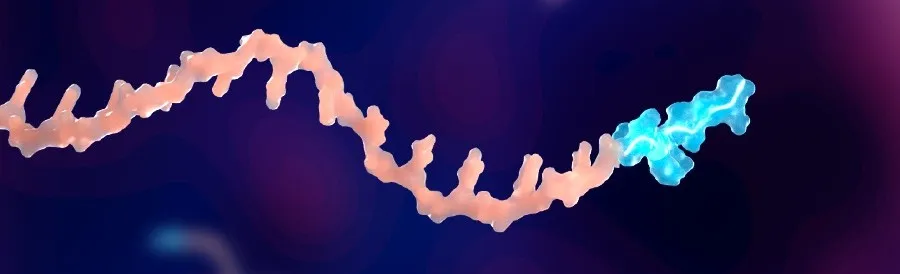
Without real project experience, an algorithm may struggle to understand the problem it is expected to solve. Without software and algorithmic capabilities, scientific expertise can be difficult to translate into tools that are reproducible and scalable.
TidesID® emerged from the continued convergence of long-standing scientific expertise and automation capabilities.
New modalities continue to expand the boundaries of drug innovation. New structures and mechanisms of action are emerging, bringing with them research questions that may not have existed before.
It is difficult to expect one fixed methodology to answer every question.
This reflects a principle the WuXi AppTec DMPK team has long applied in new modality research: there is no one-size-fits-all solution for every molecule. Research systems must account for the structural characteristics of different molecules and continue to evolve through real project experience.
The progression from manual spectrum interpretation to commercial software support, internally developed programs, and ultimately the TidesID® automated platform was not driven by the pursuit of a particular technology trend.
Innovation often begins with a very specific question: Why does a project take so long? Which step in the workflow is most dependent on individual expertise? Which repetitive tasks could be assigned to computers? When existing tools cannot process a new molecular structure, is there another way forward?
By continuing to ask these questions and searching for answers through real projects, a new way of working gradually took shape.
TidesID® itself continues to evolve. Looking ahead, the team plans to further explore the integration of report preparation, quality control, and other downstream activities into a more complete digital workflow, enabling smoother connections from data generation and analysis through final output.
For WuXi AppTec, TidesID® also reflects how an integrated CRDMO platform can continuously build capabilities in response to the evolving needs of new modality development.
Within WuXi AppTec’s CRDMO platform, capability development often begins with questions identified through project work. When scientists recognize a recurring challenge, teams with different areas of expertise can collaborate on the same scientific problem and progressively translate project experience into new methods, workflows, or tools. These solutions can then be tested, refined, and expanded through subsequent projects, gradually becoming broader platform capabilities.
The evolution of TidesID® illustrates this process. DMPK scientists first identified challenges related to spectrum interpretation efficiency and data processing while working on complex new modality projects. Specialists in automation, structural interpretation, algorithm development, and software engineering then worked together to address those challenges. As TidesID® continued to evolve through its use in real projects, it became more than an isolated software development initiative. It reflected a capability-building process driven by actual R&D needs.
The significance of TidesID® therefore extends beyond shortening the turnaround time for an individual metabolite identification project. It demonstrates how WuXi AppTec identifies challenges in real R&D settings, develops solutions through interdisciplinary collaboration, and translates accumulated project experience into platform capabilities that can support a broader range of innovative drug programs.
Ultimately, the purpose of greater efficiency remains the same: to help scientists obtain reliable information faster, make subsequent development decisions with greater confidence, and support promising new modalities as they advance toward clinical development and, ultimately, patient use.