


- About WXPress
- WXPress is your window into the world of WuXi AppTec and our global partners.
- Sitemap
- Events
- Contact
- Please reach out with any business inquires.
- communications@wuxiapptec.com
© 2026 WuXi AppTec. All Rights Reserved.Privacy Policy
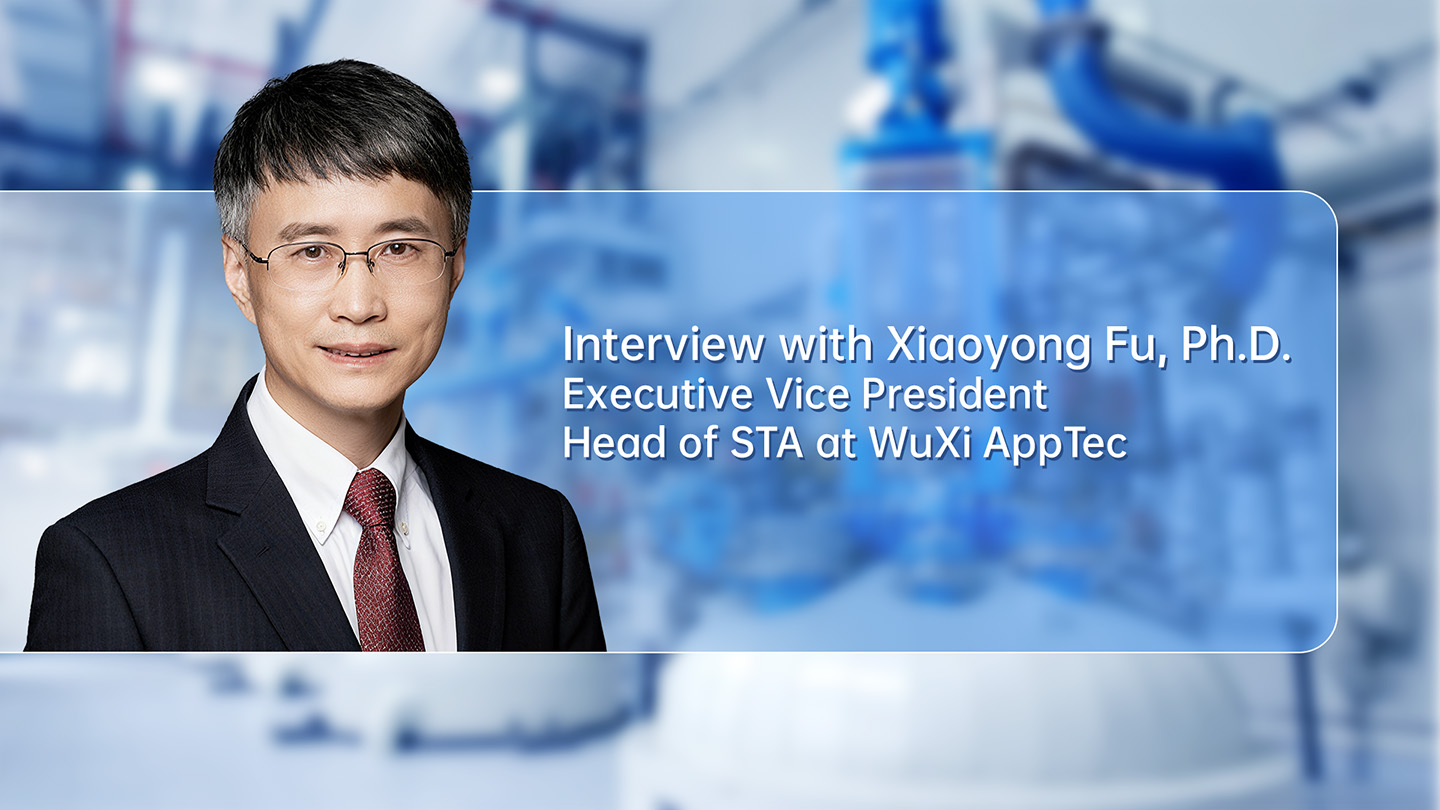
As drug candidates grow more complex, pharmaceutical manufacturing is facing a new constraint: not whether a molecule can be made, but how efficiently it can be produced at scale.
That shift is reframing the conversation from a focus on efficiency in process development and manufacturing to one that places sustainability at the very core of strategy.
For Dr. Xiaoyong Fu, Executive Vice President of WuXi AppTec and Head of WuXi STA, the change reflects a broader redefinition of what “good chemistry” looks like in modern drug development.
“It is not just about efficiency in how complex molecules are developed and manufactured,” Dr. Fu said. “Green chemistry is more about sustainability.”
Since joining WuXi AppTec in 2012, Fu has overseen the development of multiple green chemistry platforms within the company’s integrated CRDMO model, including biocatalysis, continuous manufacturing, and other enabling technologies embedded across process development and production.
These capabilities have strengthened the company’s ability to deliver increasingly complex projects, while also contributing to the broader adoption of lower-impact manufacturing processes across the industry. Seen through the lens of its technological evolution, the company’s trajectory offers a window into how green chemistry is beginning to reshape pharmaceutical manufacturing—driving a shift toward processes that aim to reconcile efficiency with environmental constraints.
Traditional manufacturing has long depended on solvent-heavy, multi-step synthetic routes that generate significant waste.
As molecular complexity increases, those inefficiencies compound.
“When you are dealing with more complex molecules, continuing to rely on traditional synthetic routes leads to lower efficiency and greater environmental burden,” Fu said.
For him, the key shift in green chemistry is timing. It is no longer about downstream waste treatment, but upstream design.
“In the past, many processes were built with the assumption that waste generation was unavoidable,” he said. “Today, we ask a different question — can we design a better route from the outset?”
That thinking has shaped WuXi AppTec’s approach to process R&D. Rather than treating green chemistry as a standalone initiative, the company is embedding it into its integrated and end-to-end CRDMO platform — from early route scouting through clinical development to commercial manufacturing.
A consistent theme runs through Fu’s view of the field: scalability.
“Many technologies work at laboratory scale,” he said. “The real challenge is whether they can be implemented reliably at an industrial scale. Only then do they create real value.”
One of the most important building blocks in WuXi AppTec’s green chemistry strategy is biocatalysis.
Enzymes offer significant advantages over traditional chemical catalysts: higher selectivity, milder reaction conditions, fewer side products, and often shorter synthetic routes.
But industrial application is far from straightforward.
Natural enzymes rarely meet manufacturing requirements without extensive optimization. Their stability, activity, and substrate scope typically need to be engineered through screening and directed evolution.
WuXi STA established its biocatalysis team in 2013. Over more than a decade, it has built a full platform spanning enzyme screening, evolution, fermentation, enzymatic process development and scale up.
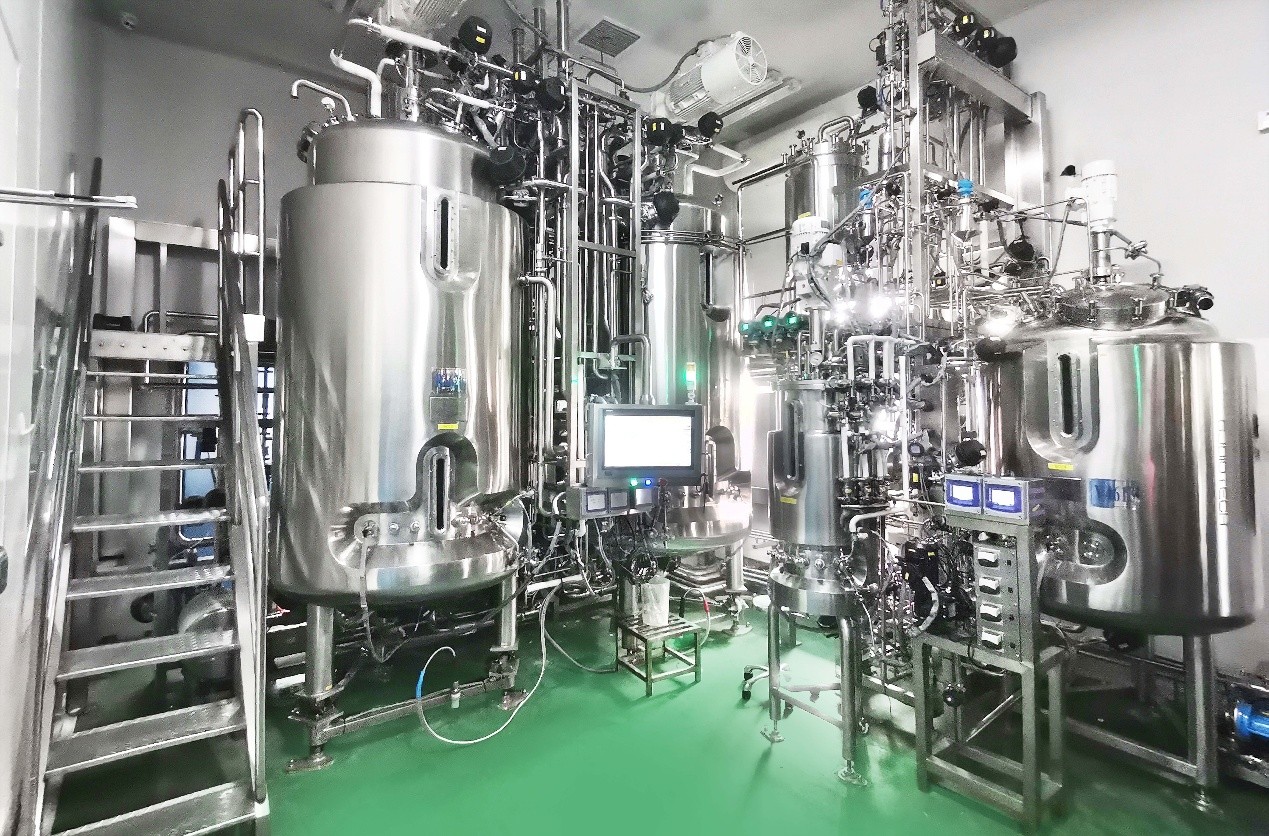
Enzyme Fermentation Plant at Jinshan Site
By 2025, the platform included more than 3,500 enzymes available for rapid screening and over 250,000 engineered variants. A new 15,000-liter fermentation facility further expanded capacity roughly fourfold, enabling parallel scale-up of multiple programs.
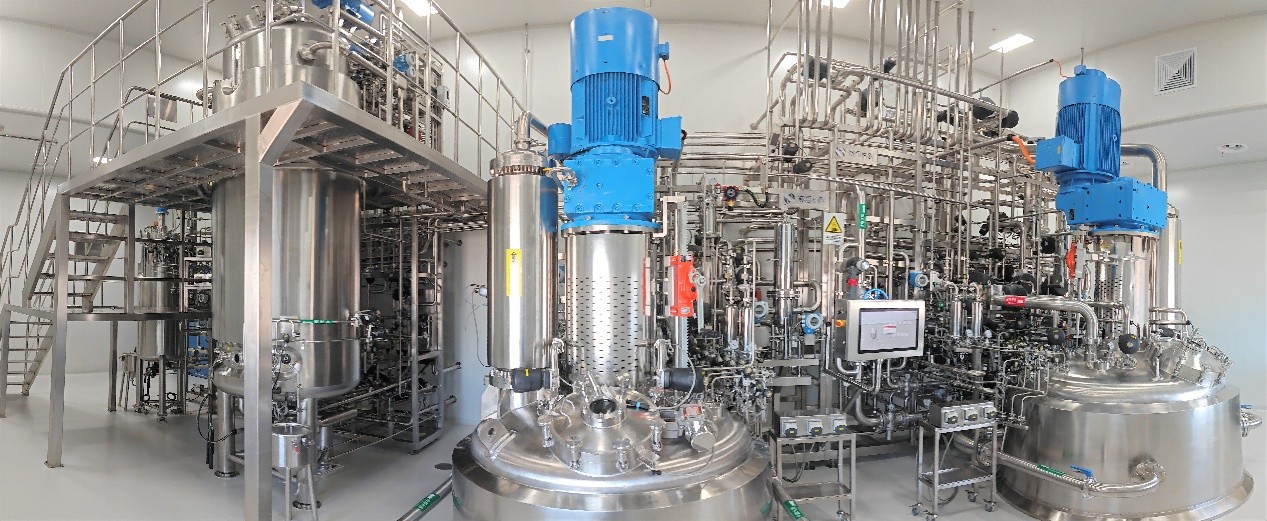
New Enzyme Fermentation Plant at Changshu Site
Fu pointed to one particularly challenging molecule as an example of how the platform has been applied.
The original synthetic route required dozens of steps and delivered yields measured in tens of parts per million.
The team redesigned the route and introduced biocatalytic steps to streamline the synthesis. More than ten steps were eliminated, and overall yield improved by nearly 100-fold, transforming a previously impractical molecule into a viable development candidate.
As the program advanced, the team spent more than two years conducting over 100 rounds of enzyme evolution, developing more than ten key enzymes and improving catalytic performance by up to roughly 1,000-fold in certain cases.
The environmental impact has also been measurable.
According to WuXi AppTec’s 2025 sustainability report, more than 60 global clients used biocatalytic processes across over 100 projects in 2025, reducing organic solvent use by approximately 2,000 tons. In some peptide and non-natural amino acid programs, reductions exceeded 90%.
In Dr. Fu’s view, enzyme catalysis is not only an important tool for addressing complex synthetic challenges, but also a key driver that makes chemical reactions more efficient and environmentally sustainable.
Fu argues that the biggest gains in sustainable manufacturing will not come from isolated technologies, but from integration.
A key example is the combination of biocatalysis with continuous manufacturing, also known as flow chemistry.
Continuous manufacturing replaces batch reactors with systems that enable reactions to proceed continuously in a controlled flow environment. This improves process control, enhances safety, and reduces solvent and reagent use.
WuXi AppTec began investing in continuous manufacturing in 2014. Today, its platform supports more than 60 types of continuous-flow reactions and includes over 35 production lines spanning preclinical and commercial manufacturing.
“Continuous manufacturing represents a different way of thinking about manufacturing,” Fu said. “It improves stability while reducing resource consumption.”
In batch manufacturing, scale-up often introduces variability that leads to failed batches, rework, and inefficiencies. Continuous systems reduce those fluctuations by maintaining steady-state conditions.
“In manufacturing, reducing rework is itself a form of sustainability,” he said.
According to the company’s 2025 sustainability report, continuous manufacturing technologies were applied across more than 600 process steps for over 150 global customers in 2025, reducing waste by more than 8,000 tons.
Integration is now extending further.
In immobilized enzyme systems, enzymes are fixed onto solid supports and reused within flow reactors, reducing separation steps and improving efficiency.
Fu said these hybrid approaches are already helping address bottlenecks in molecules that were previously difficult to manufacture using conventional chemistry.
Fu further explained that continuous-flow hydrogenation enabled stable conversion under high-pressure conditions in a fixed-bed catalytic reactor, improving scalability and advancing the program toward commercial production.
WuXi AppTec is also applying photochemistry, electrochemistry, and other emerging technologies within its flow chemistry platform, already used in the scale-up of more than 100 intermediates.
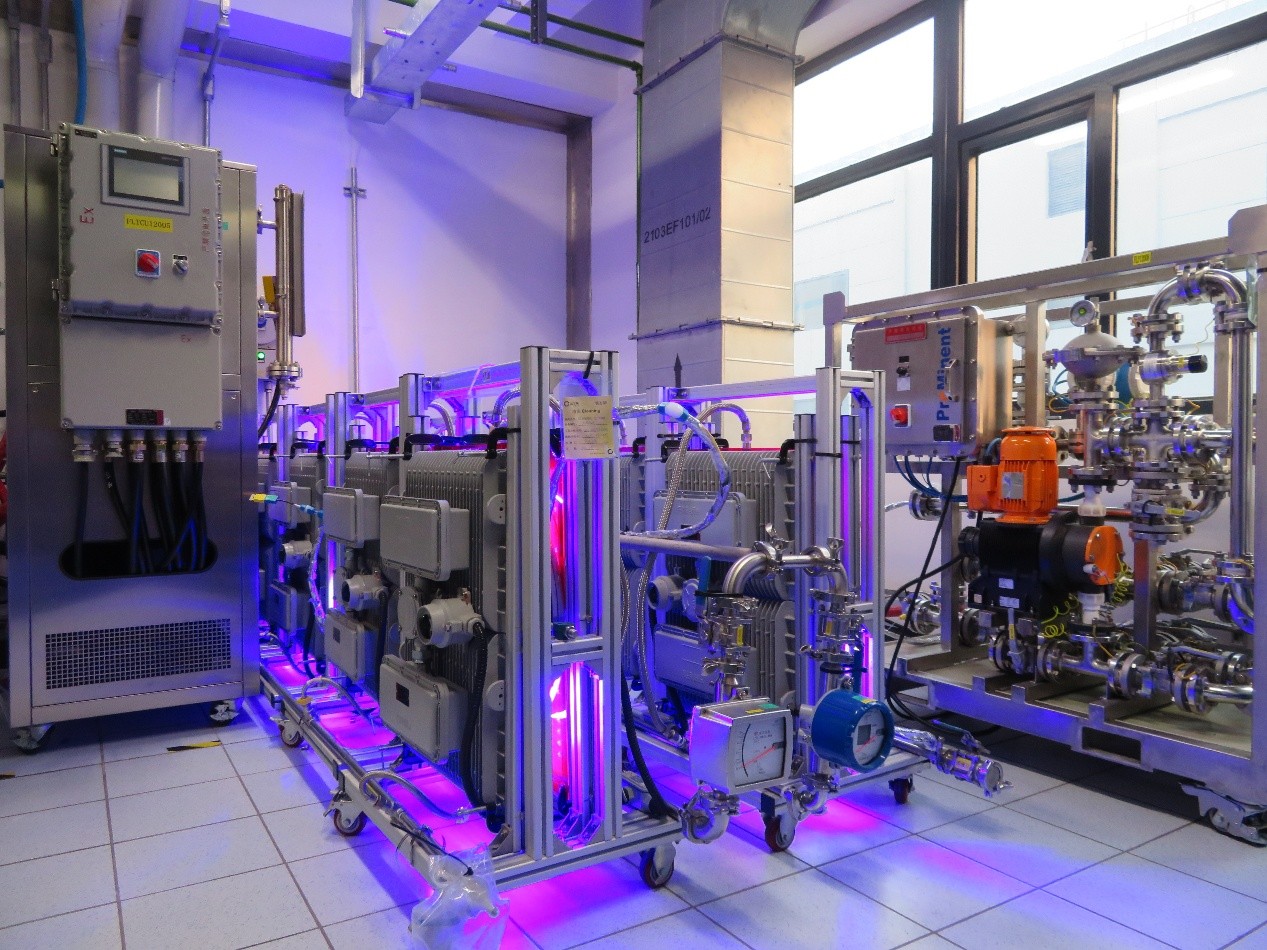
Flow Chemistry – Commercial-Scale Continuous Photochemistry Production Line
“Many green technologies are not limited by scientific feasibility,” Fu said. “They are limited by scalability. That is what WuXi AppTec’s integrated capabilities are designed to solve.”
WuXi AppTec’s continued investment in green chemistry reflects more than the evolution of a single technology platform. It also mirrors a broader shift in how the CDMO industry is beginning to think about sustainability and manufacturing performance.
For years, environmental protection and operational efficiency were often treated as competing priorities in pharmaceutical manufacturing. But as green process technologies mature, that assumption is starting to change.
Increasingly, companies are finding that greener manufacturing approaches can also improve process robustness, reduce material consumption, and enhance delivery efficiency.
“For innovative drug development, time and cost remain two of the most critical factors,” Fu said. “By integrating green chemistry technologies into our CRDMO platform, we are not only helping reduce energy use and waste generation, but also helping global partners accelerate development timelines and lower both development and commercial manufacturing costs.”
In Fu’s view, the long-term value of green chemistry extends beyond sustainability itself.
“What it ultimately enables is a more efficient and collaborative model for pharmaceutical innovation,” he said. “Our goal is to help partners advance new medicines faster and more cost-effectively, while allowing patients to benefit from these underlying technology advances.”
He added that continued exploration of greener and more efficient manufacturing technologies will also play an important role in the ongoing evolution of the small-molecule CDMO sector.
Looking ahead, Fu sees sustainability in pharma manufacturing as a long-term process of continuous improvement rather than a fixed endpoint.
“Technology will continue to evolve,” he said. “But respect for life and responsibility for the environment must always move forward together. Green chemistry is one way we put that into practice — by doing the right thing, and doing it right.”