

- About WXPress
- WXPress is your window into the world of WuXi AppTec and our global partners.
- Sitemap
- Events
- Contact
- Please reach out with any business inquires.
- communications@wuxiapptec.com
© 2026 WuXi AppTec. All Rights Reserved.Privacy Policy
On May 1, 2026, the US Food and Drug Administration (FDA) approved Veppanu (vepdegestrant) for adults with ER-positive, HER2-negative, ESR1-mutated advanced or metastatic breast cancer, marking the first approval of a drug based on proteolysis targeting chimeras. The approval comes at a time when oncology is witnessing a rapid expansion of therapeutic frontiers, from new modalities such as targeted protein degradation (TPD) and antibody-drug conjugates (ADC) to mechanistic advances in synthetic lethality and tumor microenvironment biology.
Dr. Jing Li, executive director at WuXi Biology, a segment of WuXi AppTec, who leads US teams to provide end-to-end biology services and solutions, has watched several waves of oncology innovation reshape the field over the course of his career. Recently, Technology Networks spoke with Li about how emerging modalities and mechanistic biology are driving the next wave of oncology and translating scientific discoveries into clinically meaningful therapies.
What have we learned from transformative waves in oncology, and which scientific shifts are redefining cancer research today?
Over the past decades, the industry has navigated several transformative waves in oncology, such as kinase inhibitors and immuno-oncology. In Li’s opinion, these waves have driven oncology toward more precise therapies.
“These breakthroughs fundamentally shifted cancer therapy from a one‑size‑fits‑all approach towards highly personalized, precision-based therapy tailored to each tumor’s unique profile.” Li stated that one prominent example is immune checkpoint inhibitors, which demonstrate that a patient’s own immune system can be harnessed to achieve durable, long‑term remissions that conventional chemotherapy often cannot deliver.
Today, the field continues to advance modalities such as ADCs and T‑cell engagers (TCEs). These innovations are redefining both scientific understanding of cancer and the future of treatment.
While new modalities are emerging, traditional small molecules are also gaining renewed momentum. As Li noted, they remain a powerful engine capable of revolutionizing medicine. Emerging modes of action such as covalent modifiers, PPI inhibitors, degraders, and molecular glues are expanding the therapeutic scope of small molecules and driving renewed industry interest in the modality.
Oncology research shifts:
What would it take to make molecular glue a truly reliable, repeatable drug discovery engine, and how close is the field to the inflection point?
As a representative class of targeted protein degraders, molecular glues were first recognized while studying the mechanisms of natural products such as FK506, cyclosporin, and rapamycin. Later, Revlimid (lenalidomide) became the first clinically successful molecular glue degrader. As Li pointed out, most molecular glues were discovered serendipitously historically, but that paradigm is changing rapidly.
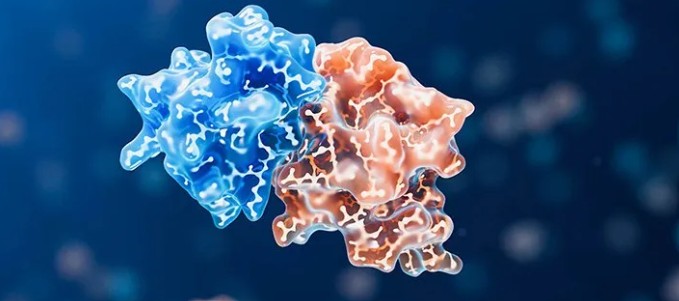
“Induced protein associations appear to be a far more common phenomenon than previously thought. Advances in diversity‑oriented library synthesis and screening technologies, including HTS (high-throughput screening), ASMS (affinity selection mass spectrometry), and DEL (DNA-encoded library), are making rational discovery of molecular glues against intended targets increasingly feasible,” Li stated. “We are turning molecular glue discovery into a scalable and repeatable drug discovery process.”
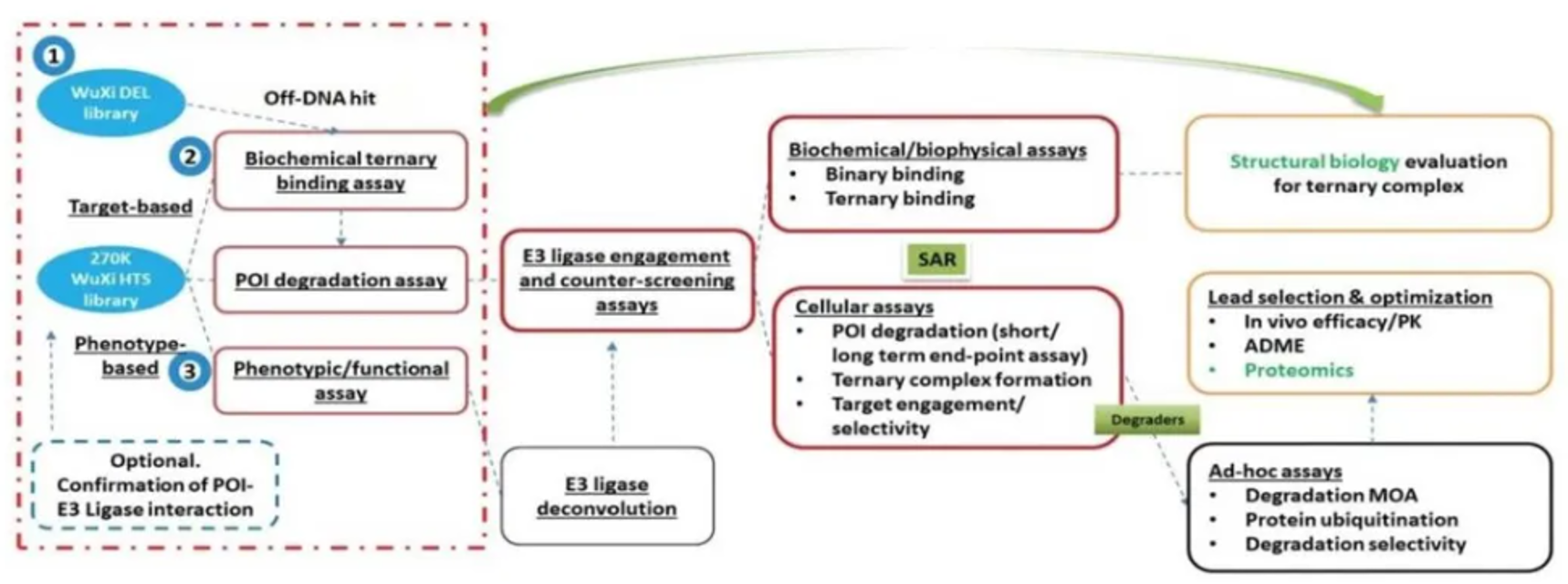
▲Representative workflow for molecular glue hit identification, characterization, and lead optimization
In Li’s opinion, these trends suggest the field of molecular glues is at an inflection point. The concept of molecular glue is evolving into, or perhaps returning to, the broader framework of proximity pharmacology. This extends beyond protein degradation to include transcriptional repression, protein translocation, and protein stabilization.
Molecular glue momentum:
In the field of ADCs, what defines the next frontier, and which technical barriers still remain?
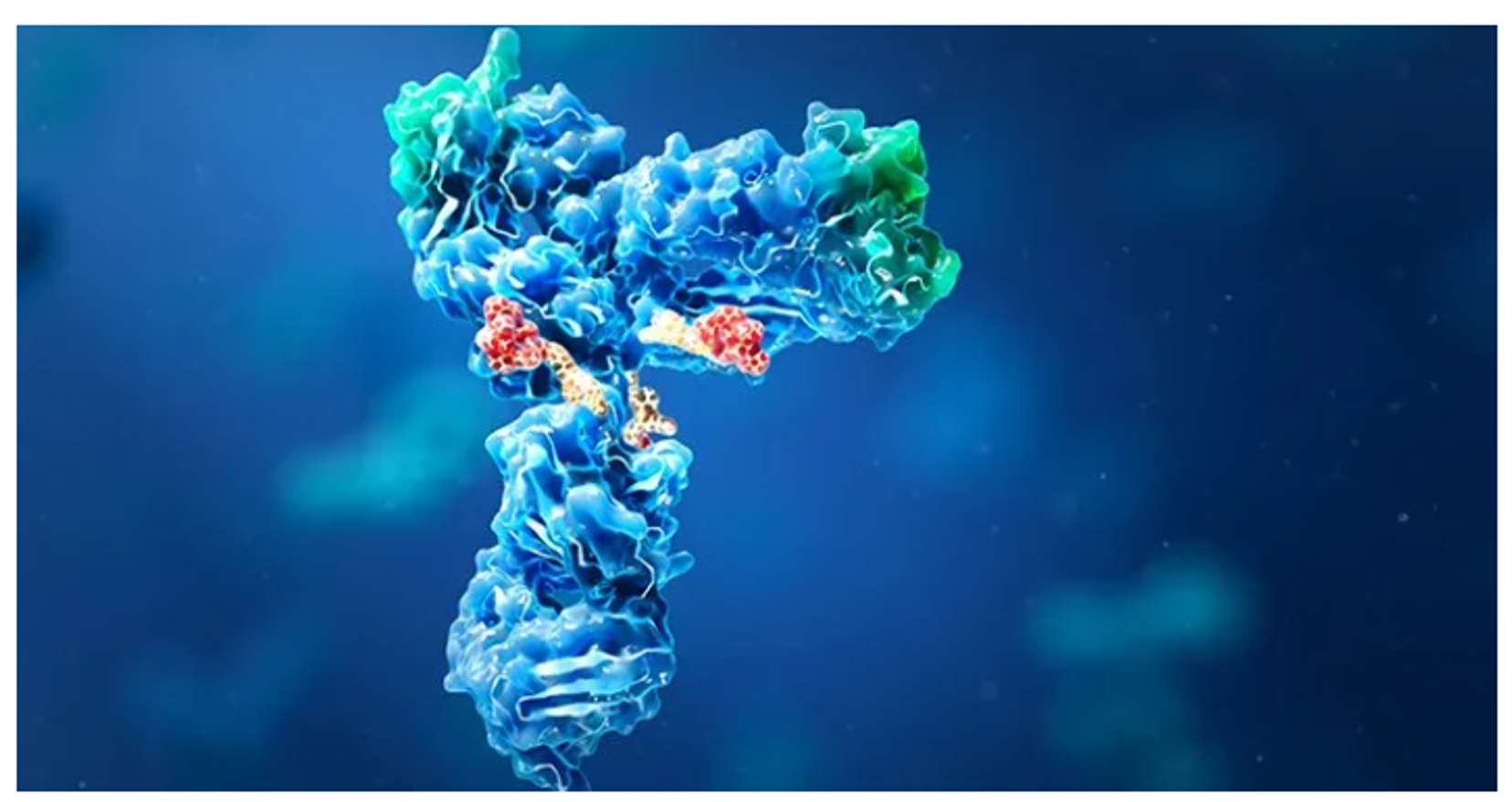
ADCs have become one of the most active areas in oncology. While the science of linker chemistry, payload innovation, and target selection is advancing rapidly, Li noted that no single innovation alone is sufficient to propel ADC research. Rather, progress is coming from the integration of advances across multiple areas.
Taking ADC payload as an example, the field has expanded beyond cytotoxic agents to include target‑specific inhibitors, protein degraders, and immune stimulators. The field is moving toward multi‑payload constructs and multi-specific ADCs to enable more precise delivery. Advancing these next-generation ADCs will depend heavily on structural innovation and protein engineering. Ultimately, the goal is to better understand ADC resistance mechanisms and improve the ability to predict combination strategies capable of producing durable responses.
ADC development drivers:
What will it take for synthetic lethality to become a broadly applicable therapeutic strategy across tumor types?
Synthetic lethality describes a genetic interaction in which the loss of two genes causes cell death, while the loss of either gene alone is tolerated. Based on synthetic lethality, PARP inhibitors have transformed outcomes for patients with BRCA-mutated cancers, and several PRMT5 inhibitors targeting MTAP‑deleted tumors are in late‑stage clinical development. As the map of genetic dependencies continues to expand, Li sees synthetic lethality poised for much broader application across oncology.
While synthetic lethality is conceptually attractive for cancer therapy, Li stated that challenges remain to hinder its clinical success: “One major challenge is that synthetic-lethal interactions are often highly context dependent. While large‑scale screens generate numbers of candidates, truly reproducible, robust, and clinically relevant synthetic‑lethal pairs appear to be rare.”
He also highlighted a potential path for advancing synthetic lethality-based therapies: “One promising future direction may be the integration of network biology with machine learning, to improve hit prioritization and increase the likelihood of identifying robust, translatable synthetic‑lethal targets.”
Synthetic lethality outlook:
As tumor microenvironment biology evolves, where is mechanistic clarity beginning to translate into actionable therapies, and which signals may hold translational potential?
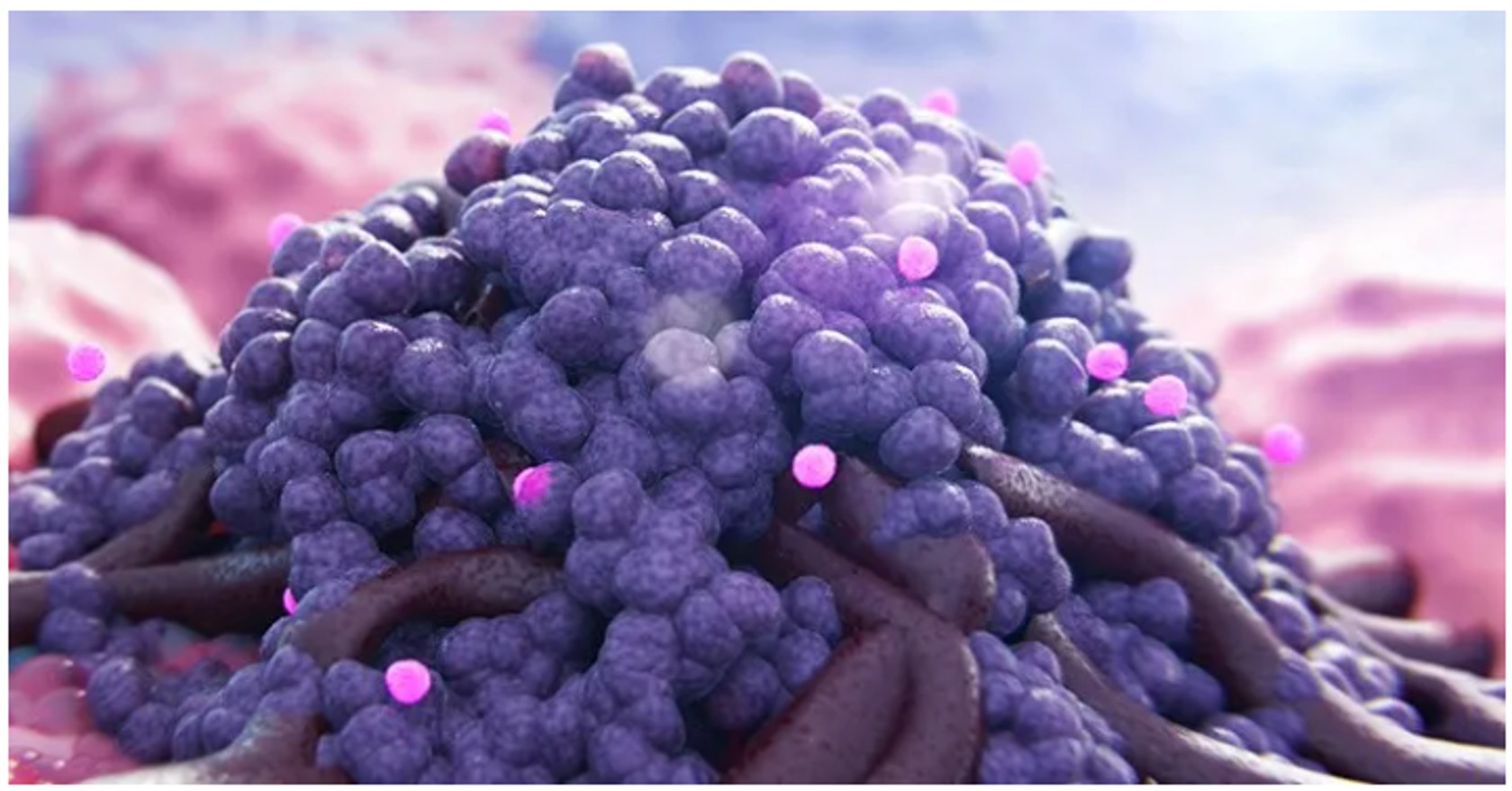
The biological complexity of the tumor microenvironment renders it both a scientifically fertile area in oncology and a highly challenging one for drug development. Still, Li emphasized that many insights are beginning to translate into actionable therapeutics. For example, depletion of fibroblast activation protein-positive cancer-associated fibroblasts (FAP+ CAFs) can disrupt the desmoplastic matrix, rendering tumors more susceptible to subsequent mesothelin‑targeted CAR T cells and anti‑PD‑1 therapy.
In parallel, advances in high‑resolution digital pathology, spatial transcriptomics, and machine learning are providing an increasingly detailed view for the immune landscapes of “hot” and “cold” tumors. According to Li, signals emerging from these advances hold promising translational potential: “Multiple agents targeting Tregs, MDSCs, TAMs, and TAFs are in clinical development, and combinatorial strategies capable of simultaneously modulating multiple immunosuppressive pathways within the tumor microenvironment could be a promising route to overcome immune escape.”
Tumor microenvironment breakthroughs:
How important has early biomarker integration become in modern oncology development, and which emerging innovations may continue transforming cancer care?
Early biomarkers, especially patient selection biomarkers, have always been an integral part of modern precision oncology. Given the high degree of tumor heterogeneity, clinically meaningful response rates are often difficult to achieve without biomarker-driven patient stratification.
Li noted a significant trend in biomarkers: the rapid expansion of cancer minimal residual disease (MRD) detection into solid tumors. With current technologies and rigorous clinical validation, circulating tumor DNA (ctDNA)‑based MRD detection enables longitudinal monitoring of therapy response across the entire stages of cancer care.
More broadly, Li highlighted a key transition underway: biomarker strategies are shifting from static, prognostic markers toward dynamic, longitudinal monitoring of biological signals that are both predictive and actionable.
Biomarker transformation trends:
Can you explain how WuXi AppTec preserves deep biological insight while still advancing programs at the speed modern oncology demands?
In oncology drug discovery, speed is essential as therapies are often complex and patient needs are urgent. Speed, however, does not come at the expense of scientific rigor. As Li explained, “Preserving scientific depth while moving at market pace is not viewed as a trade-off. Both are essential expectations that must be achieved simultaneously.”
According to Li, multi-dimensional capabilities are required for achieving that balance: capabilities grounded in causal biology; continuous anticipation of emerging scientific and market trends; and sustained investment in new drug resistance models for novel therapeutics and drug response systems tailored to emerging modes of action. These capabilities reflect the broader set of integrated capabilities that WuXi AppTec has built to enable innovators in accelerating the discovery of oncology therapies.
Looking ahead, Li noted that with the recent wave of new modalities and modes of action, the ability to translate biology into clinically meaningful outcomes is becoming stronger than ever. “Daraxonrasib is the leading development candidate for a novel class of non-covalent inhibitor that targets the active ‘ON’ conformations of mutant and wild-type KRAS, HRAS, and NRAS. The recent release of pivotal Phase 3 RASolute 302 trial results for previously treated metastatic pancreatic cancer demonstrated a median OS of 13.2 months versus 6.7 months for chemotherapy. This is a major, paradigm-shifting advance in oncology,” Li added.
These advances are transforming decades of clinical practice in oncology, pointing to a future in which therapies can be brought to patients across a broader range of cancers.
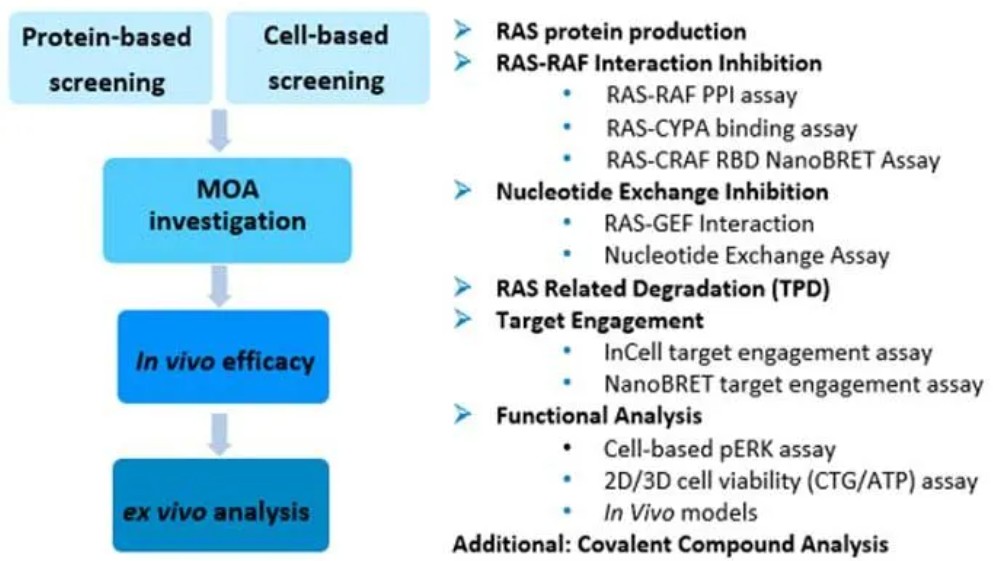
▲Representative workflow and assay toolkit used for KRAS target characterization, mechanism-of-action studies, and efficacy evaluation
Innovation execution essentials:
Oncology innovation is entering a new phase in which emerging modalities, deeper cancer biology, and advanced translational tools are converging to reshape therapeutic discoveries. From molecular glues and ADCs to synthetic lethality, tumor microenvironment modulation, and dynamic biomarker strategies, progress increasingly depends on integrating mechanistic insight with scalable discovery approaches. As these scientific advances mature, the ability to connect biological understanding with rapid, rigorous execution will be critical to bringing more precise and durable therapies to patients.