

- About WXPress
- WXPress is your window into the world of WuXi AppTec and our global partners.
- Sitemap
- Events
- Contact
- Please reach out with any business inquires.
- communications@wuxiapptec.com
© 2026 WuXi AppTec. All Rights Reserved.Privacy Policy
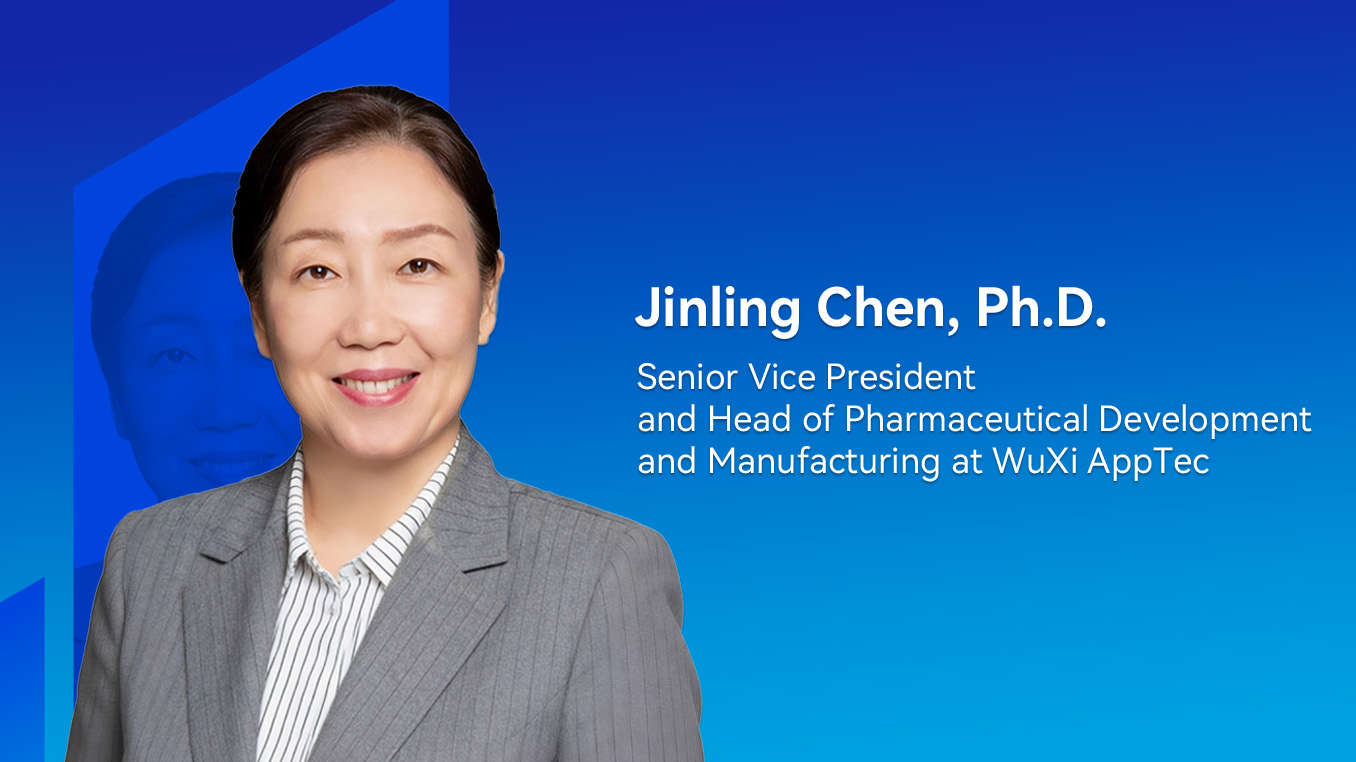
On May 6, 2026, WuXi AppTec welcomed customers and partners from around the world to its site in Couvet, Switzerland. At this facility in the heart of Europe, guests toured the highly automated drug product manufacturing lines, but the main attraction was a new piece of equipment—the PSD-4 spray drying system.
Dr. Jinling Chen, Senior Vice President and Head of Pharmaceutical Development and Manufacturing at WuXi AppTec, was on-hand to introduce guests to the newly completed spray drying plant. The new PSD-4 system is set to begin operations in the fourth quarter of this year.
To fully appreciate the ongoing investment in the spray drying capabilities at the Couvet site, it’s important to have insight into some history.
A few years ago, WuXi AppTec took on a complex new drug development project involving a molecule with a molecular weight of over 1000 Daltons, poor water solubility, and an oral absorption rate of less than 1%. It was almost written off as "non-viable for development."
Across the industry, such molecules, specifically Proteolysis Targeting Chimeras, represent a frontier in cancer drug R&D, offering significant advantages in targeting proteins once considered "undruggable." However, their high molecular weight and complex chemical structure posed enormous development challenges—poor aqueous solubility and low oral bioavailability.
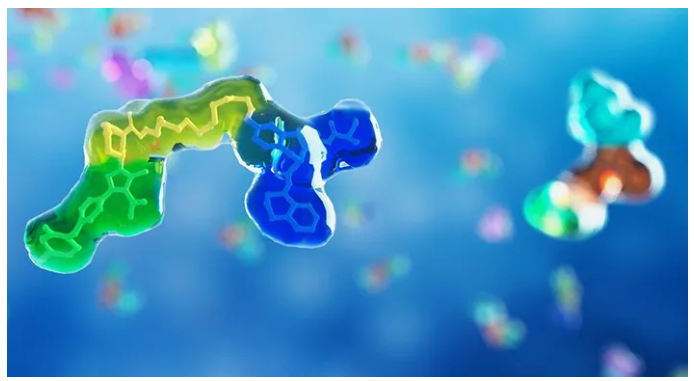
When the client approached WuXi AppTec, Dr. Chen and her team did not give up easily. "Through close collaboration with the client, the team explored various drug delivery methods to improve the compound's bioavailability, ultimately finding spray drying to be most effective," she recalled. After careful spray drying and formulation screening, optimization, and process optimization, the team successfully increased the compound's bioavailability to over 30%, rendering it viable for further clinical development.
This 30% figure is more than just a data point in a lab. It meant that a compound destined for the shelf — a molecule that had been "nearly abandoned" earned a new ticket to continue into clinical development and, ultimately, to reach patients.
This is just one example of how spray drying can solve significant development challenges. It is a story that vividly underscores WuXi AppTec’s ongoing enhancement of spray drying capabilities. "There are many such examples. Spray drying technology holds immense potential for addressing major development challenges," Dr. Chen stated.
Spray drying is not a new concept; it has been widely used in food and chemical industries for decades. In the pharmaceutical sector, it serves a unique purpose: tackling the "hard-to-develop molecules" whose structures are becoming increasingly complex and whose solubility is declining.
As Dr. Chen explained, “For many small molecules, especially those with larger molecular weights and complex structures, one of the most common challenges in pharmaceutical development today is poor aqueous solubility and low oral absorption rates, known as BCS Class II or IV compounds.” With scientific advancements, the boundaries of drug development are constantly being pushed. Over the past few decades, relatively simple molecules—the low-hanging fruit—have already been picked, leaving scientists to focus on tackling more complex molecules.
"We are entering more untouched territories, leading to more complex molecules," Dr. Chen continued, "With advancements in science, we understand more about targets, and organic chemists have better tools to form these complex molecules. Additionally, what was once economically unviable is now possible with modern technology."
Whether it’s anti-tumor drugs targeting “undruggable” KRAS proteins or other complex molecules with high molecular weight, the field of new drug development is facing a common trend: increasing molecular weight and complexity.
"Molecules are becoming more complex, with longer synthetic routes and more functional groups, making them harder to dissolve and absorb," Dr. Chen pointed out. "If this bottleneck is not addressed, even with precise targeting and potent pharmacological activity, molecules cannot be developed into oral formulations if they cannot be effectively absorbed by the human body."
The challenges are the same globally, and the entire industry is exploring innovative technologies to address them. WuXi AppTec’s subsidiary, STA, has spent years building a comprehensive drug delivery technology platform, including Spray Drying (SDD), Hot Melt Extrusion, Nano Particles, and Liquid Capsules. Among these, spray drying has proven to be one of the most effective solutions.
"Spray drying technology has been an essential tool to address these challenges.” Dr. Chen remarked.
As a global enabler of innovation, WuXi AppTec has, over the years, built a complete set of spray drying and supporting equipment, enabling development and manufacturing from lab scale to clinical and commercial production. Currently, STA possesses different types of spray drying systems (such as PSD-1, PSD-3, and PSD-4), offering the flexibility to meet the needs of molecules at different stages.
“In the lab, we use small-scale spray dryers to evaluate compound properties and support formulation selection during the early development stages. As the compound progresses, we scale up to GMP-compliant spray dryers to produce clinical trial materials. For commercial production, we use large-scale spray dryers like the PSD-4, which is a six-story tall piece of equipment,” Dr. Chen further explained.
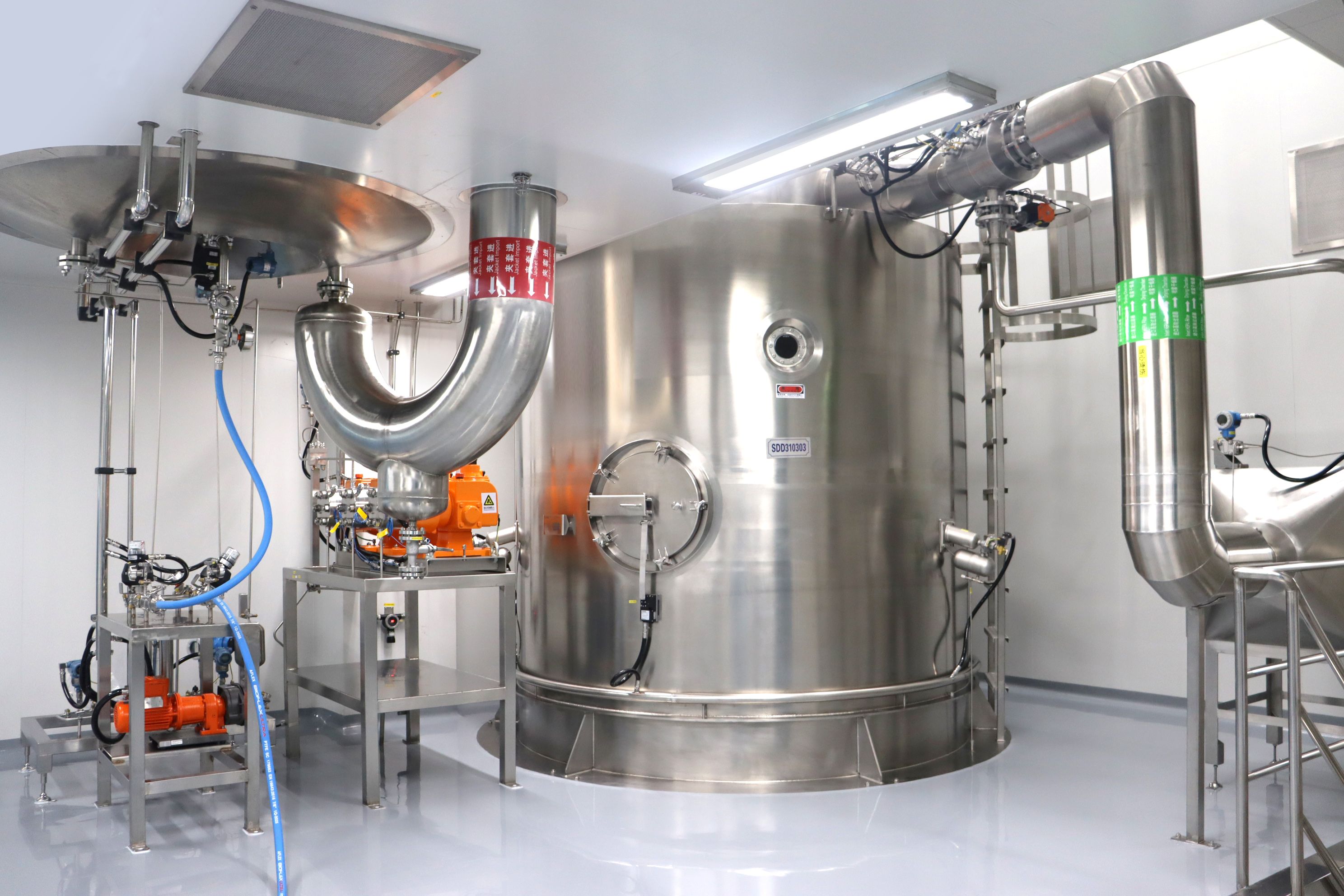
PSD-4
Furthermore, this complete capability—from small-scale production to commercial manufacturing—is enhanced by a broad, global network. “Not only in Couvet, but also our site in Taixing, is equipped with identical PSD-4 equipment.” This dual-site strategy ensures process robustness, quality consistency, a stable and reliable global supply network.
The advantages of this integrated spray drying technology platform have been repeatedly validated in numerous customer projects.
A few years ago, Dr. Chen’s team was involved in the development of a diabetes drug for a client. Using spray drying, the team successfully developed a tablet formulation that is now available in the market, benefiting many patients. To date, STA's spray drying platform has facilitated the successful approval and launch of five commercial new drugs.
“Whether assisting in the development of KRAS-targeted drugs in oncology or aiding the formulation development of new diabetes drugs, these examples highlight our firm support for clients in these critical disease areas and our ongoing contribution to the industry,” Dr. Chen said.
If technologies like spray drying are akin to playing a solo instrument, then WuXi AppTec’s integrated CRDMO (Contract Research, Development, and Manufacturing Organization) platform represents a full symphony orchestra.
A case study in the development of an anti-cancer drug clearly illustrates this point. In the early clinical stages, the client entrusted the entire program to STA. This wasn’t merely a spray drying contract; it encompassed the full spectrum of development and manufacturing, from the active pharmaceutical ingredient (API), intermediates, and solid dispersions to the final drug product, including the subsequent stages of registration, validation, and regulatory inspection.
Imagine this scenario: At one of WuXi AppTec’s sites, after synthesizing just a few grams of the API, it was immediately transported to another site where the spray drying team started working on the process, preparing solid dispersions. Meanwhile, as the first batch of SDD samples was ready, the formulation team at a third site was prepared to take over — multiple teams across three locations working efficiently in parallel to ensure the project progressed smoothly.
In less than two and a half years, the CMC development and clinical studies were successfully completed. Soon after, the client’s anti-cancer drug was approved and launched.
Behind the speed, the deeper value lies in robustness. Multiple tasks progress simultaneously within a unified quality system, seamlessly connected. Whenever a process step needs improvement, all teams can quickly respond, ensuring real-time cross-department collaboration. This kind of seamless, cross-departmental collaboration minimizes the risk of ineffective output and effectively controls development risks.
This exemplifies the value and essence of WuXi AppTec’s integrated CRDMO enabling platform and its global network. Within this network, the Couvet site in Switzerland plays a unique and crucial role as the European hub.
"As an integrated part of our organization, the Couvet site, along with our facilities globally, provides significant value to our customers. They benefit from our speed, diversified enabling technologies, and the expertise and capabilities of our team around the world. As an example, teams in Shanghai, Wuxi City, and Couvet collaborated closely, rapidly aligning the tech transfer from China to Couvet and advanced the project to NDA submission in just 5 months." Dr. Chen explained.
At the Couvet site, advanced equipment and design concepts are complemented by WuXi AppTec’s operational philosophy and quality standards. "Clients who visit often describe it as a futuristic, dream facility for pharmaceutical manufacturing," Dr. Chen reflected. Leveraging its central European location, the Couvet site, as part of the global network, brings clients the advantages and value of high quality, high efficiency, and high reliability.
Every molecule that is handled with meticulous care holds the potential to advance disease treatment. And while the challenges of global new drug development remain complex, WuXi AppTec is prepared to address the challenge to fulfill the vision that "Every drug can be made, and every disease can be treated."